
With Delhi’s air quality reaching hazardous levels, the government has ordered all offices to operate at 50% staff strength while the remaining employees work from home.
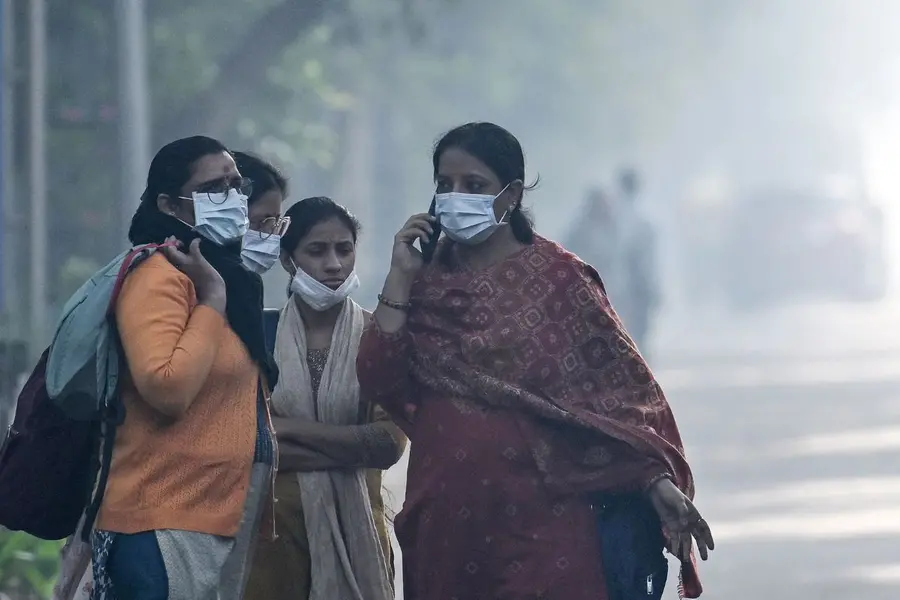
New Delhi: Amid the ongoing air pollution crisis in Delhi, the city government has mandated that all government and private offices operate with only 50% of their workforce physically present, with the remainder required to work from home.
The order, issued on Monday by the Department of Environment & Forests, also recommends staggered office hours and reducing vehicular trips wherever feasible to curb exposure and limit traffic-related emissions.
Also Read

Essential and emergency services, including hospitals, fire services, public transport, electricity, water, and sanitation utilities, remain exempt from the order. The directive comes as Delhi continues to battle severe smog, with the overall Air Quality Index (AQI) at 382, while 15 monitoring stations recorded readings above 400—well within the “very poor” category defined by the Central Pollution Control Board (CPCB).
Data from the past week highlights the persistent crisis: AQI readings in Delhi were 391 on Sunday, 370 on Saturday, 374 on Friday, 391 on Thursday, 392 on Wednesday, 374 on Tuesday, and 351 on Monday. According to CPCB norms, AQI levels between 301–400 are considered “very poor,” and anything above 400 is “severe,” posing serious health risks.
Stage 3 of the Graded Response Action Plan (GRAP) has been active in Delhi since November 11, enforcing traffic restrictions, halting construction activity, and limiting emissions from power plants to mitigate smog. However, pollution levels remain critical due to a combination of factors, including vehicular emissions, industrial activity, burning of crop residue in neighbouring states, and meteorological conditions that trap pollutants close to the ground.
Health experts warn that prolonged exposure to such pollution can have serious consequences, particularly for children, the elderly, outdoor workers, and people with pre-existing respiratory or cardiovascular conditions. Chronic exposure may cause or worsen asthma, bronchitis, eye irritation, reduced lung function, and heart problems. Wearing protective masks, limiting outdoor activity, and following work-from-home instructions are strongly advised.
The government’s new office directive is aimed at reducing the daily exposure of working professionals while also cutting down on vehicular traffic during peak hours. Staggered working hours are encouraged to further ease congestion and reduce emissions.
Delhi generates over 11,000 tonnes of municipal solid waste daily, with industrial and vehicular emissions contributing significantly to the city’s toxic air. The absence of natural ventilation during the winter months, combined with lower wind speeds, often causes pollutants to linger over the city for several days.
The Delhi environment minister has emphasised that authorities are monitoring pollution levels round-the-clock and will consider additional interventions, including stricter vehicular restrictions and potential temporary school closures, if AQI readings do not improve.
Experts highlight that reducing exposure, rather than short-term interventions, is key to protecting public health. With air quality remaining dangerously low, the combination of remote work, staggered office hours, and limited outdoor activity is expected to provide immediate relief while longer-term strategies, such as cleaner fuels, stricter industrial regulations, and regional crop-burning management, are implemented.
Published: 24 Nov 2025, 08:40 pm IST
Disclaimer: Kindly avoid objectionable, derogatory, unlawful and lewd comments, while responding to reports. Such comments are punishable under cyber laws. Please keep away from personal attacks. The opinions expressed here are the personal opinions of readers and not that of Mathrubhumi.