
Ethiopia`s Hayli Gubbi volcano erupts for the first time in 12,000 years! See the massive ash plumes and learn about this rare geological event. Click for details!
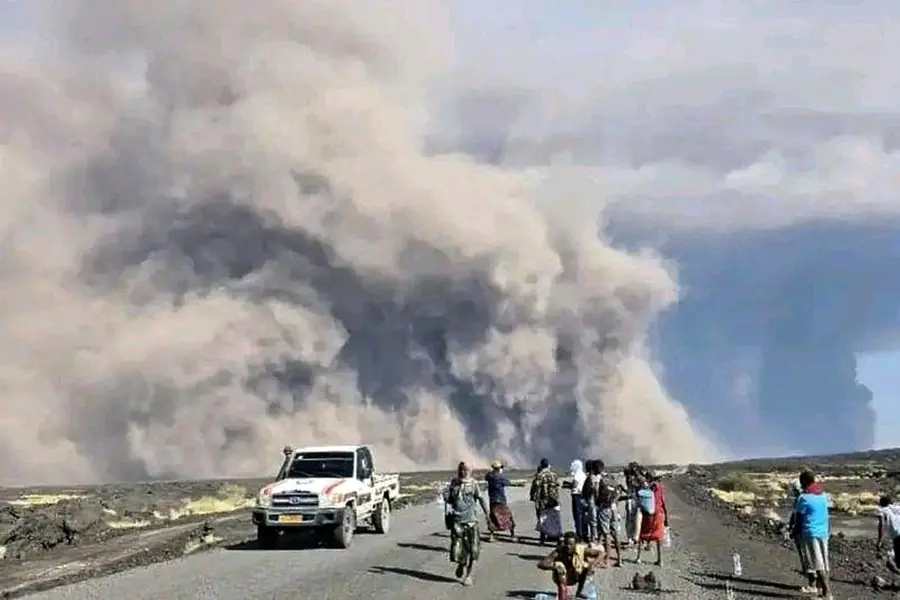
A volcano in Ethiopia’s northeastern region, Hayli Gubbi, erupted for the first time in nearly 12,000 years, sending massive plumes of ash and smoke up to 14 kilometres (nine miles) into the sky, according to the Toulouse Volcanic Ash Advisory Centre (VAAC).
Where is the Hayli Gubbi volcano located?
The Hayli Gubbi volcano sits in Ethiopia’s Afar region, roughly 800 kilometres (500 miles) northeast of Addis Ababa, near the border with Eritrea. Rising about 500 metres, the volcano lies within the Rift Valley, a geologically active zone where two tectonic plates meet.
How far did the ash spread?
Ash clouds from the eruption on Sunday drifted over Yemen, Oman, India, and northern Pakistan, posing potential hazards for air travel and nearby communities, the VAAC reported.
READ MORE: Kannur–Abu Dhabi IndiGo flight diverted after Ethiopian volcano eruption
According to the Smithsonian Institution’s Global Volcanism Program, Hayli Gubbi has no recorded eruptions during the Holocene, which began around 12,000 years ago at the end of the last Ice Age.
Volcanologist Simon Carn, professor at Michigan Technological University, confirmed that Hayli Gubbi has no record of Holocene eruptions, making this event extremely rare.
Published: 24 Nov 2025, 07:54 pm IST
Related Topics
Disclaimer: Kindly avoid objectionable, derogatory, unlawful and lewd comments, while responding to reports. Such comments are punishable under cyber laws. Please keep away from personal attacks. The opinions expressed here are the personal opinions of readers and not that of Mathrubhumi.
