
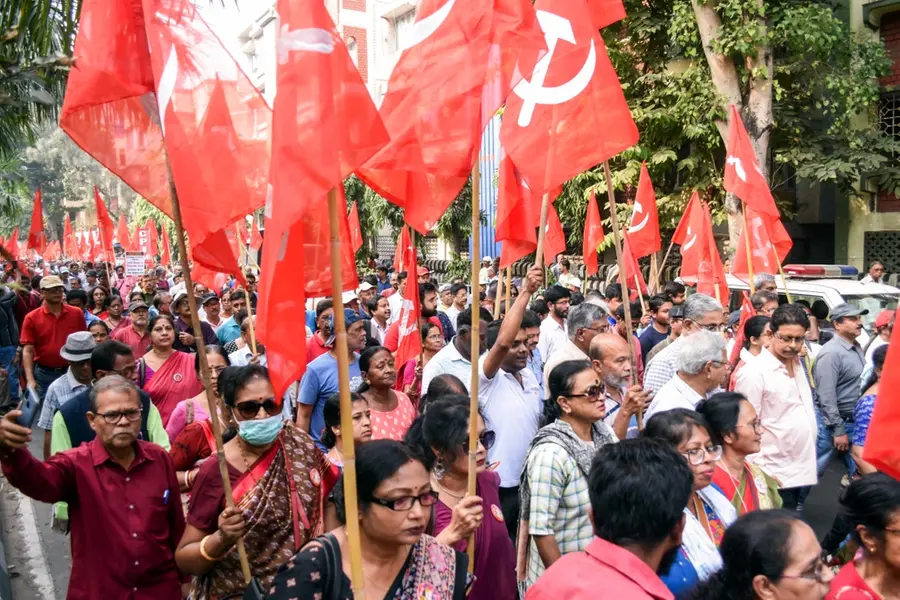
New Delhi: The Supreme Court on Monday directed the formation of a Special Investigation Team (SIT) to probe the alleged torture of a woman in police custody following her arrest during protests over the rape and murder of the doctor at R G Kar Medical College and Hospital in Kolkata.
In its ruling, a bench comprising Justices Surya Kant and Ujjal Bhuyan noted that not all cases could be handed over to the CBI. As a result, they modified the Calcutta High Court's earlier order for a CBI investigation, emphasising the need for senior IPS officers from the state to oversee the investigation.
Also Read

The Supreme Court instructed that the newly formed SIT, consisting of officers nominated by the state, report the progress of their investigation to the high court on a weekly basis. The Calcutta High Court chief justice was directed to set up a special bench to review the SIT's findings and determine if further action was necessary.
The bench's decision followed an appeal by the West Bengal government, which contested the high court’s directive for a CBI investigation, asserting that the state police was capable of handling the case. On November 11, the top court stayed the October 8 ruling of the Calcutta High Court, which had ordered a CBI inquiry. It also asked the state government to submit a list of seven IPS officers, including five women, to form the new SIT tasked with investigating the custodial torture allegations.
Earlier, the Calcutta High Court had upheld a single-judge bench's order for a CBI probe. The division bench of the High Court reasoned that the need for an independent investigation was critical due to the nature of the allegations.
The case began when two women, Rebeka Khatun Molla and Rama Das, filed petitions accusing the police of physical torture while in custody. A jail doctor’s report indicated signs of hematoma (blood clotting) on the legs of one of the women. The petitioners were arrested on September 7 and remained in the custody of Falta Police Station until their judicial remand on the following day.
The high court noted discrepancies in medical reports, including differences between the findings of a local medical officer and that of the Diamond Harbour Medical College doctor. This led the bench to conclude that there was a prima facie case that the trauma occurred while the women were in police custody. Given the inconsistencies, the court called for an independent investigation into the matter.
Agency
Published: 25 Nov 2024, 02:40 pm IST
Related Topics
Disclaimer: Kindly avoid objectionable, derogatory, unlawful and lewd comments, while responding to reports. Such comments are punishable under cyber laws. Please keep away from personal attacks. The opinions expressed here are the personal opinions of readers and not that of Mathrubhumi.