
India’s latest petrol and diesel price hike comes amid rising global crude oil costs, the expiry of a US waiver on Russian oil trade, and escalating geopolitical tensions in West Asia, creating renewed pressure on fuel markets.
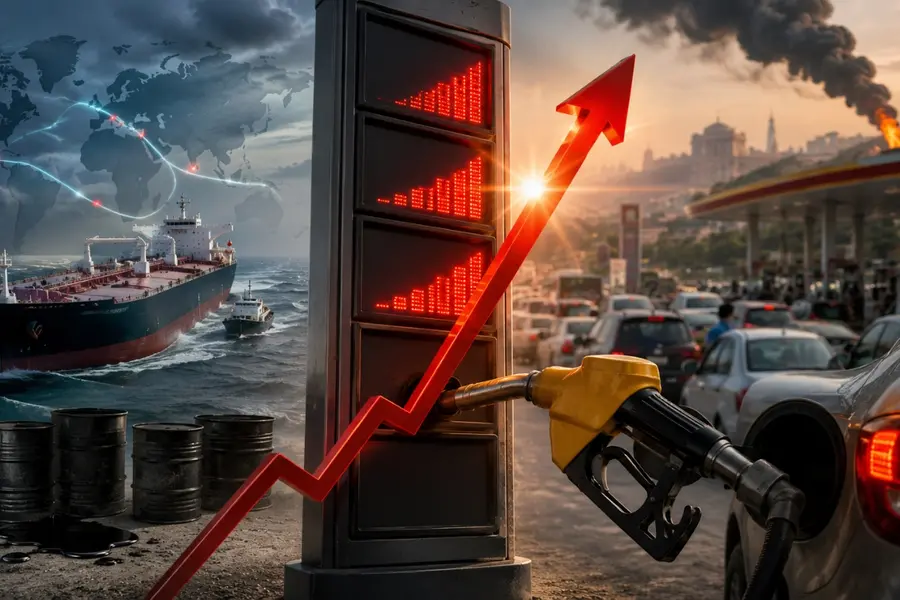
Petrol and diesel prices in India have been increased again by around ₹0.90 per litre, marking the second hike within a week. The latest revision follows an earlier ₹3 per litre increase, reflecting sustained pressure from global crude oil markets.
In Delhi, petrol now stands at ₹98.64 per litre and diesel at ₹91.58 per litre. Similar increases have been seen across major metros, including Kolkata, Mumbai, Chennai and Kochi, where fuel prices have also crossed or remained above the ₹100 mark for petrol in most cities.
Also Read

Russian oil waiver expiry adds new uncertainty
A key factor influencing global oil markets is the expiry of a US sanctions waiver that had previously allowed countries, including India, to continue purchasing Russian crude without heightened restrictions.
With the waiver now ended, Indian refiners face potential compliance risks and tighter scrutiny on Russian oil imports. This comes at a time when India has been relying heavily on discounted Russian crude to cushion domestic fuel prices.
Any disruption in this supply channel could force India to seek alternative sources at higher global rates, increasing import costs and adding pressure on retail fuel prices.
Why India need Trump ‘Permission’
There is an irony in the way the Russian oil “waiver” works in global energy trade. In practice, one country’s ability to buy oil from another is not purely a market decision but is influenced by geopolitical permissions and sanctions frameworks. The United States, through its sanctions regime, effectively “allows” or restricts certain countries from trading with Russia by setting financial and shipping-related conditions that global banks, insurers and shipping firms must follow.
In India’s case, the so-called waiver or tolerance around Russian crude purchases meant that Indian refiners could continue importing discounted oil despite Western sanctions on Russia after the Ukraine war. The irony is that India is a sovereign buyer in the global oil market, yet its access to cheaper crude is indirectly shaped by rules set elsewhere, particularly by the US and its allies, because of their dominance in global finance and maritime insurance systems.
With the recent tightening or expiry of such waivers, the situation becomes more restrictive. Even if oil is available from Russia at lower prices, the ability to purchase and transport it smoothly depends on compliance with sanctions rules. This creates a situation where global energy trade is not just about supply and demand, but also about political permissions, where one country’s policy decisions can influence another country’s fuel costs and inflation.
West Asia conflict pushes crude prices higher
At the same time, tensions in West Asia have intensified concerns over global energy security. Disruptions near key maritime routes such as the Strait of Hormuz have raised fears of supply bottlenecks.
Brent crude has surged above the $100-per-barrel mark, with sharp volatility driven by geopolitical risks and supply uncertainty. Since India imports nearly 85–90% of its crude oil requirement, any spike in global prices quickly transmits to domestic fuel markets.
Why India is highly vulnerable to oil price shocks
India’s fuel pricing structure is highly sensitive to international crude movements. After retail prices were largely frozen since 2022, state-run oil marketing companies (OMCs) absorbed global price volatility for extended periods.
However, sustained high crude prices have widened under-recoveries, increasing financial pressure on Indian Oil Corporation, Bharat Petroleum Corporation Limited and Hindustan Petroleum Corporation Limited.
Officials have indicated that daily losses for OMCs have run into significant levels when global prices remain elevated, making periodic price revisions increasingly unavoidable.
Inflation and economic impact of fuel hikes
Higher fuel prices directly affect transport costs, logistics, and production expenses across sectors. This has a cascading effect on food prices, airline fares, and essential goods, contributing to broader inflationary pressure.
Economists warn that if crude remains above the $90–100 range for a prolonged period, India could see sustained inflationary risks alongside higher import bills and pressure on the rupee.
What next for petrol and diesel prices?
Future fuel price movements will depend on three key factors:
- Stability of West Asia conflict and supply routes
- Impact of Russian oil trade restrictions after waiver expiry
- Sustainability of global crude above $100 per barrel
If geopolitical tensions persist, additional fuel price hikes may become difficult to avoid. However, any easing of supply disruptions or a fall in crude prices could stabilise domestic fuel rates.
For now, India remains in a sensitive phase where both geopolitical developments and global oil market trends will determine the direction of petrol and diesel prices in the coming weeks.
Published: 19 May 2026, 07:57 am IST
Related Topics
Disclaimer: Kindly avoid objectionable, derogatory, unlawful and lewd comments, while responding to reports. Such comments are punishable under cyber laws. Please keep away from personal attacks. The opinions expressed here are the personal opinions of readers and not that of Mathrubhumi.