
Iran refuses to ease its Strait of Hormuz blockade as Trump says the US is taking a “low-key” approach amid rising tensions and shipping disruption.
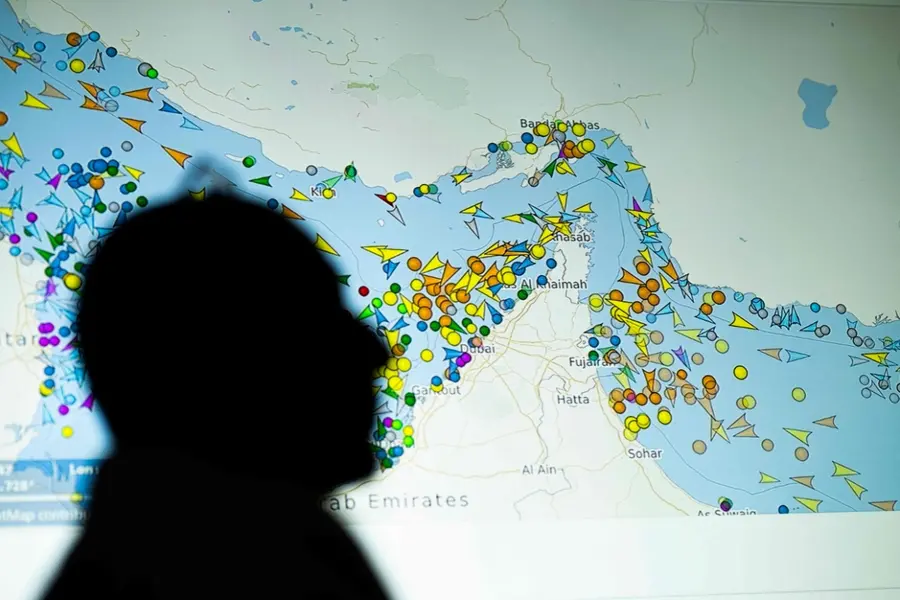
The standoff over the Strait of Hormuz is showing little sign of easing, with Iran refusing to lift its blockade while US President Donald Trump says Washington is deliberately taking a low-key approach to the confrontation.
Iran's Revolutionary Guards said on Sunday that the blockade would continue until the US accepts Tehran's conditions. Trump, meanwhile, has suggested that Washington is prepared to let economic pressure on Iran build rather than rush into a deal.
The conflicting positions leave the future of the crucial waterway uncertain, with shipping already badly disrupted and attacks on vessels continuing.
Iran refuses to back down
Iran's Supreme National Security Council set out a list of conditions for reopening the strait on Saturday, according to the Tasnim news agency.
The demands include an end to the war on all fronts, the lifting of a US counterblockade on Iranian ports, an end to sanctions, the release of frozen Iranian assets and compensation for wartime damage.
The Revolutionary Guards reinforced that position on Sunday, saying Iran would maintain the blockade until all its conditions were accepted.
“The strait is now actually a theatre of war for us and not just a waterway,” the Guards said.
Tehran also wants to retain control over the Strait of Hormuz after the war and has sought to charge tolls for vessels passing through it. Iranian forces have repeatedly attacked ships they accuse of trying to bypass their preferred route.
Trump says US is taking a different approach
While Iran is signalling that it will not reopen the waterway without its demands being met, Trump has indicated that the US is in no hurry to make a deal.
“We are low-keying it,” Trump said in an interview with Axios on Sunday when asked about Washington's approach to Iran.
“We are only semi-negotiating with them,” he was quoted as saying, pointing to Iran's inflation and financial difficulties.
“It will work out,” Trump added. “It's like a chess game.”
Iranian Foreign Minister Abbas Araghchi said separately on Sunday that Tehran was only exchanging messages with Washington through intermediaries, rather than holding direct negotiations.
Hormuz remains at the centre of the standoff
The confrontation has already had a direct impact on shipping through the Strait of Hormuz, one of the key routes for global energy supplies.
Traffic through the waterway has fallen sharply amid continuing attacks. At least one tanker was struck on Saturday, according to the UAE.
Oman has condemned the repeated attacks and warned that any action that threatens the ongoing negotiations could jeopardise efforts to reach an agreement over navigation through the strait.
Under the June memorandum, Iran and Oman were expected to discuss future arrangements for administering the waterway with other Gulf countries and in line with applicable international law.
Oman said negotiations on navigation arrangements were continuing, while Araghchi said discussions over the management of the strait were nearing their final stages.
The blockade is widening the regional pressure
The Hormuz confrontation is unfolding alongside a separate escalation involving Iran's Houthi allies in Yemen.
The Houthis announced on Sunday that they had struck a Saudi oil facility on the Red Sea coast. Saudi Arabia had earlier said it had extinguished a fire at the site.
In Yemen, a medical source in government-held Mokha said three civilians and eight military personnel were killed and 32 others wounded on Sunday. The civilian casualties were reported to have resulted from Houthi strikes on the city's port.
Houthi military spokesman Yahya Saree said the group had targeted Saudi troops and equipment in the area with missiles and drones.
Saudi Arabia moves to strengthen its defences
The widening conflict has also pushed Saudi Arabia towards new security arrangements.
The kingdom signed a joint defence agreement with Turkey and Pakistan on Friday. The agreement includes a NATO-style clause under which an attack on one country is considered an attack on all.
Turkey's Foreign Minister Hakan Fidan said on Saturday that he expected Egypt to join the agreement, describing it as a “natural partner” on regional issues.
Fidan said the agreement was not aimed at any particular country, while Pakistan's foreign ministry said it was intended to strengthen collective deterrence.
With AFP inputs
Published: 10 Aug 2026, 07:04 am IST
ABOUT THE AUTHOR

Disclaimer: Kindly avoid objectionable, derogatory, unlawful and lewd comments, while responding to reports. Such comments are punishable under cyber laws. Please keep away from personal attacks. The opinions expressed here are the personal opinions of readers and not that of Mathrubhumi.