
The DMRC has unveiled a comprehensive plan to add 24 extra train trips every Monday and scale up digital ticketing to motivate commuters to swap private vehicles for public transport.
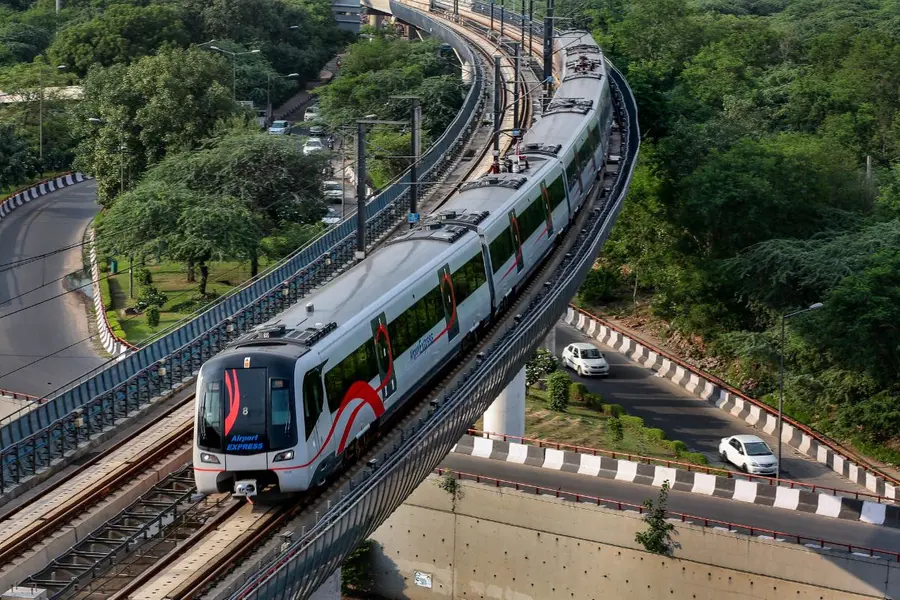
New Delhi: In a targeted push to encourage commuters to transition from personal vehicles to mass transit across the National Capital Region (NCR), the Delhi Metro Rail Corporation (DMRC) on Sunday announced a major strategy involving additional train deployments, enhanced security infrastructure, and optimised last-mile networks.
More Monday trips to tackle peak-hour rush
The DMRC detailed that starting Monday, May 18, it will implement 24 additional train trips by adding six extra trains into service specifically every Monday. The transit authority indicated that identical frequency expansions could be rolled out on other days of the week, contingent upon real-time commuter volume.
This targeted initiative aligns with a broader national focus on energy security, mitigating environmental impact, and lessening the reliance on fossil-fuel-dependent road transport. According to the corporation, the extra services will proactively accommodate a projected spike in ridership while guaranteeing seamless transit during high-congestion peak hours. Commuter trends will remain under continuous review to execute further service adjustments when necessary.
Crowd management and seamless interchanges
To accommodate larger passenger crowds, the DMRC is expanding its on-ground management by stationing extra security personnel, activating auxiliary ticketing counters, deploying backup baggage scanners and door-frame metal detectors, and working to lower waiting times at security checkpoints.
Emphasising the network’s structural role in regional transit integration, the DMRC noted that numerous metro stations provide direct interchanges with Indian Railways stations, interstate bus terminals (ISBTs), airport terminals, the Namo Bharat Regional Rapid Transit System (RRTS), Noida Metro, and Gurgaon's Rapid Metro. This multi-layered layout permits commuters to shift efficiently across different networks, decreasing the necessity for private cars.
Direct access to major commercial hubs
Furthermore, the metro provides critical access to primary commercial areas, Central Government offices, educational campuses, corporate sectors and tourist landmarks across Delhi-NCR. Major zones, including Connaught Place, Chandni Chowk, Cyber City, Hauz Khas, Nehru Place and major universities, are directly linked, smoothing the daily commute for professionals, students and visitors.
Strengthening last-mile feeder networks
Addressing last-mile infrastructure, the corporation highlighted that nearly 1,00,000 passengers currently utilise local transit options—including e-autos, e-rickshaws, bike taxis, app-based cabs and rental bicycles—across 160 stations daily. The corporate 'Saarthi App' works as a unified travel planner, enabling users to book both metro tokens and feeder services on a singular application.
The DMRC also noted that hydrogen-powered shuttle bus services, backed by Indian Oil Corporation Limited (IOCL), have debuted in the Central Vista zone to link metro stations directly with government office complexes. In addition, approximately 1,500 DEVI (Delhi Electric Vehicle Interchanges) electric feeder buses managed by the Delhi Transport Corporation (DTC) are operational across 52 metro stations, with plans to introduce more electric units progressively.
Smart parking and upgraded digital ticketing
To accommodate multi-mode commuters, the corporation continues to maintain "park and ride" facilities at 126 stations throughout Delhi-NCR. Furthermore, the DMRC has modernised its ticketing architecture, integrating QR-code systems, National Common Mobility Cards (NCMC), WhatsApp messaging tickets and payment integrations with platforms like Paytm, PhonePe, Amazon and IRCTC.
PTI
Published: 17 May 2026, 08:59 pm IST
Related Topics
Disclaimer: Kindly avoid objectionable, derogatory, unlawful and lewd comments, while responding to reports. Such comments are punishable under cyber laws. Please keep away from personal attacks. The opinions expressed here are the personal opinions of readers and not that of Mathrubhumi.
