
RSS chief Mohan Bhagwat has made remarks on Gen Z, LGBTQ+ communities, gender debates and social movements during an event in Hyderabad. His comments have renewed discussion around the Rashtriya Swayamsevak Sangh's ideology, its relationship with the BJP and its influence on Indian politics.
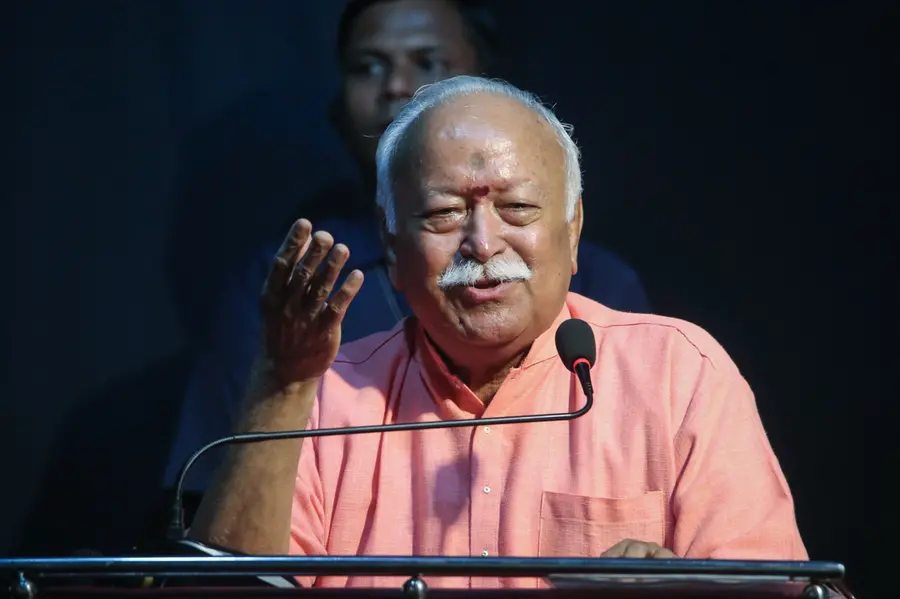
Hyderabad: Rashtriya Swayamsevak Sangh (RSS) chief Mohan Bhagwat on Sunday described Generation Z as adaptable and emotional but said young people often do not think with a "calm mind".
Speaking at an event in Hyderabad, Bhagwat said, "Gen Z is good, adaptable and emotional by nature. They do not think with a very calm mind. If what is in touch with them is visibly authentic, it appeals to them."
Also Read

Bhagwat said the younger generation is influenced by movements and ideas that appear genuine or relatable. His remarks came amid ongoing discussions about youth participation in social and political movements, including recent student protests over alleged examination irregularities.
Bhagwat's comments on women's liberation movement
During the event, Bhagwat also spoke about the women's liberation movement, referring to it as the "Stree Mukti Andolan". He claimed that some aspects of the movement led sections of society in the wrong direction.
"'Stree Mukti Andolan' started and gradually became widely accepted... So, a phase passed. After that, the proponents of that movement realised that we had stepped onto a wrong path and ruined a generation or two of our country," Bhagwat said.
The women's rights movement in India has historically focused on issues including equality, education, employment opportunities, political representation, protection from violence and legal rights. Bhagwat's remarks reflected his criticism of certain social changes associated with such movements.
Bhagwat's comments on LGBTQ+ communities
Bhagwat also addressed LGBTQ+ communities, saying they are part of Indian society and should not be excluded.
"LGBTQ+ and all these communities exist. Such tendencies are present in society. Some are innate, determined by nature itself; neither we nor they can do anything about it--that is simply how they were born. However, some are acquired later due to mindset, or arise from physical inclinations. Since this phenomenon exists worldwide, we cannot claim it was absent here; we are human too, and it existed among us as well. We made quiet arrangements for them," he said.
He added that such communities should have a place in society.
"They are not ostracised from society; there is a place for them within the vast tapestry of social life. We are taught not to view them with a sense of inferiority... Even today, we see that they have their own deities, shrines, and even Mahamandaleshwars who participate in the Kumbh Mela too. Rather than making unnecessary noise or fanfare about these matters, we handled them quietly to ensure society maintained a sympathetic attitude toward them. We made proper, discreet arrangements, recognising them as integral parts of our own society..." Bhagwat said.
His remarks came in the context of continuing debates in India over LGBTQ+ rights, social acceptance and legal recognition.
Bhagwat on gender equality debate
Bhagwat also commented on debates around whether men or women are superior.
"Like there is a discussion about who is superior, whether a man or a woman is superior. So naturally those who are in favour of men will say that men are superior. Those who are in favour of women say that women are superior. Now this is once again the dispute of superior and junior," he said.
He further added, "If we accept this, then all the questions arise--that if women are superior, then why should they remain as slaves in the family? Why accept a marriage that traps you in slavery? A woman can do everything--this is an illusion. It's not like that. A man can do everything--this is also an illusion. If something has to happen somewhere, it is necessary for men and women to be together."
What is the RSS?
The Rashtriya Swayamsevak Sangh (RSS) is a Hindu nationalist volunteer organisation founded in 1925 by Keshav Baliram Hedgewar in Nagpur.
The organisation describes itself as a cultural and social body working for national service, discipline and social unity. It operates through a network of local branches known as "shakhas", where members participate in physical training, discussions and social activities.
Critics, however, describe the RSS as an organisation promoting Hindutva, an ideology that views India primarily through the lens of Hindu cultural identity. Supporters of the RSS argue that Hindutva represents cultural nationalism rather than religious exclusion.
The RSS does not directly contest elections, but it has historically influenced several organisations and political movements in India.
RSS and BJP connection
The Bharatiya Janata Party (BJP), India's ruling political party, has historical links with the RSS. Many senior BJP leaders have had backgrounds in the RSS, including Prime Minister Narendra Modi, who was associated with the organisation before entering electoral politics.
The BJP was founded in 1980 and emerged from the political tradition of the Bharatiya Jana Sangh, which was established in 1951 by Syama Prasad Mukherjee with ideological support from the RSS.
While the BJP functions as an independent political party, the RSS is widely considered its ideological parent organisation. The relationship between the two has been described as one based on shared ideological roots, though the RSS does not formally control the BJP.
RSS ideology and Hindutva
A central concept associated with the RSS is Hindutva, a term popularised by Vinayak Damodar Savarkar in the early 20th century. Hindutva supporters describe it as a form of cultural nationalism based on India's civilisational heritage.
Critics argue that Hindutva politics can marginalise religious minorities by placing Hindu identity at the centre of national identity. The debate over Hindutva remains one of the most significant ideological discussions in Indian politics.
The RSS has maintained that its work focuses on cultural identity, social service and national unity, while opponents have raised concerns about its views on secularism, minority rights and social issues.
Context of Bhagwat's remarks
Bhagwat's comments came at a time when political debate has intensified around youth activism, social movements and student protests.
Recent student demonstrations led by the Cockroach Janata Party (CJP) gained national attention after climate activist Sonam Wangchuk joined the protest and went on a hunger strike at Jantar Mantar over alleged examination irregularities.
The protests escalated during the 'Sansad Chalo' march on July 20, when police reportedly used tear gas and lathi charges to disperse protesters moving towards Parliament. Opposition parties later criticised the government's handling of the demonstrations and demanded accountability.
Bhagwat's remarks on Gen Z, social movements and LGBTQ+ communities have added another layer to ongoing debates over changing social values, youth participation and India's political direction.
Published: 27 Jul 2026, 02:13 pm IST
ABOUT THE AUTHOR
Disclaimer: Kindly avoid objectionable, derogatory, unlawful and lewd comments, while responding to reports. Such comments are punishable under cyber laws. Please keep away from personal attacks. The opinions expressed here are the personal opinions of readers and not that of Mathrubhumi.