
UNESCO has added manuscripts of the Mahabharata, Arthashastra and Rajatarangini to its Asia-Pacific Memory of the World Register, taking India's tally to six.
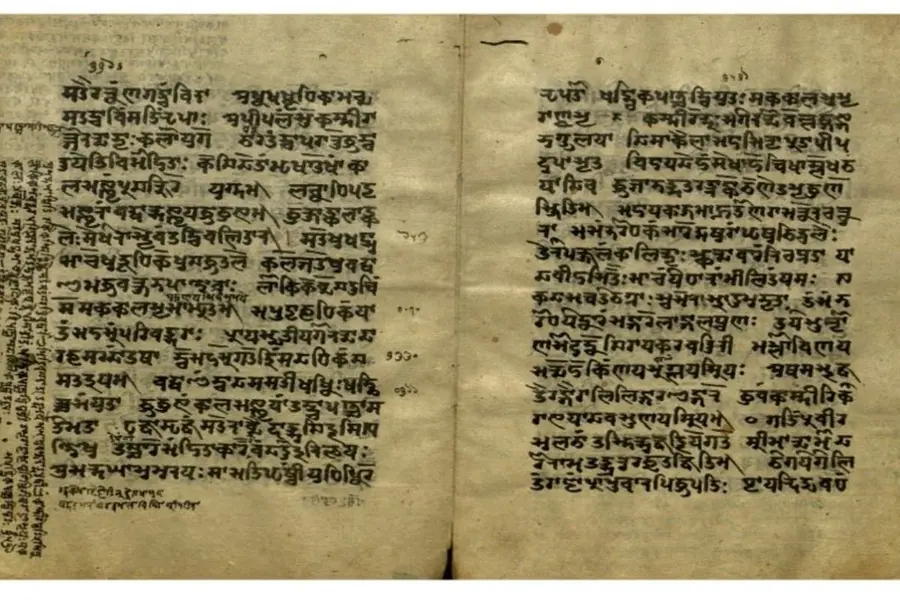
Three important works from India's literary, historical and political traditions have received international recognition, with manuscripts of the Mahabharata, Kautilya's Arthashastra and Kalhana's Rajatarangini being added to UNESCO's Memory of the World Asia-Pacific Regional Register.
The inscriptions place three significant records of India's intellectual heritage on a regional platform dedicated to preserving and recognising documentary heritage. With their inclusion, India's total number of entries in the UNESCO regional register has risen to six, officials said on Thursday.
The decision was taken at the 11th session of the Memory of the World Asia-Pacific Regional Register, held in Jakarta, Indonesia. The Indira Gandhi National Centre for the Arts (IGNCA) played an important role in preparing the nomination dossiers for all three manuscripts.
Which Indian manuscripts have received UNESCO recognition?
The three inscriptions represent different aspects of India's knowledge traditions, ranging from epic literature and historical writing to governance and statecraft.
1. Mahabharata manuscript
The recognised document is titled The Birch-bark (burjapatra) Manuscript of Mahabharata – A Perennial Epic of South Asia. It is housed at the Bhandarkar Oriental Research Institute in Pune.
The Mahabharata is one of India's most important epics, with a lasting influence on its literature, philosophy and cultural traditions.
2. Kautilya's Arthashastra
The second inscription is Kautilya's Arthashastra, Ancient Palm-leaf Manuscript on Governance and Statecraft. It is preserved at the Oriental Research Institute in Mysuru.
3. Kalhana's Rajatarangini
The third manuscript is The Manuscript of Rajatarangini by Kalhana: A Twelfth-century Chronicle of Kashmir. It is housed at the Oriental Research Library, Sri Pratap Singh Library Complex, in Srinagar.
Written by Kalhana in the 12th century, the Rajatarangini is a historical chronicle of Kashmir and an important source for understanding the region's past.
The latest additions follow the inscription of three other Indian manuscripts in the Asia-Pacific Regional Register in 2024.
These include illustrated manuscripts of Tulsidas' Ramcharitmanas, featuring intricate miniature paintings; a rare 15th-century manuscript of the Panchatantra, containing animal fables and moral stories; and the manuscript of Sahrdayaloka-Locana, a text on Indian poetics.
Together, the six inscriptions reflect the range of India's documentary heritage, covering literature, philosophy, history, ethics and political thought.
Union Culture Minister Gajendra Singh Shekhawat described the latest recognition as a landmark acknowledgement of India's documentary and civilisational heritage.
He said the three works represent traditions of historical inquiry, philosophical thought and statecraft, adding that their ideas continue to inspire people.
With PTI inputs
Published: 06 Nov 2026, 10:10 am IST


ABOUT THE AUTHOR

Related Topics
Disclaimer: Kindly avoid objectionable, derogatory, unlawful and lewd comments, while responding to reports. Such comments are punishable under cyber laws. Please keep away from personal attacks. The opinions expressed here are the personal opinions of readers and not that of Mathrubhumi.