
Manjhi became the 23rd Chief Minister of Bihar in 2014, after Nitish Kumar’s resignation.
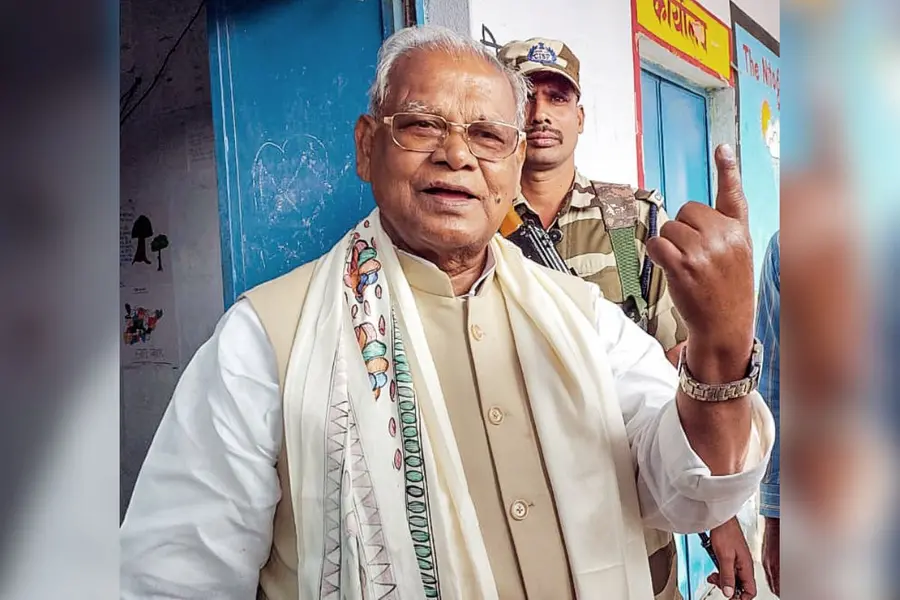
Patna: As the vote counting progresses, Deepa Manjhi, the daughter-in-law of Hindustani Awam Morcha (HAMS) leader and Union Minister Jitan Ram Manjhi, has clinched victory in the Imamganj constituency. She triumphed by a commanding margin of over 25,000 votes, defeating RJD's Ritu Priya Chaudhary.
Among the key figures in this political landscape is Jitan Ram Manjhi, a former Bihar Chief Minister who now leads his own party, the Hindustani Awam Morcha (HAM). HAM is currently an ally of the NDA, marking another chapter in Manjhi’s long and often controversial political career.
Also Read

Deepa Manjhi, his daughter-in-law, had emerged as the frontrunner in the initial trends from Imamganj, which has long been a stronghold of the HAM. She is contesting against Rashtriya Janata Dal (RJD) leader Ritu Priya Chaudhary and Dr Ajeet Kumar of Jan Suraaj Party (JSP). The Imamganj Assembly seat, located in Bihar’s Gaya district, is a Scheduled Caste (SC) reserved constituency and was part of the second phase of voting in the Bihar Assembly elections.
Jitan Ram Manjhi: A former ally, now a key NDA player
Once a confidant of Bihar's Chief Minister Nitish Kumar, Manjhi's political trajectory has been marked by dramatic shifts. He was the Chief Minister of Bihar from May 2014 to February 2015, stepping into the role after Nitish Kumar resigned following the JD(U)’s defeat in the 2014 Lok Sabha elections. However, Manjhi's tenure was brief and turbulent, ending when he refused to vacate the Chief Minister’s chair in favour of Kumar's return, leading to a floor test he was poised to lose. Manjhi resigned shortly after, bringing an end to a controversial chapter in Bihar’s politics.
Who is Jitan Ram Manjhi?
Born on October 6, 1944 in Gaya, Bihar, Jitan Ram Manjhi hails from the Musahar community, one of Bihar's Mahadalit groups, which have been historically marginalised. His early life was marked by hardship, and he has often shared stories of the extreme poverty his family endured, including surviving by eating rats during lean months. In one memorable interview, he remarked, “Even I am a rat-eater,” reflecting on his humble origins.
Manjhi graduated with a Bachelor’s degree from Magadh University and married Shanti Devi in 1974. His political career began in 1980 when he was elected as an MLA from the Fatehpur constituency in Gaya, contesting on a Congress ticket. Over the years, he has shifted allegiance across various parties, including the Janata Dal (1990-96), Rashtriya Janata Dal (RJD, 1997-2005), and Janata Dal (United) from 2005 to 2015.
A tumultuous political career
Manjhi served as a minister in Bihar under several chief ministers, including Chandrashekhar Singh, Satyendra Narayan Sinha, Jagannath Mishra, Lalu Prasad Yadav, Rabri Devi, and Nitish Kumar. His political fortunes peaked when he became the 23rd Chief Minister of Bihar in 2014, after Nitish Kumar’s resignation.
However, tensions with Nitish Kumar quickly escalated. When the JD(U) leadership asked him to step down and make way for Kumar’s return as Chief Minister, Manjhi initially refused, resulting in a public rift. As a result, he was ousted from the JD(U) in 2015, eventually founding the Hindustani Awam Morcha (Secular) or HAM(S). His party entered into an alliance with the BJP and LJP, but the results of the 2015 Bihar elections were less than favourable, with HAM securing just one seat.
Despite this setback, Manjhi's political journey continued. He later joined the RJD-led Mahagathbandhan (Grand Alliance) ahead of the 2019 Lok Sabha elections, but failed to secure a seat. By 2024, he made a return to the NDA fold and was elected to the 18th Lok Sabha. His political fortunes were further solidified when he was appointed Union Minister for Micro, Small, and Medium Enterprises (MSME).
Controversial statements
Manjhi’s political career has not been without controversy. In 2023, he made headlines by stating that Ravan was more knowledgeable in rituals than Lord Ram, and that the Ramayana was a work of fiction. The remark sparked outrage, particularly from the Aam Aadmi Party (AAP) and opposition leaders, and he later issued an apology.
In 2021, Manjhi also made waves by criticising the Satyanarayan Puja, claiming that Brahmins often refused to eat in Musahar homes and demanded cash instead of food. His outspoken views on caste, religion, and rituals have frequently put him at odds with traditionalists and religious groups. Notably, he has been a vocal critic of the caste system, once referring to "upper-caste" Hindus as "foreigners" in the context of their dominance over Hindu rituals.
Jitan Ram Manjhi’s journey from a tea vendor’s son to the leader of a political party allied with the NDA has been anything but conventional. While his political alignments and statements continue to spark debate, there is no doubt that he remains a significant figure in Bihar’s politics. As the NDA leads in the vote count, Manjhi’s role within the alliance seems poised for further prominence. However, whether his controversial statements and shifting loyalties will ultimately serve or hinder his political future remains to be seen.
Published: 14 Nov 2025, 09:54 am IST
Disclaimer: Kindly avoid objectionable, derogatory, unlawful and lewd comments, while responding to reports. Such comments are punishable under cyber laws. Please keep away from personal attacks. The opinions expressed here are the personal opinions of readers and not that of Mathrubhumi.