
Muay Thai, known as the 'Art of Eight Limbs', has evolved from an ancient battlefield combat technique into one of the world's most popular fitness disciplines.
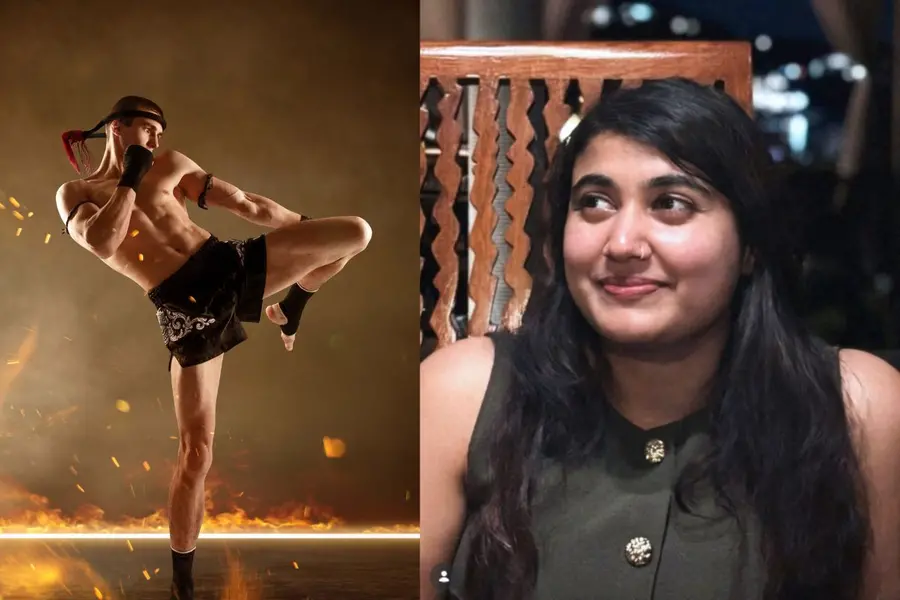
Vismaya Mohanlal's acting debut in ‘Thudakkam’ has put the spotlight on a journey that began far away from cinema. Years before stepping in front of the camera, the daughter of Malayalam superstar Mohanlal found herself in a Muay Thai training camp in Thailand, where an unexpected holiday turned into a life-changing experience.
The actress has often spoken about arriving in Thailand without any intention of losing weight. Instead, she stumbled upon Muay Thai while staying in Koh Samui, eventually spending months learning a martial art that transformed her physical fitness, mental discipline and outlook on life.
Muay Thai, an ancient combat sport that has evolved from the battlefields of old Siam into one of the world's fastest-growing fitness disciplines.
Today, Muay Thai is no longer confined to professional fighters. From Hollywood celebrities and athletes to office workers looking for an alternative to the gym, millions are embracing the centuries-old martial art for its ability to improve strength, endurance and mental resilience.
From war to world sport: The origins of Muay Thai
Muay Thai traces its roots back several centuries to the former Kingdom of Siam, present-day Thailand. Historians and the International Federation of Muaythai Associations (IFMA) say the martial art evolved from military combat techniques used by Siamese warriors when weapons were lost during battle.
Soldiers trained to use every part of their body as a weapon, allowing them to fight effectively at close range. Over generations, these battlefield techniques gradually transformed into an organised martial art that became deeply woven into Thai culture.
The sport gained prominence during the Ayutthaya Kingdom (1351-1767), when organised competitions became common. Fighters competed during temple festivals and royal celebrations, helping preserve Muay Thai as both a cultural tradition and a national sport.
Today, Muay Thai is recognised as one of Thailand's most important cultural exports, with professional competitions held across Europe, North America, Australia and Asia.
Why is it called the 'Art of Eight Limbs'?
Unlike boxing, which relies on punches, or kickboxing, which focuses mainly on fists and feet, Muay Thai employs eight points of contact.
Practitioners strike using:
- Two fists
- Two elbows
- Two knees
- Two shins
These eight striking weapons allow fighters to attack from multiple angles while also using clinching techniques, sweeps and defensive movements.
Because nearly every major muscle group is engaged during training, Muay Thai is often described by sports scientists as one of the most complete full-body workouts.
Why Muay Thai has become a global fitness trend
Over the past two decades, Muay Thai gyms have expanded far beyond Thailand.
Fitness experts say the discipline appeals to beginners and experienced athletes alike because it combines cardiovascular exercise, strength training, flexibility and coordination in a single session.
A typical class may include:
- Skipping and warm-up drills
- Shadow boxing
- Pad work with trainers
- Heavy bag sessions
- Bodyweight conditioning
- Core exercises
- Controlled sparring
- Stretching and recovery
Unlike repetitive treadmill workouts, every session involves changing combinations and movements, making the training physically demanding while keeping participants mentally engaged.
According to the American College of Sports Medicine, exercises that combine aerobic and resistance-based movements help improve cardiovascular health, muscular endurance and overall functional fitness.
Can Muay Thai help with weight loss?
One reason Muay Thai has become popular outside competitive sport is its reputation as an effective calorie-burning workout.
Sports medicine experts note that a high-intensity Muay Thai session can expend significant energy depending on intensity, duration, body weight and training level. The sport also builds lean muscle mass, which contributes to higher energy expenditure over time.
However, experts caution that lasting weight loss depends on a combination of regular exercise, balanced nutrition and adequate recovery rather than any single activity.
Vismaya's own experience reflects this broader perspective.
Speaking to Galatta Plus, she recalled struggling with everyday movement before beginning her training.
"It was one of the best experiences of my life. At that time, I was not fit at all. I believe fitness and body weight are two different things. A person can weigh 98 kg and still be fit. But when I weighed nearly 100 kg, I struggled even to climb stairs. I would get breathless, and my friends would ask me, 'Why are you panting so much?'"
A workout that challenges the mind as much as the body
While Muay Thai is known for its physical intensity, researchers increasingly point to its psychological benefits.
Sports psychology studies suggest that martial arts training can improve concentration, emotional regulation, confidence and resilience through repetitive skill development and disciplined practice.
The need to react quickly, maintain balance and execute combinations demands complete mental focus, leaving little room for distractions.
That immersive quality is exactly what Vismaya experienced during training.
"Whether it's art or martial arts, there's something special about them. When you're doing it, every other thought disappears. You can focus only on the task in front of you. For one hour, all you think about are punches, kicks and training. It transforms your mind as well."
The unexpected journey that changed everything
Vismaya's introduction to Muay Thai was entirely accidental.
She travelled to Thailand simply to explore a new destination and enrolled at FitKoh in Koh Samui out of curiosity.
"That's when I went to Thailand. I thought I'd try something new there, so I started Muay Thai training at FitKoh in Koh Samui. Initially, I didn't like it at all. I felt it was extremely difficult."
When the COVID-19 pandemic disrupted travel, she remained in Thailand much longer than expected.
That extended stay gave her the opportunity to continue training until the sport became part of her daily routine.
"Then COVID happened, and I stayed there instead of returning home. That's when I truly started enjoying the training."
The lesson that stayed with her
For Vismaya, the biggest takeaway had little to do with punches or kicks.
Instead, it came from a trainer who refused to let her stop before finishing a drill.
"If my trainer asked me to do 10 kicks, I would stop after nine. He would tell me, 'You always stop just before the last one. Just do one more kick.' Then he would make me do another 30 kicks. That experience taught me to finish whatever I start. I'll always be grateful for that. Now I absolutely love Muay Thai."
That lesson, she says, has shaped her approach beyond the training ground.
A martial art finding new relevance
Muay Thai has travelled a remarkable distance from the battlefields of ancient Siam.
Today it is taught in boutique fitness studios, community gyms and professional academies around the world. Some train to compete, others to improve fitness, relieve stress or learn self-defence.
Published: 07 Aug 2026, 03:41 pm IST
ABOUT THE AUTHOR

Related Topics
Disclaimer: Kindly avoid objectionable, derogatory, unlawful and lewd comments, while responding to reports. Such comments are punishable under cyber laws. Please keep away from personal attacks. The opinions expressed here are the personal opinions of readers and not that of Mathrubhumi.