
The viral 'cortisol face' trend has people blaming their hormones for facial puffiness
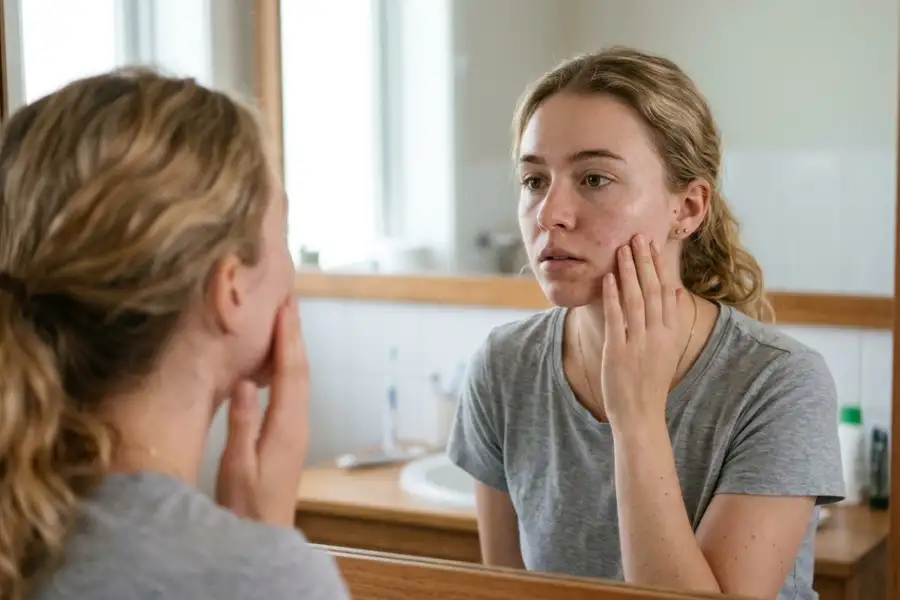
You’ll find her when you open Instagram. She will be tapping her cheeks and calling it “cortisol face”. Stress did this, she says. Sort out your hormones and the puffiness will go. She even has a pink drink for it.
Plenty of us have watched that video, and plenty are now peering at their own reflections and wondering: Is stress really rearranging our faces?
We took the question to Dr Gurusangappa S Mudagall, Consultant, Diabetes and Endocrinology, Manipal Hospital Electronics City.
So why is it getting blamed for a round face?
There is a kernel of truth, and the videos have run with it. “Prolonged, excessive cortisol exposure, as seen in Cushing’s syndrome, can cause fat redistribution, including increased facial puffiness. But an ordinary stress-related cortisol rise does not cause this kind of structural facial change.” he explains.
Is “cortisol face” a real diagnosis?
“It is largely a social media term, not a recognised medical diagnosis,” says Dr Mudagall. People use it for any face that looks rounder or puffier than usual, and they pin it on stress.
Doctors do have a name for a truly rounded face caused by too much cortisol: ‘moon face’. It sounds like a cousin of the trend, but it comes from somewhere else entirely. “These two should not be confused because their underlying causes are very different.”
Moon face does not always point to a faulty gland. Doctors in other countries note that it is a well-known side effect of taking steroid tablets for a long time, say for asthma or arthritis.
"During fight-or-flight, cortisol rises temporarily to help the body respond to a perceived threat," says Dr Mudagall. "Once the stressor passes, levels generally return towards normal."
In Cushing's syndrome, the alarm never switches off. "Cortisol exposure is excessive and prolonged, sometimes over months or even years. This sustained exposure affects fat metabolism and distribution, producing characteristic facial rounding along with other changes, such as central weight gain, muscle weakness, and easy bruising."
So the face is rarely the only clue. Doctors also look for pink or purple stretch marks, a fatty lump between the shoulder blades, thin skin and tired muscles. A round face on its own tells you very little.
What is probably making your face puffy
"Chronic psychological stress can affect cortisol regulation, sleep, appetite, and metabolism," says Dr Mudagall.
"However, current evidence does not establish that everyday psychological stress alone raises cortisol sufficiently to cause the characteristic facial fat redistribution seen in Cushing's syndrome."
That does not mean stress leaves your face alone. It simply works in a roundabout way. "Stress may indirectly affect someone's appearance through poor sleep, dietary changes, and fluid retention, but that is different from developing a cortisol-related moon face."
The usual suspects
Dr Mudagall starts with the ordinary suspects. "A high sodium meal, particularly late-night takeout, can temporarily increase fluid retention. Sleep deprivation can make the eyes look swollen and dark circles more prominent. Dehydration, allergies, hormonal fluctuations can also contribute."
Also Read: Warning signs your cortisol is too high
Then there is the jaw. Many people clench or grind their teeth when they are anxious, and they do not notice it.
"Jaw clenching may enlarge the masseter muscles over time, changing the lower face contour," he says. "These explanations are often more plausible than cortisol excess."
Other doctors add a few more to the list: alcohol, some medicines, thyroid trouble and kidney problems. A bag of masala chips at midnight and a poor night's sleep can do more to your face than any hormone.
Where stress does show: your skin
Here the trend is on firmer ground. Your face may not turn into a moon, but your skin does notice a hard year.
“There is evidence suggesting that chronic psychological stress can negatively affect skin health,” says Dr Mudagall. “Stress-related hormonal pathways may increase oxidative stress, impair the skin barrier, interfere with wound healing, and influence collagen and elastin production. This may contribute to changes in skin texture and premature ageing.” Dermatologists abroad add that stress hormones can make the oil glands busier, which is bad news for clogged pores and spots.
Skin ageing has many causes, including genes, sun, food, smoking and simply getting older. Stress is one voice in a crowded room, not the only one.
Dark circles, spots and dull skin
Social media loves these as proof of high cortisol. Dr Mudagall does not.
“No, these are not reliable indicators of elevated cortisol,” he says.
Dark circles often run in families, or come from pigment, allergies or short nights. Spots have plenty of triggers, hormones and inflammation among them. Redness can be rosacea, irritation or weather. Dull skin can simply mean dehydration and too little sleep.
“None of these symptoms, individually or together, can establish that someone has high cortisol.”
The twist: high cortisol, ordinary face
The reverse is also true, and it is the part people miss. A round face does not prove high cortisol. A normal face does not rule it out.
“Cortisol levels and facial appearance do not have a direct, predictable relationship,” Dr Mudagall says. “Someone may experience elevated cortisol without developing any visual facial changes. Even in Cushing’s syndrome, symptoms vary between individuals. Diagnosis depends on clinical picture and appropriate biochemical testing, not simply how someone’s face looks.”
So how do doctors find out?
“A routine blood cortisol test is not sufficient to diagnose Cushing’s syndrome,” says Dr Mudagall. “Cortisol naturally fluctuates throughout the day and can rise with stress.”
Doctors usually pick from three screening tests: two late-night salivary cortisol measurements, at least two 24-hour urine free cortisol measurements, or an overnight low-dose dexamethasone suppression test. An endocrinologist reads the results and may order more tests to confirm.
The mocktail problem
Now to the pink drink. Recipes built on magnesium, tart cherry juice and coconut water are sold as a cure for "cortisol face". Ashwagandha, a herb used in Ayurveda, is promoted in the same breath.
"The biggest danger is treating an assumed hormonal problem without establishing that one exists. There is no good clinical evidence that cortisol mocktails reverse facial puffiness or treat excess cortisol."
Also Read: Can the viral ‘cortisol cocktail’ really lower stress? Here's what to know
Ashwagandha deserves extra care. "It has some limited evidence for stress and sleep, but it can cause gastrointestinal problems, affect thyroid function, and rarely cause liver injury. It can also interact with medications."
So, these products should never replace a proper medical assessment.
Doctors who have commented on the trend overseas say much the same. There is no quick fix for cortisol, and steady sleep, regular movement and ways to wind down do more than anything in a glass.
Gua sha, ice rollers and a good face massage
They look lovely, and they do a little something. “These techniques may temporarily reduce mild facial puffiness by moving superficial fluid and improving the appearance of swelling,” says Dr Mudagall.
“Cold rollers can also temporarily reduce swelling through their cooling effect. But there is insufficient evidence that gua sha or facial massage can reduce facial fat or correct cortisol-related fat redistribution. These are cosmetic measures, not treatment for hormonal disorders.”
And if it is Cushing’s, does the face come back?
“In many cases, yes,” says Dr Mudagall
“When the underlying cause of Cushing’s syndrome is successfully treated, facial fullness gradually improves as excess fat distribution normalises.”
It takes patience. “Recovery is not immediate. It can take several months, sometimes longer than a year, and the extent of recovery varies between individuals. The important thing is to treat the underlying hormonal condition rather than trying to treat the face alone.”
Published: 14 Nov 2026, 04:04 pm IST


ABOUT THE AUTHOR

Related Topics
Disclaimer: Kindly avoid objectionable, derogatory, unlawful and lewd comments, while responding to reports. Such comments are punishable under cyber laws. Please keep away from personal attacks. The opinions expressed here are the personal opinions of readers and not that of Mathrubhumi.