
In this interview with Mathrubhumi, LYTE Aviation CEO and Founder Freshta Farzam explains how SkyClinic – an advanced eVTOL‑based airborne medical platform – aims to deliver operating‑room‑level care directly to patients, even in remote villages and disaster zones.
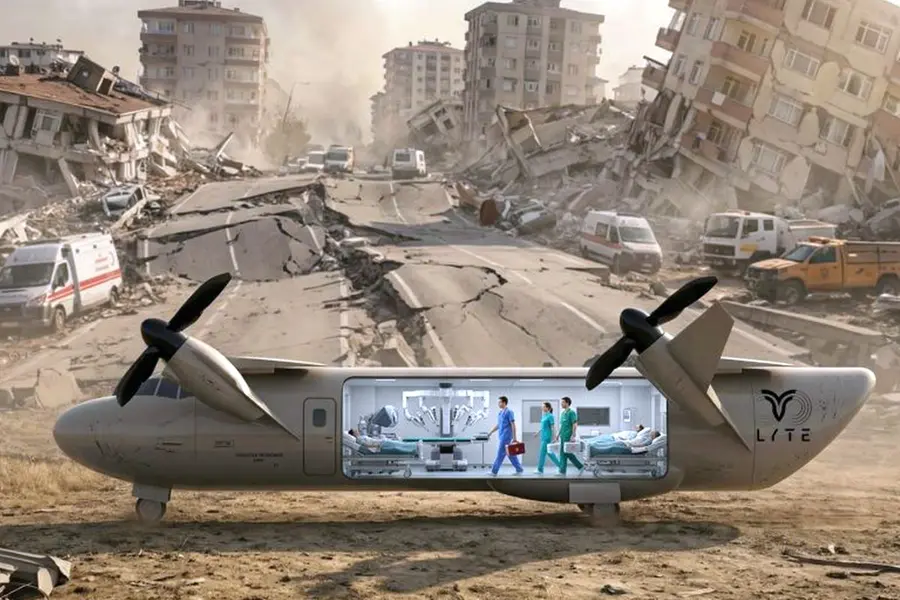
In a country like India, where timely access to healthcare can often mean the difference between life and death, the idea of a 'flying hospital' is both powerful and deeply relevant. With challenges such as traffic congestion, remote geographies, and limited medical infrastructure in many regions, emergency care is not always within reach.
In this conversation with Mathrubhumi, LYTE Aviation CEO & Founder Freshta Farzam shares her views on how SkyClinic, an innovative airborne medical platform aims to bridge this gap by bringing advanced medical care directly to patients.
From speed and accessibility to affordability and long-term vision, she explains how this futuristic concept could transform the way healthcare is delivered, especially in underserved areas. Read on...
In simple terms, what is a "flying hospital" and how will it help ordinary people?
A flying hospital is a fully equipped flying eVTOL that can land at your doorstep or anywhere on a 50m x 50m landing field. It will help ordinary people to gain finally access to surgeries and hospitals. Billions of people don't even have any access to hospitals
How quickly can SkyClinic reach a patient compared to a regular ambulance?
We fly with 300km/h speed and cover a 1000km range... especially roads with bad or non-existent infrastructure, where ambulances can’t even reach or hard to reach, we are much faster than 50km/h speed and broken ground infrastructure
Can this flying hospital really work in crowded cities or remote villages in India?
Absolutely! Yes! It can and it will work in remote cities first in India, as that is where the biggest pain point is. But also in disaster zones, earthquakes, hurricanes etc leave broken infrastructure behind (runways, hospitals or even roads that cut off roads to hospitals) and that is where our SkyClinic is in high demand by governments in particular.
Will treatment on SkyClinic be affordable for common people?
That is the long-term goal, yes. Affordability for common people. That's why we reduced the seat price of our SkyBus also to $39 compared to other eVTOLs' $200, because I believe that quick and easy access to abundance and health should not require a high price.
But on the other hand, yes, we need to be realistic that for the next decade until we get our aircraft certified and operated as the new normal and the robotics and remote surgery equipment also advances even further; to become more affordable, initial investments will be high but the revenues will also be tremendous for operators.
If we get governments to subsidize surgeries in our SkyClinic, that's when we easily can get affordable access to common people and all my conversations with our partners are focused on the wellbeing and impact on human lives and our planet. So yes, we are absolutely targeting affordability, for our industry partners, for our business customers but also our end consumers as OEM.

Currently we have looked with our partners into multiple solutions that can be handled on board, basically whatever you can do in a Operation Room or Emergency Room shall be offered on our SkyClinic. That's why we chose a hybrid solution, manually operating with surgeons on board and also give robotics arms the opportunity to connect with worldwide top surgeons in that instant who operate remotely on a heart, on a lung, on legs or on arms.
Anything that can decrease disabilities and deaths, should be considered for disaster zones and anything that’s most commonly required on a day-to-day basis for rural areas in developing or even developed countries.
When can people in India expect to actually see SkyClinic in action?
People in India can expect in the next 7-8 years realistically, 5-6 years optimistically, to have our first Sky Clinics being distributed in India by VMan Aviation and operating in certain regions.
How will this help reduce deaths caused by delays in reaching hospitals?
Great question... imagine during an earthquake people running for their lives, some stuck underneath heavy materials and suddenly they can't breathe because a metal piece stabbed through their lungs. If a hospital is nearby that person can be saved immediately in a surgery on our SkyClinic that lands a few meters at the next possible landing field, and saves that life... while the rest of ambulances try to first collect the injured people to then drive them, if lucky to even get through the broken streets, and until they reach the maybe available hospital that person has died already. Also in common scenarios, the way from highway crash and injury to surgery takes usually hours while our SkyClinic can be flown in within minutes, and operate right there and then. No delays.
Also Read: Will the US Navy scrap its most high‑tech aircraft carrier?
Published: 23 Apr 2026, 12:22 pm IST
Related Topics
Disclaimer: Kindly avoid objectionable, derogatory, unlawful and lewd comments, while responding to reports. Such comments are punishable under cyber laws. Please keep away from personal attacks. The opinions expressed here are the personal opinions of readers and not that of Mathrubhumi.