
Back in Venice's Orizzonti competition with 'Lovers in the Blue Night', filmmaker Anuparna Roy speaks to Mathrubhumi about migration, identity, Mumbai, political realities, and why no government can stop her from making films.
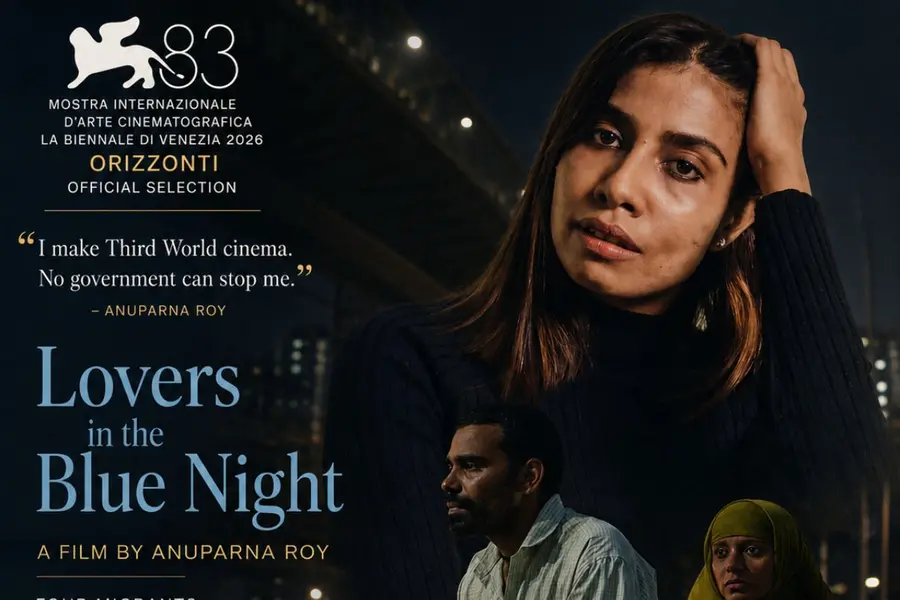
After scripting history last year as the first Indian filmmaker to win the Orizzonti Best Director award for 'Songs of Forgotten Trees', filmmaker Anuparna Roy is returning to the prestigious Venice Film Festival's Orizzonti competition with her second feature, 'Lovers in the Blue Night'.
Set against Mumbai's restless nights, the film follows four migrants: A closeted gay husband, his wife who works in a bar, a thief, and a pimp, whose lives intersect through love, desire, survival, and identity.
Speaking to Mathrubhumi, Roy opened up about the pressure of following up a historic debut, the politics shaping contemporary India, her deeply personal relationship with Mumbai and why she refuses to let labels define cinema.
Asked whether she felt the burden of expectations after her Venice triumph, Roy admitted the pressure was real, but not because of awards.
'I definitely felt the pressure, but it wasn't about winning again or getting selected at another festival. My only pressure is how to do better than whatever I did last. That has always been with me, even before ‘Songs of Forgotten Trees’. I want to make better Indian films, break the monotony of our cinema and write stories rooted in realism and social politics.'
Her latest film centres on characters often pushed to the margins of society. Roy says the intention was never to seek sympathy for them.
'I'm not emphasising their poverty or asking people to sympathise with them. I'm only expecting a little empathy for four human beings trying to pursue their desires. Seeing a man who kills rats for a living kiss another man, despite where society places him, is a revolution for me. All four characters are driven by love, longing and the search for acceptance.'
While Mumbai has been portrayed countless times on screen, Roy's city is marked less by its skyline than by loneliness.
Beauty comes with pain and loneliness, she said. ‘I stay with my characters more than I stay with the city's physical landscape. Bombay naturally enters the film because it is such a powerful character, but emotionally, it represents everything to me. After my first heartbreak, I moved here, found a job within a month and wrote ‘Songs of Forgotten Trees’ inside the very apartment where we later shot the film,' Roy added.
Language, too, plays a crucial role in 'Lovers in the Blue Night', which blends Hindi, Sylheti Bengali and Marathi.
Speaking on this palette the director said that people come to Mumbai from every corner of India, speaking different languages, but their struggles remain the same.
‘They are all looking for love, acceptance and identity. I don't believe in the divisions between mainstream and independent cinema. Cinema is driven by a good story. I tell young filmmakers not to get trapped in industry politics. Just write a film. The rest will follow,' she explained.
Roy also believes survival often forces people to compromise emotionally, but says her film deliberately shifts the focus elsewhere.
'I wasn't interested in emphasising survival because audiences already understand that struggle. I wanted to question desire instead. My characters are chasing love, identity and belonging. Society itself is performative, and everyone is searching for a place within it.'
The conversation inevitably turned political. Roy did not mince words while reflecting on the current climate.
'I think the current government and political climate are trying to break the spine of filmmakers. But no government can stop me from making Third World cinema. I don't need their support, appreciation or criticism. Whatever is happening with students is pathetic and inhuman, and I stand with the students. If needed, I'll make another film about them.'
Ending on a deeply introspective note, Roy described herself as 'a selfish director' for telling stories of marginalised communities despite coming from a privileged background.
'I criticise myself before anyone else does. Of course I fear someone telling me, "This isn't my truth." I seek validation like every filmmaker does. But my biggest fear isn't criticism. It's whether I'm writing something better than what I wrote last year.'
Published: 02 Aug 2026, 02:09 pm IST
ABOUT THE AUTHOR

Related Topics
Disclaimer: Kindly avoid objectionable, derogatory, unlawful and lewd comments, while responding to reports. Such comments are punishable under cyber laws. Please keep away from personal attacks. The opinions expressed here are the personal opinions of readers and not that of Mathrubhumi.