
The question of the Ford‑class's future hangs in the balance -- caught between the demands of battle‑proven performance, the sting of congressional cost‑cutters, and the unpredictable politics of the Trump administration.
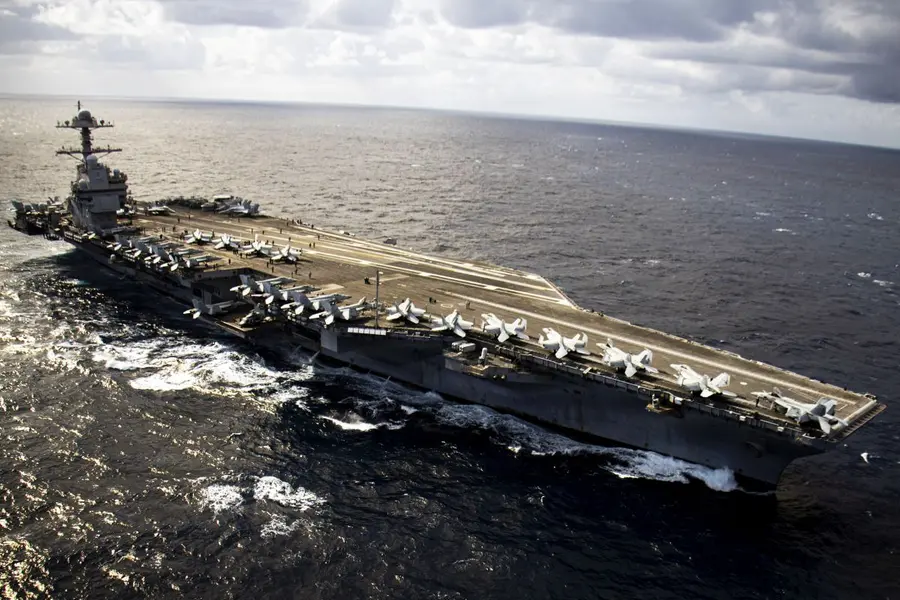
The US Navy is conducting a high‑stakes review of its most advanced and expensive warship class -- the Ford‑class nuclear aircraft carrier -- casting doubt over whether future versions of the design will be built at all.
Navy Secretary John Phelan told media persons on Tuesday that the assessment, due for completion next month, is a "prudent and practical" overhaul aimed squarely at the carriers' ballooning costs and the complex web of systems embedded in their design.
Also Read: Inside the world's toughest nuclear cleanup mission ever
Phelan declined to guarantee the Ford's long‑term production line, saying only that the service "will have carriers" but stressing that it is "too early to say" whether new Ford‑class hulls will be ordered. The review is being framed as a data‑driven check on the class's advertised superiority over the older Nimitz‑class carriers, particularly in the way Ford‑class ships launch and recover aircraft at sea.
Trump's long‑running criticism
The examination comes after years of public criticism from President Donald Trump, who has repeatedly attacked the Ford‑class carriers as over‑engineered and unreliable.
Last year, in Oval Office remarks, Trump singled out the ship's electromagnetic aircraft launch system (EMALS), a magnetic catapult that replaces steam‑powered catapults on older carriers, calling the technology flawed and claiming it "did not work".
Phelan's review is, in part, a response to those concerns. He told reporters he follows the "Ronald Reagan school of trust but verify", adding that the Navy will scrutinise data on how quickly the Ford‑class can launch and recover aircraft, whether the EMALS works as intended, and whether the savings in maintenance and fresh‑water consumption justify the upfront cost.
Battle‑proven but budget‑strapped
The lead ship of the class, the USS Gerald R Ford, has been at sea for a record‑setting deployment of more than 300 days since June 2025. During that time, the world's largest aircraft carrier has served as the centerpiece of two major military operations under the Trump administration: the capture of Venezuelan leader Nicolas Maduro and the war against Iran.
Also Read: HAL's golden ticket: Forging Russia's Sukhoi-57 Felon stealth fighter at home
Navy officials have pointed to this operational record as evidence that the Ford‑class is "battle‑proven" and capable of generating more sorties at a faster rate than the Nimitz‑class carriers. They argue that Ford‑class designs offer greater combat power and the ability to sustain high‑tempo global strike operations across three different regions.
Yet the Navy's own budget documents, released Tuesday, sidestepped the Ford‑class label. Where other vessel types -- such as the Columbia‑class submarines and Arleigh Burke‑class destroyers -- are listed by class name, the carrier section simply refers to "aircraft carrier", without specifying Ford‑class construction. That omission has fed speculation that the Navy may be preparing to shift course or freeze the Ford‑class line while the review runs its course.
Magnetic catapults: Promise and pressure
Central to the Ford‑class's edge are its electromagnetic catapults, which give the ships a decisive advantage over older Nimitz‑class carriers in launching aircraft.
EMALS reduces stress on airframes, slashes maintenance work, and requires far less fresh water than steam catapults, which traditionally drew large volumes from the ship's water‑purification systems.
However, the technology has also been a lightning rod for controversy. Critics, including Trump, have argued that EMALS has underperformed in real‑world use, prompting questions about whether the complexity and cost of the system are worth the gains.
Phelan's review is expected to weigh those technical and operational questions alongside the ship's long‑term affordability and its role in the Navy's broader fleet‑mix strategy.
Three more Ford‑class carriers in the pipeline
The Navy is currently building three additional Ford‑class carriers: the USS John F Kennedy, the USS Enterprise, and the USS Dorie Miller. These ships are already under contract, so they are unlikely to be affected by the current review.
The examination is instead focused on two planned but not yet contracted hulls: the USS William Jefferson Clinton and the USS George W Bush, both named during the Biden administration. Canceling or delaying these vessels would allow the Navy to redirect funds toward other priorities, including undersea warfare (Columbia‑class submarines) and surface‑combatant programs, even as it maintains the core of its carrier fleet.
Trump's $17‑billion 'battleship' alternative
As the Navy re‑examines the Ford‑class, President Trump has pushed an alternative vision: a new "Trump‑class" battleship he has unveiled as a heavily armed, nuclear‑capable warship. The first ship of the class, the USS Defiant, is projected to cost more than $17 billion -- roughly $4 billion more than a Ford‑class carrier.
Also Read: Trump's absurd Strait stunt
The Navy has signaled that it does not plan to fund the first Trump‑class vessel until the 2028 budget cycle, underscoring the experimental and long‑term nature of the project.
Phelan told reporters the current price tag is only an "early initial estimate", and he expects the cost to fall as the design matures and economies of scale kick in. He also said the Navy has not ruled out nuclear propulsion for the Trump‑class, which would significantly raise complexity and expense.
What the review could mean for the future
The Ford‑class review is not just a technical audit; it is a political and strategic pivot point. The Navy must decide whether the extra sortie rate, electronic modernisation, and reduced manpower demands of the Ford‑class justify its multi‑billion‑dollar price tag in an era of tightening defence budgets and rising great‑power competition.
If the review concludes that the Ford‑class is too costly or too reliant on unproven systems, the Navy could slow production, redirect funds to other platforms, or even pivot to an entirely new carrier design. Conversely, if the data shows that Ford‑class carriers are delivering the promised combat edge, the Navy may be able to push back against political pressure and preserve the class as the backbone of the carrier fleet for decades to come.
Published: 22 Apr 2026, 09:49 am IST
Related Topics
Disclaimer: Kindly avoid objectionable, derogatory, unlawful and lewd comments, while responding to reports. Such comments are punishable under cyber laws. Please keep away from personal attacks. The opinions expressed here are the personal opinions of readers and not that of Mathrubhumi.
