
On 13 April 2025, Kurnool in Andhra Pradesh witnessed a major moment in India's defense journey. Dr Samir V Kamat, chairman of the Defence Research and Development Organisation, addressed a gathering that was full of excitement and pride. The spotlight was on the live demonstration of a powerful 30-kilowatt laser weapon system capable of destroying enemy aircraft, missiles, and swarms of drones in mid-air. This wasn't just a show of strength. It was a clear signal that India is stepping boldly into the future of warfare.
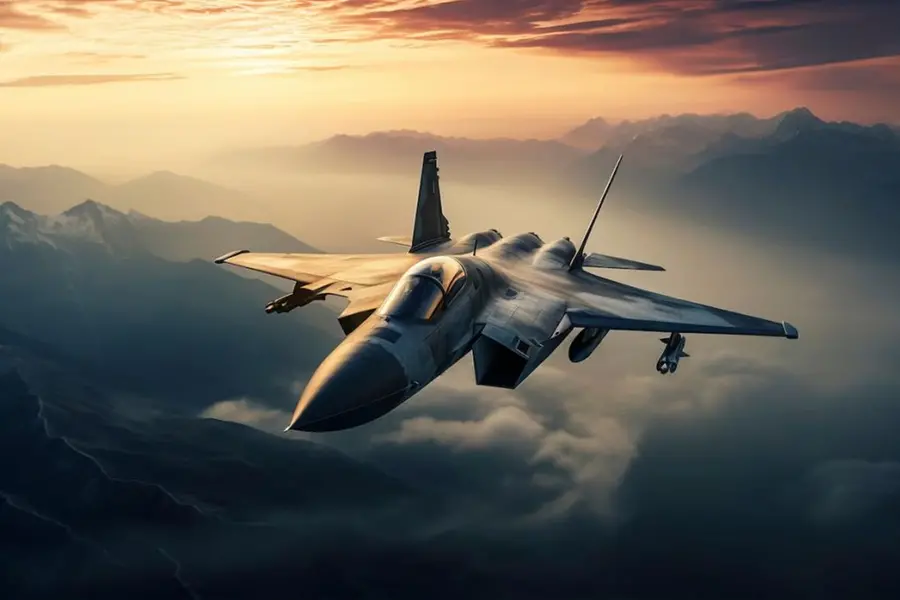
Taking advantage of this occasion, Dr Kamat unveiled India’s roadmap for the AMCA (Advanced Medium Combat Aircraft), the country's first fifth-generation stealth fighter jet, which is expected to be ready for delivery by 2035. But more importantly, he shared something even more ambitious: India's decision to move towards developing sixth-generation aircraft, which could completely change the face of aerial combat.
Also Read

According to Kamat, the AMCA is an important step, but not the final one. "Developing a fighter jet from scratch takes 10 to 15 years anywhere in the world," he said, reminding the audience that the AMCA project got the green light only in 2024. However, what caught even more attention was his focus on engine development.
He recalled the tough lessons learned from the Kaveri engine program -- a previous effort that aimed to build a fourth-generation engine. Now, with technology evolving rapidly, India plans to work with an international partner -- an Original Equipment Manufacturer (OEM) -- to build a more advanced engine.
"Today's technology has moved to sixth generation," Kamat pointed out, hinting that the new engine could not only power the AMCA but also a future jet that could stand shoulder-to-shoulder with the best in the world. He also suggested that there would be "good news" soon, which may indicate that a deal is near.
What makes a sixth-generation jet so special?
Sixth-generation fighter aircraft are not just upgrades—they represent a whole new category of airpower. These jets go far beyond the conventional, combining futuristic technologies that once seemed like science fiction.
Here is what defines them:
Hypersonic Speed: These jets can fly faster than Mach 5, making them nearly impossible to chase or intercept.
AI-Driven Combat: Onboard artificial intelligence helps pilots respond to threats quickly, make split-second decisions, and even handle some tasks without human input.
Total Connectivity: These aircraft work in sync with drones, satellites, and ground units, acting like a command hub in the sky. They can coordinate drone swarms or even control laser weapons.
Laser and Microwave Weapons: They use advanced energy-based weapons -- like the laser system recently demonstrated by India -- to neutralize threats accurately and silently.
Adaptable Platforms: With modular structures and engines, these jets can be upgraded quickly to keep up with new threats.
Manned or Unmanned: Depending on the mission, these jets can fly with a pilot or operate autonomously, especially useful in high-risk zones.
Dr Kamat's reference to 'Star Wars technologies' like lasers, electromagnetic pulses, and high-powered microwaves shows that India is already working on these systems. The recent laser test places India alongside top nations like the US, China, and Russia that are also developing these futuristic weapons.
Who else is racing towards the sixth generation?
India is not the only country in this race. Many others are also developing their own sixth-generation fighters, each with unique goals and features:
United States: Its Next Generation Air Dominance (NGAD) project is the most advanced so far. Combining stealth, AI, and control over unmanned drones, the aircraft is expected to replace the F-22 Raptor around the mid-2030s.
China: Though secretive, China is moving fast. Its sixth-generation plan, likely linked to the J-XX project, builds on the success of the J-20 and focuses on hypersonic and AI tech.
Europe (France, Germany, Spain): Their joint Future Combat Air System (FCAS) aims to create a networked air combat platform involving both jets and drones, scheduled for 2040.
United Kingdom: Working with Japan and Italy under the Global Combat Air Programme (GCAP), the UK is building the Tempest -- a fighter featuring AI, laser weapons, and future-ready systems.
Japan: A key GCAP partner, Japan is developing its own F-X fighter, which will include high-end stealth and battlefield networking features.
Russia: While facing financial limitations, Russia's aerospace firms like MiG and Sukhoi are also researching sixth-generation designs, though they are lagging behind the others.
India's challenge is tougher, as it is entering this race without decades of experience in developing such advanced platforms. But by using the AMCA as a foundation, India is building a strategy that combines learning and innovation, and could turn it into a serious contender.
Realism with a bold vision
Dr Kamat's speech wasn't only about engines and aircraft -- it was about building India's future defense ecosystem. The AMCA will offer stealth and multirole capabilities and is expected to fly around the same time many sixth-generation jets are being rolled out globally. This timing gives India an opportunity to apply the lessons from AMCA to future programs.
Partnering with a global original equipment manufacturers (OEM) is also a smart move, as developing an engine from scratch can take decades and costs billions. This collaboration will help India leap over past mistakes, like those with the Kaveri engine, and focus on developing a next-gen engine with modern features like variable-cycle capability or hybrid propulsion.
Dr Kamat also highlighted that India's broader defense ecosystem is maturing rapidly. Projects like VSHORAD (Very Short Range Air Defence), MPATGM (Man-Portable Anti-Tank Guided Missile), and the upcoming flight of the LCA Mark II show that India is already delivering on critical systems.
"In the next six months to one year, many of these systems will be ready for service," he said.
Once these systems are rolled out, India will have more room to focus on futuristic projects like sixth-generation jets. The Kurnool laser test gives a preview of what’s possible -- imagine Indian aircraft coordinating with drone swarms or disabling enemy equipment with microwaves.
One of India's key advantages lies in its collaborative spirit. Kamat praised the strong partnerships between DRDO, the private sector, and academic institutions. This teamwork is helping India move faster, smarter, and more efficiently than many traditional defense programs in the West, which often work in silos.
If India signs a deal with a global player -- such as General Electric or Safran -- it will blend global expertise with homegrown innovation. While AMCA is still under development, India is already looking at what comes next.
Sixth-generation jets will not only fly fast and quietly -- they will be intelligent, connected, and deadly. Dr Kamat's vision shared at Kurnool was more than just an update -- it was a challenge to the future. With lasers being tested, engines being planned, and AI systems on the horizon, India is preparing for a future where air dominance is decided by speed, smart systems, and high-tech precision.
The author is a defence, aerospace and political analyst based in Bengaluru.
Published: 14 Apr 2025, 10:39 am IST
Related Topics
Disclaimer: Kindly avoid objectionable, derogatory, unlawful and lewd comments, while responding to reports. Such comments are punishable under cyber laws. Please keep away from personal attacks. The opinions expressed here are the personal opinions of readers and not that of Mathrubhumi.