
Why does India want the 11,000 MW Siang dam? How does it counter China’s Medog dam, what does NHPC propose, and why are Adi communities protesting?
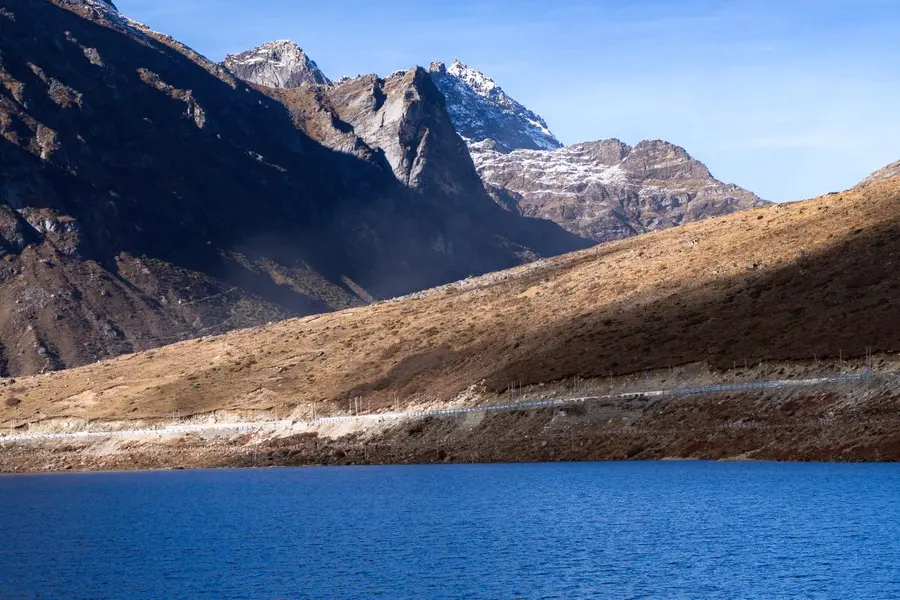
On the banks of the Siang river, one of the most consequential infrastructure disputes in modern India is unfolding. The proposed Siang Upper Multipurpose Project (SUMP), a mega-dam conceived at roughly 11,000–12,500 MW, is being promoted by the Centre and the Arunachal Pradesh government as a strategic answer to China’s upstream dam ambitions. For the Adi communities of the Siang valley, however, it threatens to submerge ancestral land, disrupt livelihoods and alter a river central to their identity.
The project has not yet been approved for construction. NHPC is currently carrying out a pre-feasibility report (PFR) -- an early technical assessment of the dam site, river hydrology, geology, likely submergence and social impact.
But even this preliminary stage has triggered sustained protests, police action and a widening political confrontation.
What is the Siang Upper Multipurpose Project?
The SUMP is proposed on the Siang river, the principal channel through which the Brahmaputra enters India from Tibet. NHPC, the central public-sector hydropower company, has been tasked with preparing the PFR for the project.
According to local reportage, the proposed dam could be nearly 300 metres high, with a gross storage capacity of about 13–14 billion cubic metres and live storage of around 9.2 billion cubic metres. Its installed capacity is estimated at 11,000–12,500 MW, which would make it one of the largest hydropower projects ever planned in India.
The estimated cost has been placed at about ₹1.13 lakh crore. NHPC has identified three possible dam locations near Yingkiong: between Parong and Deging villages, at Ugeng near Riga village, and between Ditte-Dime and Geku.
Why the Government wants the Siang Dam
The government's case rests on a single strategic premise: India can no longer afford to remain a passive downstream country while China builds one of the world’s largest hydropower complexes on the same river system.
Chief Minister Pema Khandu has described SUMP as a “national security necessity” and argued that India needs the ability to regulate the Siang’s flow within its own territory.
Officials frame the dam as a multipurpose water-security project, not merely a power plant. Its proposed reservoir would store excess water, regulate releases, moderate floods and help maintain downstream flows during the dry season.
The government argues that such storage could reduce the impact of sudden water releases from upstream Chinese infrastructure and protect communities in Arunachal Pradesh and Assam from devastating floods.
It also sees the project as a way to secure electricity for the region and strengthen India’s renewable-energy capacity.
China's Medog Dam: The Strategic Trigger
The immediate catalyst is China’s Medog hydropower project on the Yarlung Tsangpo -- the river known as the Siang in Arunachal Pradesh and the Brahmaputra after it enters India.
The Chinese project is reported to be planned at around 60,000 MW, far larger than SUMP.
The concern in New Delhi and Itanagar is not simply that China will consume the water. Hydropower dams generally return most water downstream.
The deeper issue is operational control: China could release water suddenly, worsening downstream floods, or retain and divert water during dry periods.
India also has no comprehensive water-sharing treaty with China covering the Yarlung Tsangpo–Siang–Brahmaputra basin. Officials point out that China is not a party to the UN Watercourses Convention and is not legally bound to share hydrological data or consult downstream countries.
This is why the government describes SUMP as a countermeasure. It would not match China’s 60,000 MW project in electricity generation, but it would give India downstream storage capacity to absorb floods, regulate flow and reduce vulnerability to unilateral decisions upstream.
NHPC's role and project details
NHPC's present mandate is to assess whether the Siang valley can technically and environmentally support the project. The company has maintained that the PFR is a preliminary exercise and does not amount to approval for construction.
The project is being positioned as a storage-led, multipurpose scheme: electricity generation, flood moderation, water regulation and protection against upstream disruptions.
According to local media reports, the Centre wants a reservoir capable of holding billions of cubic metres specifically to respond to China’s upstream dam activity and manage downstream flood risk.
NHPC has also invested heavily in public communication. The Arunachal Times reported that the company engaged Concept Public Relations India Ltd in 2025 for a campaign initially valued at ₹8.73 crore, later extended by ₹2.18 crore, taking the total to about ₹10.91 crore.
The reported campaign included outreach to village heads, community leaders, NGOs, schools, local media and national journalists.
Critics have seized on this communication strategy as evidence that the government is attempting to build public acceptance before securing genuine consent from affected communities.
Why local communities are protesting
Opposition is led by the Siang Indigenous Farmers’ Forum (SIFF), affected villagers, student organisations and civil-society groups across the Siang valley.
Their objections go beyond compensation and rehabilitation; they concern the survival of Adi land, culture and a free-flowing river.
The most immediate fear is submergence. A dam approaching 300 metres in height, with a reservoir holding billions of cubic metres of water, could inundate villages, agricultural land, forests and culturally significant sites.
Reports cite at least 27 villages at risk in Siang and Upper Siang districts, while critics say more than 100,000 people could be directly or indirectly affected.
Residents also fear permanent displacement. Former chief minister Gegong Apang has demanded the immediate withdrawal of the PFR survey and cancellation of the project, calling the Siang valley the home of Adi civilisation.
Environmental and seismic concerns
Environmental groups argue that damming the Siang would fundamentally alter one of the Eastern Himalaya’s most important free-flowing river systems.
A massive reservoir could submerge fertile land and forest, destroy wildlife habitat and disrupt aquatic biodiversity.
The region’s seismic vulnerability adds another layer of anxiety. The Eastern Himalaya is geologically fragile and earthquake-prone, and opponents argue that placing a mega-reservoir in such a landscape carries risks that cannot be fully mitigated.
Earlier basin-level studies cited by The Arunachal Times warned that extensive damming in the Siang basin would alter the river system and submerge large tracts of forest.
Consent, surveys and security presence
A central grievance is procedural. SIFF and other opponents say NHPC’s PFR surveys began without adequate information, participation or free, prior and informed consent from affected communities.
They allege that survey teams entered or examined areas without properly informing residents.
The deployment of central armed police forces to facilitate PFR work has intensified distrust.
Protesters argue that security personnel are being used to enable surveys rather than to protect residents, while the state maintains that the forces are needed to maintain law and order during a volatile situation.
For many residents, the presence of security forces around a survey meant to assess their future has become symbolic of a larger problem: a project described as being for “national interest” is being pursued before local consent has been established.
Protests turn violent in Pasighat
Resistance escalated sharply in October 2026, when protests in Pasighat turned violent. Demonstrators allegedly set fire to an NHPC office and a police station, damaged vehicles and targeted residences of elected representatives. Police said more than 40 personnel were injured.
Protesters demanded the release of arrested activists, reinstatement of suspended village headmen, withdrawal of PFR-related survey activity and removal of paramilitary forces from the area.
The state government has said it will move forward only after the PFR, public hearings and consultations, and has maintained that local consent remains central to the process.
But the violence has made clear that trust between the government, NHPC and Siang valley communities has broken down.
National interest vs indigenous rights
The Siang dam dispute is ultimately a collision between two powerful claims.
The government sees SUMP as strategic resilience: a way to store water, moderate floods, secure dry-season flow and generate clean power in a region increasingly exposed to China’s upstream infrastructure.
For the Adi communities of the Siang valley, the project asks them to surrender the river, land and cultural landscape that define their collective life for a national-security benefit whose risks and rewards remain uncertain.
That unresolved gap -- between hydro-strategic necessity and indigenous consent -- will determine whether the Siang Upper Multipurpose Project becomes a landmark of India’s water security or one of the country’s most contested mega-dams.
Published: 26 Oct 2026, 01:46 pm IST
Related Topics
Disclaimer: Kindly avoid objectionable, derogatory, unlawful and lewd comments, while responding to reports. Such comments are punishable under cyber laws. Please keep away from personal attacks. The opinions expressed here are the personal opinions of readers and not that of Mathrubhumi.
