
A former Air India Boeing 737-200, popularly known as 'Baby Boeing', has found a new purpose after remaining grounded at Kolkata airport for more than a decade
Imagine an aircraft that once carried hundreds of passengers, travelled between cities and was part of people's journeys. Then, one day, it stops flying. It is parked on a quiet corner of an airport, while the world of aviation moves on around it.
Days turn into months, and months into years. The aircraft remains where it was, almost forgotten. But what if its flying days were not the end of its story?
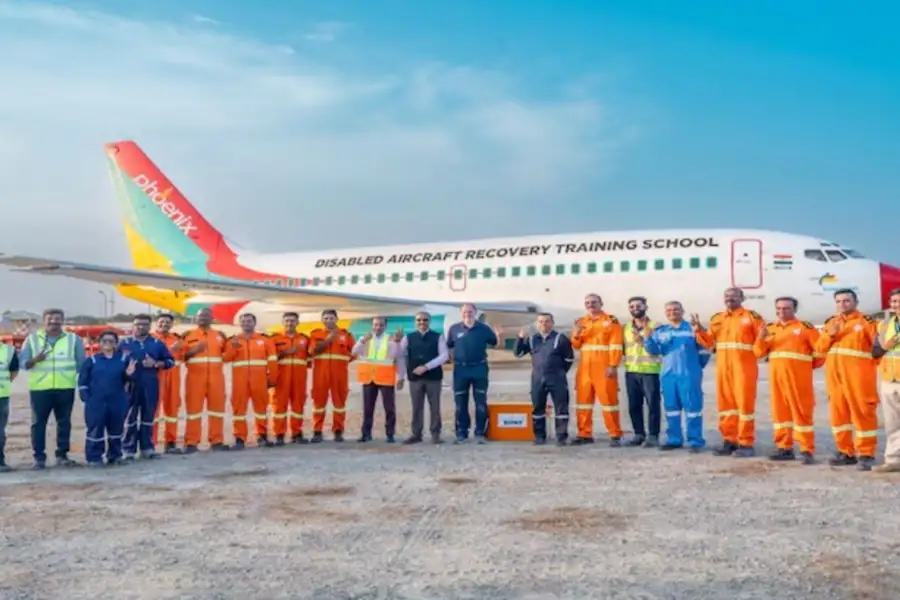
A former Air India Boeing 737-200, popularly known as 'Baby Boeing', has found a new purpose after remaining grounded at Kolkata airport for more than a decade. The aircraft has now travelled to Bengaluru, where it will help train aviation professionals in an important but lesser-known area of airport operations like recovering aircraft that cannot move on their own.
The aircraft is renamed as 'Phoenix' and was unveiled at Kempegowda International Airport by Bangalore International Airport Limited (BIAL). It will be used at the airport's Aircraft Recovery Training School. The aircraft may never fly again, but its new journey could help thousands of aviation professionals prepare for the challenges of their careers.
A long journey to a new home
The Boeing 737-200 was delivered to Indian Airlines in 1982. It was later leased to Alliance Air in 1998 and came under Air India following the merger of Indian Airlines and Air India in 2007. After spending more than a decade grounded at Kolkata airport, the aircraft was acquired by BIAL and brought to Bengaluru.
Moving an entire aircraft from one city to another was no easy task. The operation took 45 days and involved carefully dismantling the aircraft, transporting its parts on four specially designed trailers and reassembling it at the Bengaluru airport. The aircraft has retained its engines, cockpit and avionics, making it useful for practical training.
Its new name, Phoenix, seems particularly fitting. Like the mythical bird that rises from its ashes, the aircraft has returned to the aviation world with a completely different purpose.
When an aircraft gets stuck, who moves it?
Most passengers rarely think about what happens when an aircraft develops a serious technical problem and cannot move from the runway or taxiway. Sometimes, an aircraft may suffer damage to its landing gear, develop a problem with its wheels or become stuck after an emergency landing. Such situations can create serious challenges for airport operations.
The aircraft must be moved safely without causing further damage. Special equipment and trained teams are needed to lift, support and tow it to a suitable location. This process is known as Disabled Aircraft Recovery.
It is a specialised job that requires technical knowledge, teamwork and practical experience. Even a small mistake during recovery can cause additional damage to an aircraft or affect airport safety.
This is where Phoenix will play an important role. Instead of learning only through books or classroom lessons, trainees will get an opportunity to understand aircraft recovery using an actual aircraft.
A training ground for aviation professionals
BIAL established its Aircraft Recovery Training School to strengthen its own emergency preparedness. The facility is now opening its doors to aviation professionals from across the industry. The training school works with Germany-based KUNZ, a company specialising in aircraft recovery solutions, and has a team of qualified trainers.
The courses include a five-day advanced practical programme, a three-day basic training programme and a one-day familiarisation session. Each training batch can accommodate 16 participants.
The facility also has specialised equipment to recover large aircraft, including those belonging to the Code F category.
With Phoenix added to the facility, trainees will have access to a full-sized aircraft to understand how recovery operations are carried out. This practical exposure can help airport teams, airline engineering staff and other aviation professionals prepare for situations they may encounter during their work.
India's aviation growth needs skilled people
India's aviation sector is growing rapidly. New airports are opening, airlines are adding aircraft and passenger numbers are increasing. Behind this growth is a large workforce that keeps the industry running every day.
Pilots and cabin crew are among the most visible aviation professionals. But there are thousands of others working behind the scenes, including aircraft maintenance engineers, airport operations teams, ground-handling staff, safety personnel and technical specialists.
As the industry expands, the need for trained professionals will also increase. This means India will need not just more aviation courses, but also better facilities where students and working professionals can learn practical skills.
Training in areas such as aircraft recovery, emergency response and airport safety may not always receive much attention, but these skills are essential to keeping airports safe and operations running smoothly.
BIAL's initiative is an example of how airport infrastructure can also be used to create learning opportunities for the wider aviation industry.
Girish Nair, Chief Operating Officer of BIAL, highlighted the importance of operational resilience, specialised skills and continuous learning in supporting India's growing aviation sector. The training school aims to welcome aviation professionals from India and Southeast Asia, giving them an opportunity to learn and practise an important aspect of airport operations.
The sky is not the only limit
There is a happy ending to the story of Baby Boeing, but perhaps it is also a new beginning.
An aircraft that once carried passengers between destinations will now help people build their careers. It may no longer take off from a runway, but the knowledge gained by those who train on it could travel much further.
For young people looking at aviation as a career, there is also a lesson here. The industry offers opportunities beyond becoming a pilot or an aircraft maintenance engineer. Airport management, aircraft recovery, safety, ground operations and technical services are just some of the fields that keep aviation moving.
As India's aviation story enters an exciting new chapter, the demand for people with the right skills will only grow. So, if you have ever dreamt of working in aviation, take a closer look. There are many ways to be part of this wonderful world, and not all of them require you to fly an aircraft.
Sometimes, even helping one get back on its wheels can be a career worth taking off with.
Published: 20 Nov 2026, 06:43 pm IST


Related Topics
Disclaimer: Kindly avoid objectionable, derogatory, unlawful and lewd comments, while responding to reports. Such comments are punishable under cyber laws. Please keep away from personal attacks. The opinions expressed here are the personal opinions of readers and not that of Mathrubhumi.
