
India's long-awaited Tejas Light Combat Aircraft (LCA) Mark 1A is expected to join the Indian Air Force (IAF) in substantial numbers by the end of the current financial year, with the first squadron likely to be delivered by March 2027
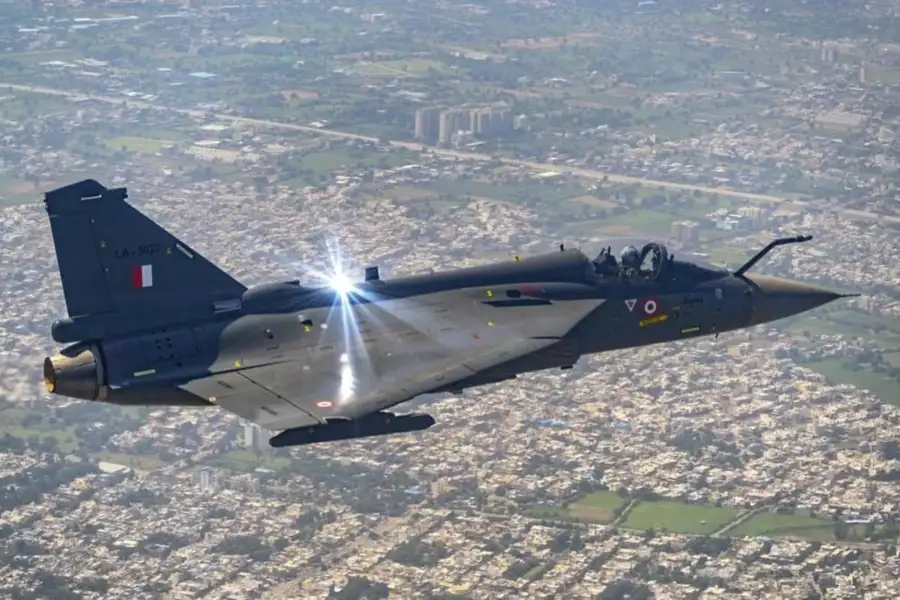
The Indian Air Force expects to receive its first squadron of indigenous Tejas Mark 1A fighter jets by the end of March 2027, marking a crucial step towards addressing its declining combat strength.
India's long-awaited Tejas Light Combat Aircraft (LCA) Mark 1A is expected to join the Indian Air Force (IAF) in substantial numbers by the end of the current financial year, with the first squadron likely to be delivered by March 2027. The announcement by Chief of the Air Staff Air Chief Marshal Ashutosh Dixit comes as the Air Force faces an increasing shortage of fighter aircraft, making the induction of the indigenous fighter an important development for India's defence preparedness.
Also Read

Speaking at the ANI National Security Summit 3.0 in New Delhi, Air Chief Marshal Dixit said the first squadron of Tejas Mk1A aircraft would join the IAF within the current financial year. "Very shortly, we will have LCA Tejas Mk1A joining the Indian Air Force. Within this financial year, we will have a squadron. Then we will continue developing; we will take it further… LCA Tejas Mark-2 will roll out maybe next year. And we are working very hard also for AMCA (Advanced Medium Combat Aircraft)," he said.
An IAF fighter squadron typically comprises 18 aircraft. The induction of the first Tejas Mk1A squadron would therefore represent a significant addition to the force's operational strength. The first one or two aircraft could be handed over to the IAF as early as January 2027, ahead of the Aero India 2027 event, according to an earlier report by ThePrint. However, the Air Chief's latest statement places the broader target at the end of March 2027.
Why the Tejas Mk1A induction matters for the IAF
The importance of the announcement becomes clearer when viewed against the IAF's current fighter squadron strength. The Air Force is operating with around 29 active fighter squadrons against an authorised requirement of 42. This is reportedly its lowest strength in six decades.
The widening gap has become a major concern as older fighter aircraft are gradually retired and the induction of new platforms has not kept pace with operational requirements. Fighter squadrons are essential to maintaining air defence, responding to security threats and conducting offensive and defensive operations. A lower squadron strength places additional pressure on the aircraft available for these responsibilities.
In this situation, the Tejas Mk1A is particularly important because it offers the IAF an opportunity to expand its fleet through an indigenous aircraft programme. The Air Force has placed orders for a total of 180 Mk1A aircraft, comprising two contracts with Hindustan Aeronautics Limited (HAL). The first contract, signed in February 2021, was for 83 aircraft, while a second order for 97 aircraft was placed in September 2025.
The induction of the first squadron will not immediately bridge the gap between the existing 29 squadrons and the authorised strength of 42. However, it will mark the beginning of a larger induction programme that could gradually strengthen the IAF's combat capabilities and reduce its dependence on ageing aircraft.
The significance also extends beyond the number of aircraft. The Mk1A is an upgraded version of the Tejas Mk1, which is already operational with the IAF. Classified as a 4.5-generation fighter, it incorporates several improvements in radar, weapons and electronic warfare capabilities, making it a more advanced platform for modern combat requirements.
What makes the Tejas Mk1A different?
One of the major improvements in the Tejas Mk1A is its Active Electronically Scanned Array (AESA) radar. Unlike conventional radar systems, AESA technology allows the aircraft to scan the surrounding airspace more rapidly, track multiple targets simultaneously and detect potential threats from greater distances. It also offers better resistance to electronic jamming, making it more effective in environments where adversaries may attempt to disrupt an aircraft's radar systems.
The aircraft is also equipped with beyond-visual-range (BVR) missile capabilities. These weapons allow pilots to engage hostile aircraft from distances beyond what they can see with the naked eye. This gives the IAF greater flexibility during air combat and improves its ability to respond to aerial threats before they come within close range.
Another important feature is its electronic warfare suite, which is designed to protect the aircraft against hostile radar systems, sensors and weapons. Such systems are increasingly important in modern air combat, where electronic detection, tracking and interference can influence the outcome of an engagement.
Together, these upgrades are expected to improve the Tejas Mk1A's ability to operate in more complex combat environments. Its induction will therefore not only add aircraft to the IAF inventory but also strengthen the technological capabilities of its frontline fighter fleet.
Why has the programme been delayed?
Despite its importance, the Tejas Mk1A programme has faced significant delays. HAL had originally been expected to begin deliveries of the first 83 aircraft in 2024, but the schedule was affected primarily by delays in the supply of F404-IN20 engines from US-based GE Aerospace.
The engines are a critical component of the aircraft, and their delayed availability affected the pace of production and delivery. The programme also faced challenges involving the integration of weapons and other onboard systems, followed by the testing required to ensure that the upgraded aircraft met operational requirements.
The first batch of 83 aircraft was originally scheduled to be delivered by February 2028. However, the delay in starting deliveries pushed the programme behind its original timeline, creating additional pressure on the IAF's modernisation plans.
The second order, comprising 97 additional Tejas Mk1A aircraft, was placed with HAL in September 2025 and is valued at more than Rs 62,370 crore. Deliveries under this contract are expected to begin in the financial year 2027-28 and continue over six years.
The delivery of the first squadron by March 2027 would therefore be an important breakthrough after the prolonged wait. It would also demonstrate progress in moving the aircraft from development and testing into operational service.
From Tejas Mk1 to Mk1A, IAF’s role in development
The development of the Tejas Mk1A has involved extensive collaboration between the IAF, HAL and India's defence research institutions.
Explaining the aircraft's evolution, Air Chief Marshal Dixit said the original Tejas programme brought together around 600 to 700 work centres and laboratories across the country. These included institutions such as the Indian Institutes of Technology (IITs), Council of Scientific and Industrial Research (CSIR) laboratories and even railway laboratories.
The IAF identified four major areas in which the initial Tejas Mk1 needed improvement and worked with HAL to develop the upgraded Mk1A version. The Air Force also provided an aircraft from its existing inventory to support the development process.
According to the Air Chief, work on these four identified areas is now almost complete. Weapons developed by the Defence Research and Development Organisation (DRDO) have also been integrated into the aircraft, followed by extensive flight testing.
This highlights an important aspect of India's indigenous fighter development programme. The Tejas Mk1A is not simply a locally manufactured aircraft; it is the result of collaboration between the armed forces, public-sector aerospace manufacturing and a network of research and engineering institutions.
Looking beyond the Tejas Mk1A
While the Mk1A is expected to address some of the IAF's immediate fighter requirements, India's longer-term ambitions extend to more advanced indigenous combat aircraft.
The next step is the Tejas Mk2, which is being developed as a larger and more capable version of the aircraft. It is expected to be powered by a more powerful GE engine and offer enhanced performance and operational capabilities. Air Chief Marshal Dixit indicated that the aircraft could roll out as early as next year. However, its prototype has yet to undertake its first flight.
Beyond the Mk2, India is also pursuing the Advanced Medium Combat Aircraft (AMCA), an indigenous stealth fighter programme aimed at developing a next-generation combat platform. The aircraft is expected to incorporate advanced technologies designed to improve its ability to operate in highly contested airspace.
The AMCA programme is being pursued through an industry partnership model, with the process of selecting a company or consortium to participate in developing and building its prototypes currently underway.
These programmes indicate that India's fighter aircraft strategy is moving on two parallel tracks: meeting immediate operational requirements through aircraft such as the Tejas Mk1A while developing more advanced platforms for future combat needs.
Balancing indigenous development with foreign acquisitions
India's efforts to strengthen its domestic fighter aircraft programme are also taking place alongside plans to procure aircraft from international manufacturers.
In February 2026, the Defence Acquisition Council granted Acceptance of Necessity (AoN) for the proposed acquisition of 114 Rafale fighter aircraft under the Indian Air Force's Multi-Role Fighter Aircraft programme. A majority of the proposed aircraft are expected to be manufactured in India.
The Rafale acquisition is still progressing through the approval and procurement process. Once inducted, these aircraft are expected to strengthen the IAF's air superiority and long-range strike capabilities.
The combination of indigenous aircraft programmes and foreign acquisitions reflects the scale of the challenge facing the Air Force. While platforms such as the Tejas Mk1A are essential for strengthening domestic manufacturing and gradually rebuilding squadron numbers, advanced foreign aircraft are also being considered to meet operational requirements.
A crucial phase for India's air power
The expected induction of the first Tejas Mk1A squadron by March 2027 could be a defining moment for India's fighter aircraft programme. After years of development, production challenges and delivery delays, the aircraft is approaching an important transition from an indigenous development project to an operational platform within the IAF.
However, the real measure of success will lie in the pace of subsequent deliveries, the ability of HAL and its supply chain to maintain production schedules, and the Air Force's capacity to integrate the aircraft into its operational squadrons.
For India, the Tejas Mk1A represents more than an addition to its fighter fleet. It is an important test of the country's ability to develop, manufacture and sustain advanced military aircraft within its own aerospace ecosystem.
As the IAF works towards rebuilding its fighter strength, the successful induction of the Tejas Mk1A could provide much-needed momentum to its modernisation efforts, while laying the groundwork for the next generation of indigenous combat aircraft.
Published: 17 Nov 2026, 09:09 pm IST


ABOUT THE AUTHOR
Related Topics
Disclaimer: Kindly avoid objectionable, derogatory, unlawful and lewd comments, while responding to reports. Such comments are punishable under cyber laws. Please keep away from personal attacks. The opinions expressed here are the personal opinions of readers and not that of Mathrubhumi.