
The Mk21A may look like a simple nose cone, but it is one of the most demanding components of America’s new Sentinel nuclear missile. Lockheed Martin’s latest test tested whether the vehicle can protect the W87-1 warhead through the extreme heat and pressure of atmospheric re-entry.
Since 1970, a missile called the Minuteman III has stood quietly in underground silos across America. Its job has never been to fight. Its job is to warn: anyone who thinks of striking the United States with nuclear weapons must know that a reply could come within minutes. For more than half a century, that silent promise has kept a fragile peace. Now the Minuteman is old, and the United States is building its replacement, a new long-range missile named the LGM-35A Sentinel.
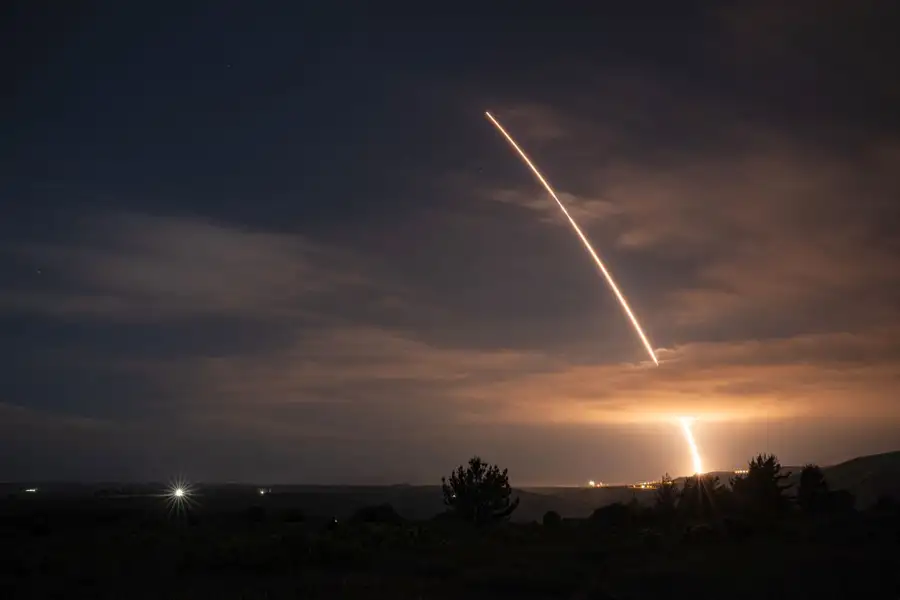
That is why a flight test over the Pacific Ocean this week matters far beyond California. Lockheed Martin launched a new reentry vehicle, the Mk21A, from Vandenberg Space Force Base.
In plain terms, a reentry vehicle is the nose cone that carries the warhead. No nuclear weapon was on board, and the whole Sentinel missile was not being tested either. The flight was aimed only at this nose cone, the one piece that must do the hardest job of all.
To understand that job, picture the missile as a three-stage rocket, each stage burning solid fuel and then falling away, pushing the missile faster and faster. By the time the fuel runs out, the US Air Force says the Sentinel will be travelling at about 15,000 miles per hour, or 24,140 km/hr.
At that speed, a journey from Delhi to Chennai would take under five minutes. The missile then releases its warhead along a planned path through space, and the warhead must come back down through the atmosphere to reach its target.
Coming back is the brutal part. Air that feels gentle on your face becomes a wall of fire when something slams into it at such speed, the same reason meteors glow and burn up in the night sky.
The Mk21A nose cone is the protective shell that keeps the W87-1 nuclear warhead safe through the cold of space and then through that blast of heat and pressure. Its outer body must not crack, its heat shield must not let the fire through, and the electronics inside must keep working the entire way down.
Think of it as a helmet, a fireproof suit and a navigator rolled into one.
The Mk21A is an improved version of the older Mk21 vehicle. Its new design has been reshaped to carry the W87-1 warhead and to meet everything the Sentinel programme demands. It also carries guidance and safety electronics that help steer the warhead to its target while keeping the weapon secure.
This test let the US Air Force and Lockheed Martin check whether that design and its technology would hold up in a real military mission.
Northrop Grumman leads the development of the Sentinel missile itself, while Lockheed Martin is responsible for the nose cone.
The Air Force plans to retire every Minuteman III and replace it with Sentinel. The Mk21A work is being done under a military contract worth more than $1 billion. Its next big milestone is a Critical Design Review, a detailed line-by-line check of the complete design in which experts confirm it meets the required standards.
Lockheed Martin is leaning on advanced computer simulations and digital design tools to move faster. Its engineers build computer models of the nose cone and compare them with data from earlier flights, adjusting the design each time.
The results from this latest test will feed straight back into that loop, shaping changes to the vehicle and the plan for future flights.
Jason Watson, Vice President of Strategic Reentry Programs at Lockheed Martin, said testing is essential to making the vehicle more reliable, and that lessons from earlier flights are being used to improve it and push the whole programme forward.
Yet the larger Sentinel project is struggling. Building a missile meant to last for decades is a slow, expensive business, and Sentinel's costs have climbed sharply while its schedule has slipped badly. The Pentagon, which is the US Defence Department, has responded by changing the way the missile is being developed.
The Government Accountability Office, the American agency that audits how public money is spent, has flagged these problems as the Air Force works to swap its ageing missiles for new ones.
Against that backdrop, the quiet success of the Mk21A carries real weight. A missile is only as good as its warhead's chance of surviving the return journey. If this small, fire-hardened nose cone survives as promised, it will help the Sentinel deliver a new generation of land-based nuclear weapons whose purpose, like the Minuteman before it, is not to be used but to make sure no one ever dares.
The author is an award-winning science communicator and a Defence, Aerospace & Geopolitical Analyst.
Published: 11 Nov 2026, 12:39 pm IST


Related Topics
Disclaimer: Kindly avoid objectionable, derogatory, unlawful and lewd comments, while responding to reports. Such comments are punishable under cyber laws. Please keep away from personal attacks. The opinions expressed here are the personal opinions of readers and not that of Mathrubhumi.
