
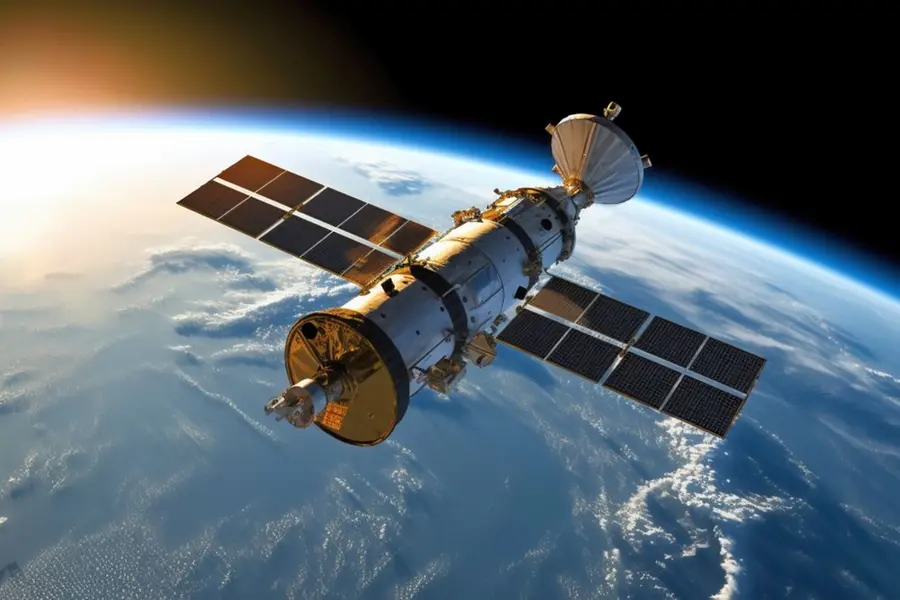
India is planning a major leap in space surveillance with the launch of 52 dedicated military satellites over the coming years. This bold initiative, announced by Chief of Defence Staff General Anil Chauhan during the Indian DefSpace Symposium, is part of a broader effort to strengthen the country’s intelligence, surveillance, and reconnaissance (ISR) capabilities.
The move comes at a time when both China and Pakistan are actively advancing their own space-based technologies, highlighting the growing importance of space in national security.
Also Read

The satellites will support the Indian Army, Navy, and Air Force, helping track enemy movements, monitor borders, and improve real-time coordination during military operations. These satellites will be able to detect missile launches, follow ships at sea, and even observe troop movements in remote terrains.
While the news was widely reported, the deeper strategic meaning lies in what this satellite surge signals: India's preparation to counter regional threats and to maintain superiority in space, which is becoming the next frontier of defense.
Why this move matters
Today's wars are no longer fought just on land, air, or sea—they are also waged in space. Satellites play a critical role in communication, intelligence gathering, and battlefield coordination.
India's move to expand its space-based defence capabilities comes at a crucial time when both of its neighbours -- China and Pakistan -- are ramping up their own military satellite programmes.
China is far ahead in this race. As of 2022, it had launched over 400 satellites, including 45 for defense purposes in that year alone. These satellites serve various roles -- tracking aircraft, monitoring naval activity, gathering intelligence, and even experimenting with potential anti-satellite weapons. China's Yaogan, Shiyan, and TJS-series satellites have significantly improved its space surveillance abilities, allowing it to keep an eye on the entire Indo-Pacific region.
Pakistan, though far behind China, has also made progress, largely with Chinese support. Its PRSS-1 (Pakistan Remote Sensing Satellite), launched in 2018, gives it the ability to conduct remote sensing—tracking land, water, and infrastructure changes.
Pakistan has also launched other satellites like PakTES-1A, though its overall satellite count remains low, around five operational units. Nevertheless, these developments show a clear intent to build surveillance capabilities over India.
India's response: Building a sky-high shield
India is not starting from scratch. It already has some military communication satellites in orbit. The GSAT-7, also known as Rukmini, was launched in 2013 for the Navy. The GSAT-7A, nicknamed Angry Bird, supports the Air Force, and the GSAT-7B is in the pipeline for the Army. These satellites enhance secure communication and coordination during operations.
But the planned launch of 52 ISR satellites takes India's capabilities to a whole new level. It means round-the-clock, near-real-time coverage of sensitive zones—not just at the borders with China and Pakistan, but also in distant oceans and conflict-prone areas. These satellites can be used to track enemy submarines, detect missile launches, and even coordinate drone and fighter jet missions.
A smart move in a crowded sky
India's growing satellite network also helps counter threats from anti-satellite weapons. With more satellites in the sky, the system becomes harder to cripple. It also allows overlapping surveillance zones, ensuring constant coverage. The overall cost of this project is reported to be around Rs 27,000 crore, approved by the Cabinet Committee on Security (CCS).
This development reflects India's clear shift towards space-based deterrence -- sending a message to adversaries that it is watching, prepared, and capable of responding quickly.
The future battlefield is as much in the sky as on the ground. With China rapidly increasing its space assets and Pakistan modernizing with external help, India's 52-satellite initiative comes not a moment too soon. It not only strengthens the country’s surveillance network but also showcases its ability to compete with larger space powers.
Published: 12 Apr 2025, 09:52 am IST
Related Topics
Disclaimer: Kindly avoid objectionable, derogatory, unlawful and lewd comments, while responding to reports. Such comments are punishable under cyber laws. Please keep away from personal attacks. The opinions expressed here are the personal opinions of readers and not that of Mathrubhumi.