
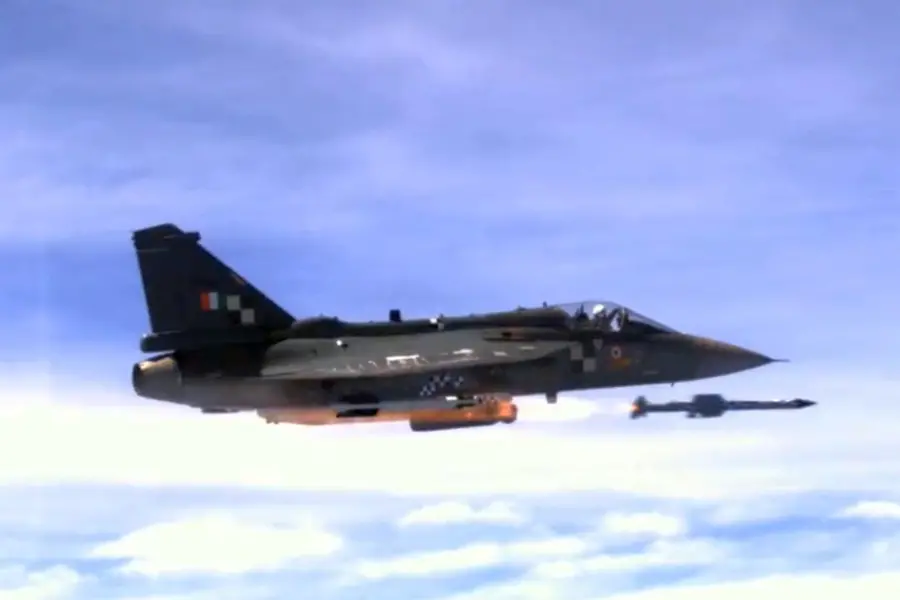
To enhance its defence capabilities, the Indian Air Force (IAF) has made a strategic decision to prioritize the integration of indigenous Astra MkI and MkII missiles over the Israeli I-Derby ER BVRAAMs for its Su-30MKI, Tejas-MkIA and MkII fleet.
This shift means these aircraft models will no longer be equipped with the I-Derby ER, with focus now directed towards advancing the development of the local Astra missile programme.
Also Read

The goal of this move is to reinforce India’s self-reliance in defence technology and bolster its indigenous defence capabilities for the future.
Astra: India's Homegrown Powerhouse
The Astra MkI and MkII, developed by India’s Defence Research and Development Organisation (DRDO), are beyond-visual-range air-to-air missiles (BVRAAMs) that have garnered significant attention in recent years.
These missiles represent a major leap in India's air defence capabilities, offering extended range and advanced guidance systems to engage aerial threats effectively.
* Astra MkI: Already operational since 2019, the Astra MkI has a range of 110 km and has been successfully integrated into the IAF’s Sukhoi Su-30MKI and Tejas fighters. Its active radar homing-seeker ensures precise targeting in the terminal phase of flight, making it a potent weapon against enemy aircraft
* Astra MkII: Currently in advanced stages of testing, the Astra MkII pushes the boundaries further with a remarkable 160 km range, achieved through its dual-pulse solid rocket motor. This enhanced range, combined with its indigenous development, makes it a strategic asset for the IAF, providing a cost-effective and customizable solution for modern air combat scenarios.
I-Derby ER: Israel's Technological Marvel
The I-Derby ER, developed by Israel's Rafael Advanced Defense Systems, is another formidable contender in the BVRAAM arena. With its 100 km range and 'fire-and-forget' capability, it allows pilots to engage targets beyond their visual range, significantly enhancing their combat effectiveness.
Key Features: The I-Derby ER's sophisticated software-defined radar seeker enables it to track and engage a variety of aerial threats, including aircraft, helicopters and UAVs. Its dual-pulse rocket motor ensures extended range and optimal flight performance, while its advanced ECCM capabilities provide robust protection against enemy jamming and electronic warfare tactics.
Versatile Applications: Primarily designed for air-to-air combat, the I-Derby ER seamlessly integrates with various fighter jets. It also finds application in ground-based air defence systems, such as Rafael's SPYDER, offering an impressive interception range against diverse aerial threats.
The SPYDER System: A Shield in the Sky
The SPYDER system, utilizing I-Derby ER missiles, offers a robust ground-based air defence solution.
Its mobile launchers, equipped with advanced radar and electro-optical sensors, can swiftly detect, track and engage aerial threats, including aircraft, helicopters, UAVs and even certain types of missiles.
This system provides a vital layer of protection against aerial attacks, enhancing India’s overall defence posture.
I-Derby ER vs Astra: Comparing Air-to-Air Missiles
In the world of air combat, the choice of missiles can significantly influence outcome. Two prominent missiles in this arena are the I-Derby ER and the Astra. Here’s an easy-to-understand comparison:
Range & Power
* I-Derby ER: This missile can engage targets up to 100 km away, thanks to its advanced rocket engine.
* Astra: The Astra MkI has a range of 110 km, while the Astra MkII extends this capability to an impressive 160 km.
Guidance & Accuracy
* I-Derby ER: Equipped with sophisticated radar technology, it is capable of locking onto, and destroying, a variety of targets, including aircraft and drones.
* Astra: Both the Astra MkI and MkII utilize radar guidance to ensure accurate targeting and engagement.
Defence & Flexibility
* I-Derby ER: It is known for its resilience against jamming and electronic counter-measures, making it a reliable option in complex combat scenarios.
* Astra: These missiles are designed with upgradability in mind, allowing them to adapt to evolving threats, which provides the IAF with a significant strategic advantage.
Origin & Development
* I-Derby ER: Developed by Israel's Rafael Advanced Defense Systems, this missile is in service with several countries, including India.
* Astra: A product of India's growing technological prowess, the Astra missiles are developed domestically, symbolizing India’s push for self-reliance in defence, and are primarily used by the IAF.
Both the I-Derby ER and Astra missiles are formidable choices in air combat. The I-Derby ER excels in handling challenging situations, while the Astra missiles represent India’s advancements in indigenous defence technology.
The choice between the two ultimately depends on the specific needs, budget considerations and mission priorities of the air force.
India’s Strategic Shift: Prioritizing Astra
The IAF initially considered integrating the I-Derby ER into its Su-30MKI and Tejas fleets. However, the decision to prioritize the Astra missile programme reflects a strategic emphasis on self-reliance and indigenous defence capabilities.
This shift not only bolsters India's defence industry, but also reduces reliance on foreign suppliers, thereby enhancing strategic autonomy.
Moreover, with their range and performance comparable to those of the I-Derby ER, the Astra missiles prove to be a cost-effective system for the IAF. The continued development and testing of the Astra MkII highlight India's commitment to advancing missile technology.
Where Lies The Future of India’s Air Power?
By investing in indigenous capabilities, India is not only strengthening its air defence, but also fostering innovation and technological growth within the country. As the Astra missile programme progresses, with full configuration trials anticipated, the IAF is set to deploy a robust arsenal of domestically developed BVRAAMs. This strategic shift, alongside advancements in other defence sectors, will contribute to India’s growing stature as a regional power and a key player on the global defence stage.
The author of this article is a Defence, Aerospace & Political Analyst based in Bengaluru.
Published: 26 Aug 2024, 01:29 pm IST
Related Topics
Disclaimer: Kindly avoid objectionable, derogatory, unlawful and lewd comments, while responding to reports. Such comments are punishable under cyber laws. Please keep away from personal attacks. The opinions expressed here are the personal opinions of readers and not that of Mathrubhumi.