
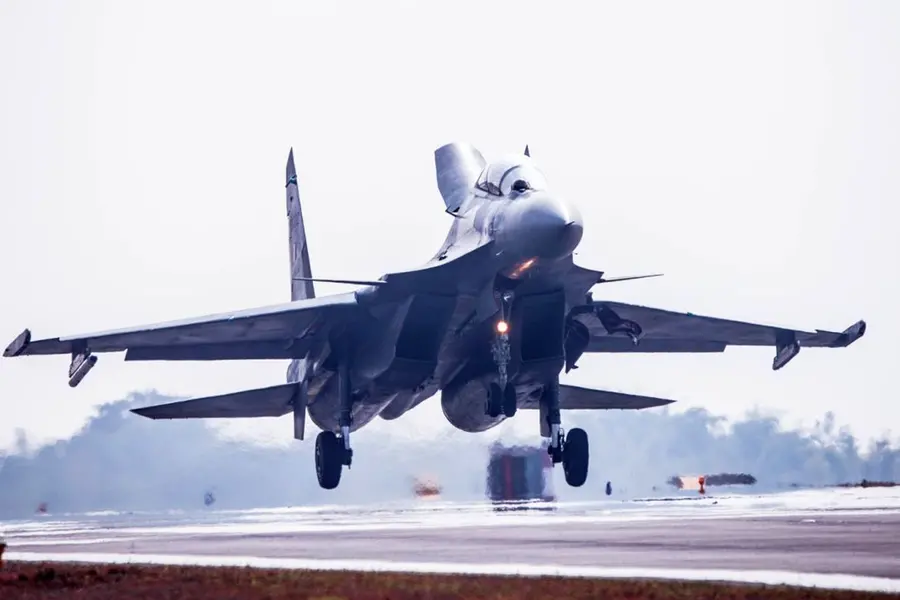
India is upgrading its Su-30MKI fighter jets, which were originally acquired from Russia, with a $7.2-billion modernization programme. Through this modernization, the jets’ service life will be extended by another 30 years. The Virupaksha radar, named after a Sanskrit word meaning 'all-seeing eye', is set to significantly enhance the capabilities of the Indian Air Force.
A key part of this upgrade is the new Virupaksha radar. This advanced radar technology will greatly enhance the capabilities of the Su-30MKI jets. It will allow them to fire multiple air-to-air and air-to-ground missiles at various targets.
Also Read

Additionally, it will improve the jets’ ability to track, detect and neutralize threats, making them much more effective in combat situations.
The Virupaksha radar is being designed as part of the ‘Make in India’ initiative. This project is led by the Defence Research and Development Organisation (DRDO), specifically through its Electronics & Radar Development Establishment (LRDE). They are working together with Hindustan Aeronautics Limited (HAL) and Bharat Electronics Limited (BEL) to develop this advanced radar system.
The Virupaksha radar is a major advancement in India’s homegrown defence technology. It builds on the success of the Uttam Mk2 Active Electronically Scanned Array (AESA) Fire Control Radar (FCR), which was developed for the Tejas MkII programme.
How Virupaksha Will Transform Sukhoi
This advanced radar system will transform the capabilities of India’s Sukhoi-30MKI fighter jets. It will replace the current Russian-made NIIP VO11M Bars (Panther) radar.
AESA Fire Control Radar uses numerous small antennas to electronically steer radar beams, allowing faster and more flexible targeting. This makes it efficient for tracking and engaging multiple targets. 'Fire' refers to its role in directing weapons to hit targets.
This improved version features a larger AESA antenna and more transmit-receive modules (T/R modules), with an estimated count between of 1,200 and 1,400, compared to the Uttam Mk2’s 900+ modules.
For those unfamiliar, T/R modules are components that help the radar send and receive signals, making it more powerful and effective at detecting targets. During trials, the radar has been able to track between 64 and 100 targets at the same time. Additionally, it is crucial for an air force pilot to launch multiple air-to-air missiles. According to Russian media outlet Sputnik, the Virupaksha radar has successfully controlled, manoeuvred and guided six missiles towards a target simultaneously in air-to-air attack mode.
Why Virupaksha Will Be Cruicial
One major advantage of the Virupaksha radar is its lighter weight. The system is expected to weigh less than 300 kg, which is a 50% reduction compared to the N011M Bars radar.
This weight reduction means a lighter nose cone for the Sukhoi-30MKI, which could improve the aircraft’s manoeuvrability.
Another significant benefit of the Virupaksha radar is its increased range. While the N011M Bars has a head-on search range of 140 km for fighter-sized targets, the Virupaksha offers a 1.7-fold increase.
This extended range allows the Super Sukhoi to stay outside the engagement zone of enemy beyond-visual-range air-to-air missiles (BVRAAM), giving it a crucial first-strike advantage.
In other words, the aircraft can detect and engage enemy targets from a greater distance, reducing the risk of being targeted itself and increasing the chances of a successful mission.
Additionally, the Virupaksha radar features advanced electronic counter-countermeasures (ECCM) technology, which helps it resist enemy efforts to disrupt its operation.
The radar can operate in air-to-air, air-to-ground and air-to-sea modes, providing specialized functions, such as high-resolution mapping and target classification. This means that the radar is not only versatile across different types of missions, but also highly reliable in hostile environments where the enemy might try to jam or interfere with its signals.
The advanced ECCM capabilities ensure that the radar remains effective, maintaining its tracking and targeting accuracy even in the face of electronic warfare.
Virupaksha radar integrated with the super Sukhoi makes India’s defence sector more self-reliant. This homegrown system offers better capabilities, reduced weight and increased survivability, ensuring the Sukhoi-30MKI remains dominant in the skies.
The author of this article is a Defence and Aerospace Analyst based in Bengaluru.
Published: 06 Aug 2024, 03:45 pm IST
Disclaimer: Kindly avoid objectionable, derogatory, unlawful and lewd comments, while responding to reports. Such comments are punishable under cyber laws. Please keep away from personal attacks. The opinions expressed here are the personal opinions of readers and not that of Mathrubhumi.