
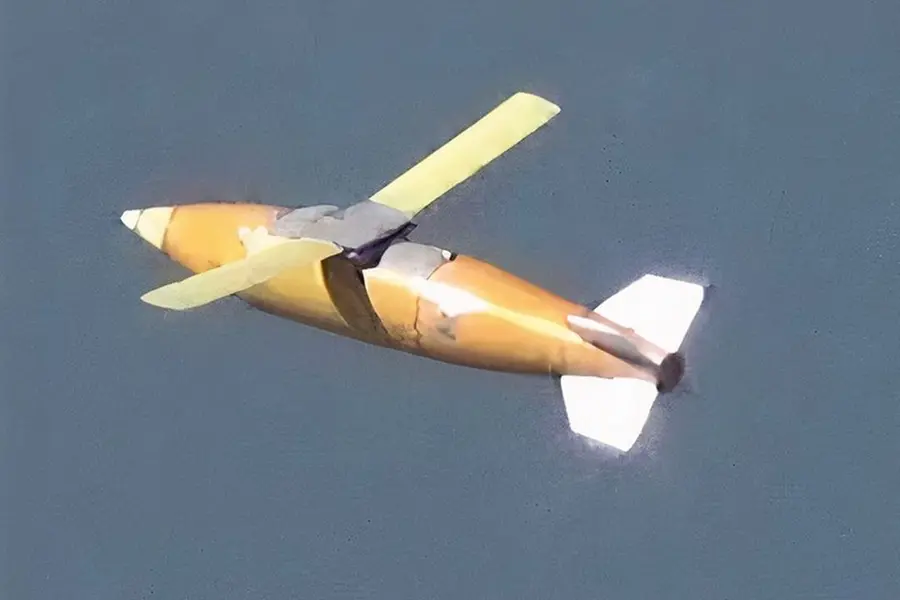
The Defence Research and Development Organisation (DRDO) successfully tested its new long-range glide bomb (LRGB), named Gaurav, from an IAF Su-30 MKI fighter jet on Tuesday, August 13.
The test took place off the coast of Odisha. Gaurav is a 1,000 kg air-launched glide bomb designed to hit targets from far away. Once launched, it can accurately steer itself toward the target using a special navigation system, according to a statement from DRDO.
Also Read

The long-range glide bomb (LRGB) was designed and developed by the Research Centre Imarat in Hyderabad. During the test flight, the bomb accurately struck a target set up at the Wheeler’s Island, as reported by the DRDO.
All flight data was recorded using telemetry and electro-optical tracking systems positioned along the coast. Senior DRDO scientists monitored the flight, and representatives from Adani Defence and Bharat Forge, who are partners in development and production, were also involved.
DRDO's Glide Bombs: Precision and Power Redefined
The DRDO Glide Bomb is crafted as a flexible medium-range weapon capable of accurately striking targets from a safe distance, beyond the range of most anti-aircraft defenses.
This design helps aircraft avoid danger, increasing their survival chances and minimizing friendly losses.
"Friendly losses" refers to any casualties or damage experienced by one's own forces, including personnel, equipment, or aircraft, during military operations. The emphasis here is on conducting precise airstrikes while ensuring the safety of pilots and their aircraft.
Under the DRDO's Long Range Glide Bomb (LRGB) project, two versions have been planned:
1. Gaurav: This is the winged version, with a range of up to 100 km and a weight of 1,000 kg. It can be equipped with either pre-fragmented or penetration-blast warheads.
2. Gautam: This is the non-winged version, with an initial range of 30 km, which can be extended to 100 km in the future. It weighs 550 kg and, like the Gaurav, can carry pre-fragmented or penetration-blast warheads. Although it doesn't have wings, it includes a control surface that works with an integrated navigation and guidance system.
Both bombs are 4 meters long and have a diameter of 0.62 meters. They are equipped with an onboard inertial navigation system, supported by GPS and the NaVIC Satellite Guidance System.
On October 29, 2021 too, the DRDO and the Indian Air Force (IAF) successfully tested the Long Range Bomb (LRB) from a Su-30MKI aircraft at Balasore, Odisha. The bomb was dropped from an altitude of 10 km and accurately hit a target at sea using laser guidance.
This 1,000 kg bomb, developed by DRDO, serves as an alternative to the Spice 2000. The Long Range Glide Bomb (LRGB) is part of a new series of precision-guided munitions, designed to strike targets at distances ranging from 50 km to 150 km.
The IAF used SPICE smart bombs -- known for being smart, precise, and cost-effective -- during the airstrike on Balakot in Pakistan on February 26, 2019.
Published: 14 Aug 2024, 10:05 am IST
Related Topics
Disclaimer: Kindly avoid objectionable, derogatory, unlawful and lewd comments, while responding to reports. Such comments are punishable under cyber laws. Please keep away from personal attacks. The opinions expressed here are the personal opinions of readers and not that of Mathrubhumi.