
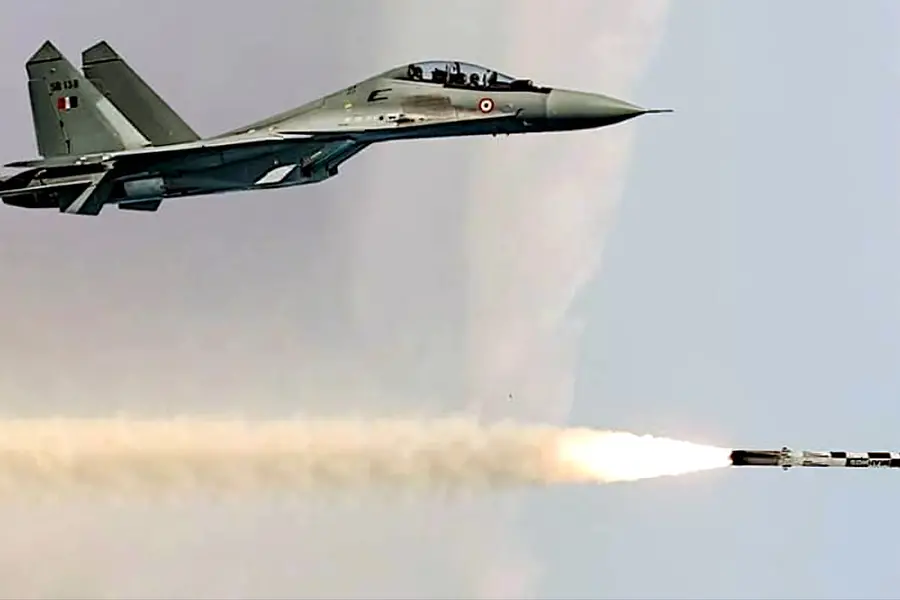
The Su-30MKI -- the main fighter aircraft of the Indian Air Force (IAF) -- is getting a major upgrade worth $7.7 billion. Hindustan Aeronautics Limited (HAL), in collaboration with the Defence Research and Development Organisation (DRDO), is handling this project.
The upgrade includes adding Software-Defined Radio (SDR) systems to the jets’ electronic warfare (EW) capabilities. Experts believe this will greatly enhance the jets’ combat capabilities, making them much more effective in modern warfare.
Also Read

The Rise of SDR Technology
SDR is a radio communication system that uses adjustable software components to process, and convert, digital signals. Unlike traditional radios, SDRs are very flexible and adaptable. This new technology is being used to connect our growing wireless world.
The Su-30MKI is currently a key asset for the IAF and is known for its versatility and strength. Former DRDO scientist Ravi Gupta told Russian media outlet Sputnik that improving the fighter’s communication abilities would boost its effectiveness in battle further.
The DRDO had previously focused on this area and had standardized several components related to the Su-30MKIs, including the SDR, which was essential for the jets’ communication system, he added.
The DRDO is a leader in EW technology, said Gupta who believes that when it is time to integrate these systems with the Su-30MKIs, the organization would be able to do it quickly. This modernization would make the aircraft even more powerful.
After India’s Balakot strike, a MiG-21 was lost during Pakistan’s Operation Swift Retort in 2019. Former IAF pilot and military expert Vijainder K Thakur explained that this occurred because the Pakistani Air Force jammed the voice communication between the radar control and the jet’s pilot.
Impact of Communication Disruption
When communication is disrupted, it can lead to a loss of coordination and situational awareness. The pilot may miss crucial information about enemy movements or threats, which makes it challenging to make informed decisions during combat.
This breakdown in communication can seriously compromise both the safety of the pilot and the effectiveness of the mission. The expert explained that SDR offered multiple waveforms, improved security and better communication reliability.
This helps meet the IAF’s needs by allowing clearer and more secure communication. SDR also enhances data transmission, improves voice clarity and ensures accurate data transfer even in noisy environments.
After the Balakot incident, the IAF had purchased advanced radio systems from Israel for its Mirage fleet, the expert noted. As a result, SDRs have become essential for India’s warplanes, including the Su-30MKIs and the IAF is eager to integrate them into both current and future aircraft.
According to the defence ministry, a key feature of SDRs is their software programmability, which makes it easy to change important radio settings, such as modulation types, operating frequencies, bandwidths and encryption/decryption algorithms.
The ministry pointed out that traditional hardware-based radios need physical changes to alter their basic features. Instead, the ministry mentioned, multiple types of radio equipment could be replaced with versatile SDRs that were multi-mode, multi-band and multi-role, fitting various needs.
The author of this article is a Defence, Aerospace & Political Analyst based in Bengaluru.
Published: 20 Jul 2024, 11:14 am IST
Related Topics
Disclaimer: Kindly avoid objectionable, derogatory, unlawful and lewd comments, while responding to reports. Such comments are punishable under cyber laws. Please keep away from personal attacks. The opinions expressed here are the personal opinions of readers and not that of Mathrubhumi.