
Artificial intelligence is reshaping political power by transforming public emotion into measurable data, raising questions about whether artificial empathy can truly humanise governance
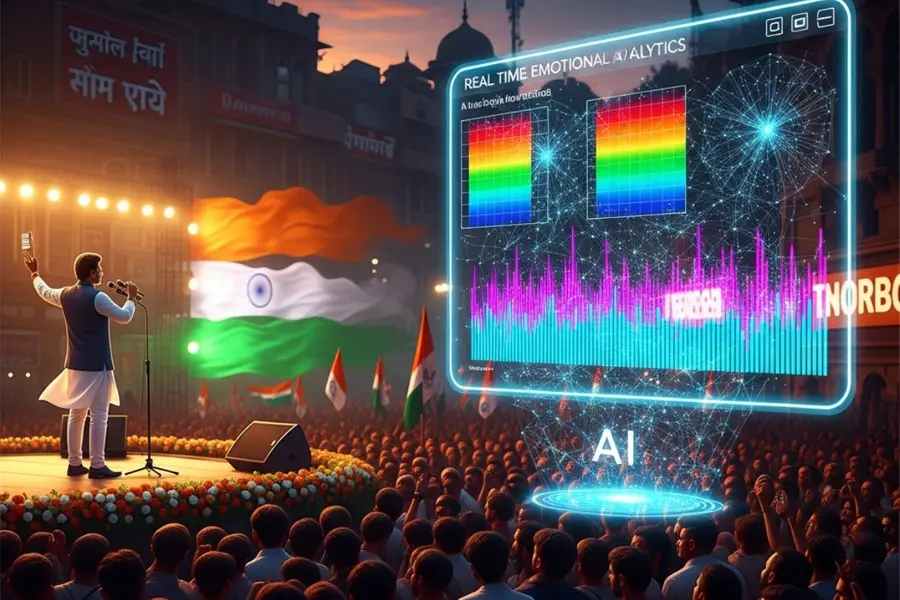
The past century’s politics was defined by control of resources, land, or media. The next may be defined by control of emotion.
Governments and political actors increasingly treat public sentiment as a measurable variable. Artificial intelligence has turned feeling into data - something to be analyzed, anticipated, and optimized. From local governments using sentiment dashboards to political consultancies tracking voter anger in real time, empathy has become an instrument of governance.
Also Read

Artificial empathy is not emotion; it is simulation. Large language models and affective computing systems detect tone, infer emotional state, and generate responses that appear caring or responsive.
In clinical trials, such systems already outperform humans in surface-level empathy. A 2023 study published in JAMA Internal Medicine found that participants rated ChatGPT’s medical responses as more empathetic than those of licensed physicians in 78 percent of cases.
This does not make the machine compassionate. It makes it statistically better at expressing phrases and structures that humans read as empathy. One of democracy’s oldest weaknesses is its inability to listen continuously. Between elections, governments guess at public mood through polling or protests. AI changes that rhythm.
Municipalities from Singapore to Helsinki now use real-time sentiment analysis to map citizen satisfaction. During Israel’s 2023 municipal feedback pilot, text and voice complaints were analyzed by natural language processing systems that could detect frustration, urgency, or approval with over 80 percent accuracy. When properly governed, such systems can make bureaucracies more responsive. Citizens are acknowledged faster. Patterns of neglect become visible. Decision-makers, armed with emotional data, can pre-empt crises rather than react to them.
Yet what AI provides is recognition, not comprehension.
A politician reading a sentiment map may know what the people feel but not why. Without the lived context of human empathy, data becomes a mirror that flatters or deceives. In 2024, a European Commission white paper warned that “automated empathy” in governance could deepen disconnection by giving the impression of responsiveness while reducing direct human contact.
AI can acknowledge every voice but understand none. Every technology that measures emotion can manipulate it. Micro-targeting, once based on demographic data, now incorporates psychographic and affective cues. Campaigns can test which tone, such as reassurance, anger, hope, triggers the desired reaction in each user. In China, the government’s “emotional surveillance” research program monitors facial micro-expressions in workplaces and classrooms, classifying stress or dissent in real time. In the United States, commercial firms use similar emotion-recognition algorithms in advertising and politics.
The danger is not only surveillance, but control. When empathy becomes programmable, so does persuasion. Empathy is shaped by culture, language, and social context. Machines trained primarily on English-language data from affluent societies reproduce those norms. A 2025 Frontiers in Political Science study found that even advanced models like GPT-4 and Claude performed well in generic empathy tasks but consistently misread culturally specific expressions of grief and anger, especially from Global South contexts.
An empathetic interface that cannot understand the vernacular of the poor or the marginalized risks deepening inequality, a new form of emotional colonialism, where only certain kinds of pain are legible. The responsible use of artificial empathy in politics begins with recognising that technology should serve as an aid, not a replacement, for human judgment. AI can triage complaints, summarise sentiment, and detect emotional patterns, but the act of response such as the moral weight of listening and deciding, must remain human.
Systems that simulate care should be transparent about their nature, clearly disclosing when an interaction is automated and how emotional inferences are made. Cultural context is equally essential; models must be trained and tested in local languages, dialects, and social environments so that empathy does not become a form of cultural imposition. To ensure fairness and accountability, independent boards should audit datasets and algorithms for bias or manipulative design, in the same way electoral commissions review campaign finances. Finally, citizens should retain the right to disengage from automated systems and request human contact.
In any political system that claims to serve its people, the human must always remain at the centre of empathy, not its periphery. Empathy has always been the most powerful political tool. From Lincoln’s letters to Roosevelt’s fireside chats, leaders who could mirror the emotions of their people held extraordinary influence.
AI offers that ability at industrial scale. Used wisely, it can humanise governance, not by feeling for us, but by forcing institutions to listen better. Used recklessly, it will accelerate manipulation and hollow out the moral centre of politics. The next generation of leadership will be defined not by who can use artificial empathy, but by who can remain genuinely human in its presence.
The author is an AI researcher based in Dubai.
Published: 10 Dec 2025, 10:55 am IST
Related Topics
Disclaimer: Kindly avoid objectionable, derogatory, unlawful and lewd comments, while responding to reports. Such comments are punishable under cyber laws. Please keep away from personal attacks. The opinions expressed here are the personal opinions of readers and not that of Mathrubhumi.