
At the Mathrubhumi International Festival of Letters 2026, Australian poet and novelist Omar Bin Musa delivered a quietly powerful session that blurred the lines between literature, music and memory
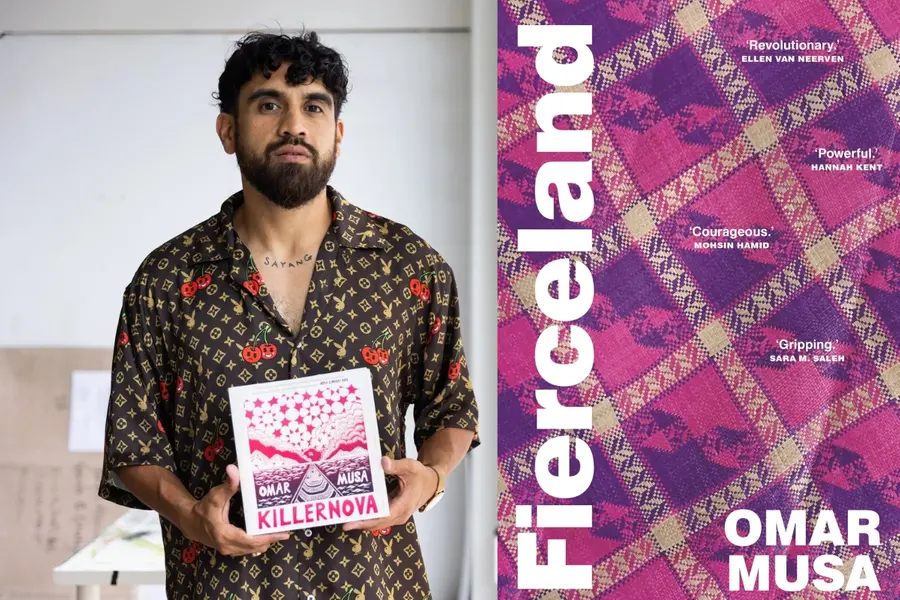
Under the shade of a tree at the seventh edition of MBIFL, Omar Bin Musa’s session unfolded with restraint rather than spectacle. What began as a literary interaction gradually transformed into an immersive experience that wove together poetry, fiction, rhythm and personal reflection.
“I’m an artist, not an activist,” Musa said early in the session, distancing himself from overt political labelling. Yet as his readings progressed, it became clear that his work confronts power, history and injustice through narrative rather than slogans.
Also Read

Musa opened by reading from his novel ‘Fierceland’, set in Malaysian Borneo, the ancestral land of his father. The story follows two siblings who return home for their father’s funeral. Yusuf Mansour, celebrated publicly as a self-made success, is gradually revealed to be a logging and oil palm magnate whose rise is tied to corruption, environmental devastation and unexplained disappearances.
Through this fictional lens, Musa explored themes of colonial legacy, ecological destruction, masculinity, memory and inherited guilt. The narrative challenged the idea of success built on silence, asking how families and societies live with histories they choose not to confront.
The session resisted fixed literary form. Musa shifted fluidly between spoken word, rap-inflected cadence and intimate storytelling, turning the reading into something closer to a lived emotional performance than a conventional book discussion. The transitions were seamless, reinforcing his belief that stories do not belong to one genre alone.
Reflecting on his upbringing, Musa spoke about being born to artist parents and how his creative voice is shaped by the lives he has encountered. His work, he suggested, grows out of collective experience rather than individual expression. Even when addressing violence, displacement and loss, the focus remained on shared humanity rather than abstraction.
Throughout the session, Musa returned to the idea that art does not need to announce itself as political to hold political meaning. In his telling, storytelling itself became an act of resistance, quietly unsettling comfortable narratives and leaving space for reflection rather than confrontation.
He concluded the session with a musical performance, offering two songs that extended the emotional arc of the evening. The audience responded not with immediate applause, but with silence—an ending that mirrored the tone of the session itself.
At MBIFL, Omar Bin Musa demonstrated that some of the most enduring forms of dissent emerge not through declaration, but through story, rhythm and memory—where art speaks softly, yet lingers long after.
Published: 31 Jan 2026, 09:43 am IST
Related Topics
Disclaimer: Kindly avoid objectionable, derogatory, unlawful and lewd comments, while responding to reports. Such comments are punishable under cyber laws. Please keep away from personal attacks. The opinions expressed here are the personal opinions of readers and not that of Mathrubhumi.