

At MBIFL 2026, a session on Lata Mangeshkar revealed how translation can become an act of devotion, preserving memory, music and emotion across languages
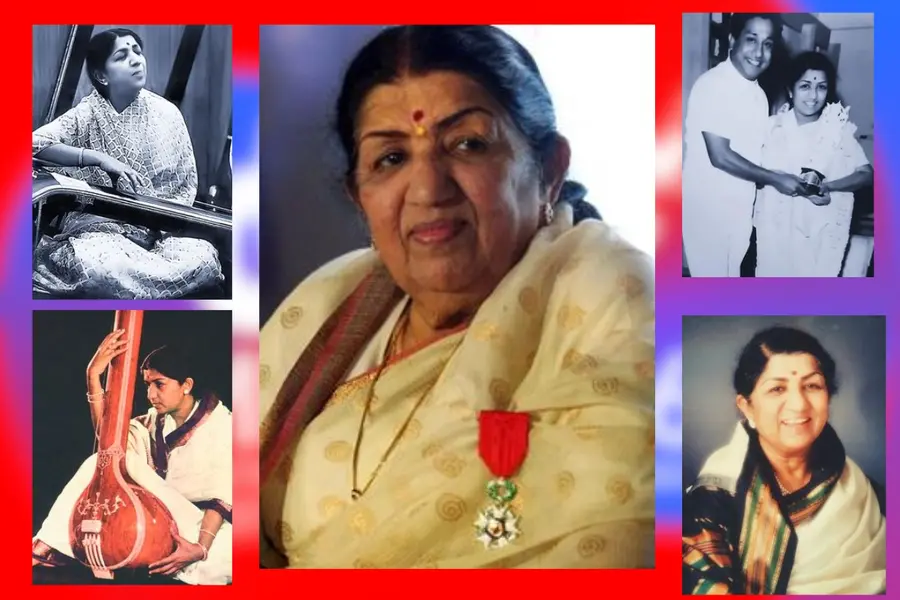
Music, memory and the delicate art of translation came together in a reflective session titled ‘Lata Mangeshkar: Paatinte Panineermazha’ at the seventh edition of the Mathrubhumi International Festival of Letters (MBIFL). The session marked the Malayalam release of Lata: Sur-Gatha, originally written in Hindi by poet and scholar Yatindra Mishra, and unfolded as a tribute to the legendary singer’s enduring cultural presence.
The discussion featured P.K. Radhamani, who translated the book into Malayalam, and was moderated by writer M.A. Askar. Rather than focusing solely on biography, the session explored what it means to carry a voice, a life and a cultural memory from one language into another. Lata Mangeshkar, whose voice shaped the emotional memory of generations across India, continues to resonate beyond music, as her life and legacy were revisited.
Opening the session, Radhamani spoke of translation as a deeply personal responsibility. In the book’s preface, she describes the work as a “duty”, shaped by childhood admiration for Lata Mangeshkar. “I first knew her only through her voice on the radio,” she recalled, adding that she imagined the singer as a divine presence. Even today, Radhamani said, she continues to see Lata Mangeshkar as a goddess-like figure and never imagined “even in my wildest dreams” that she would one day translate a book on her life.
Radhamani acknowledged being initially overwhelmed by the scale of Mishra’s original work, which was written over five years of close interaction with Lata Mangeshkar. She noted that repeated questions and conversations were a natural outcome of such long-term documentation. This led to a conscious editorial choice to present the Malayalam version as an abridged translation, making it accessible while retaining its emotional core.
What began as anxiety gradually transformed into fulfilment. The translator said the process convinced her that she was perhaps the right person to bring the book into Malayalam. Translation, she emphasised, was not a mechanical task but an act of emotional participation.
A central theme of the session was the idea of translation as a “second act of creation”. Radhamani stressed that no translated work can be identical to the original, as each version carries the translator’s cultural sensibility, emotional response and lived context. She explained that translating across languages often requires interpretation and contextual additions, rather than word-for-word substitution. Even selecting the Malayalam title, she said, involved creative negotiation to capture the spirit of the work rather than its literal meaning.
Recalling her hostel days, Radhamani spoke fondly of listening to radio programmes such as Binaca Geetmala, which deepened her lifelong bond with Lata Mangeshkar’s music. Working on the book, she said, did not alter her perception of the singer but reaffirmed her admiration.
The session also addressed contemporary debates around technology and literature. While acknowledging that artificial intelligence can assist translation, Radhamani argued that it cannot replace human emotional intelligence. Only when technology can internalise human feeling, she suggested, can it approach true translation.
On questions surrounding Lata Mangeshkar’s perceived political positioning, Radhamani responded with caution, stating that a translator’s role is not to reinterpret or alter the author’s voice, but to convey it faithfully.
Ultimately, the session emerged as more than a discussion on a book. It became a meditation on voice, memory and cultural transmission, showing how art travels across languages while retaining its emotional resonance — its panineermazha, or gentle rain.
Published: 30 Jan 2026, 09:15 pm IST
ABOUT THE AUTHOR
Related Topics
Disclaimer: Kindly avoid objectionable, derogatory, unlawful and lewd comments, while responding to reports. Such comments are punishable under cyber laws. Please keep away from personal attacks. The opinions expressed here are the personal opinions of readers and not that of Mathrubhumi.