

India’s electoral system was born not from consensus but from coercion and compromise, a reality revisited by author and former bureaucrat Jawhar Sircar at the MBIFL
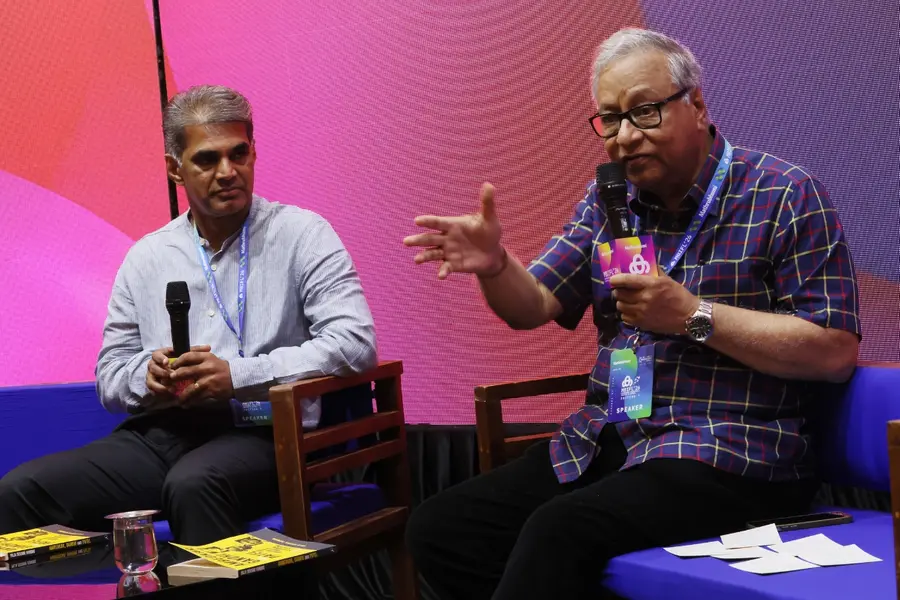
India’s electoral system is often spoken of as a triumph of democracy. But its foundations were laid not in harmony, but in fear, pressure and painful compromise.
Speaking at the Mathrubhumi Festival of Letters (MBIFL) 2026, former bureaucrat and author Jawhar Sircar revisited one of the most difficult moments in India’s constitutional history — Dr B.R. Ambedkar’s forced retreat from his demand for separate electorates for the depressed classes — arguing that the joint electorate system was born out of coercion rather than consent.
Also Read
“Ambedkar knew that political equality without independent representation would be meaningless for the oppressed,” Sircar said. “Separate electorates were not a privilege. They were a safeguard.”
Sircar explained that Ambedkar’s position was rooted in lived reality. Centuries of exclusion, he argued, could not be corrected merely by granting the vote. Marginalised communities also needed the power to choose their own representatives without dependence on dominant caste support.
At the Round Table Conferences in London, Ambedkar articulated this argument so forcefully that the British government accepted separate electorates for the depressed classes. What followed, Sircar noted, was intense backlash within the Indian nationalist movement, particularly from Mahatma Gandhi, who viewed the proposal as a threat to Hindu unity.
The standoff culminated in Gandhi’s fast unto death, placing Ambedkar under extraordinary moral pressure. “Ambedkar was put in an impossible position,” Sircar said. “Either he held on to what he had achieved politically, or he risked being blamed for Gandhi’s death.”
The outcome was the Poona Pact of 1932, which replaced separate electorates with joint electorates while increasing the number of reserved seats for the depressed classes. Though often celebrated as a moment of national unity, Sircar urged audiences to confront its consequences honestly.
“Ambedkar regretted this compromise for the rest of his life,” he said. “Joint electorates meant Dalit candidates would always remain dependent on dominant caste votes.”
That structural weakness, Sircar argued, was evident even in Ambedkar’s own political journey. Despite his national stature, Ambedkar lost several elections under the joint electorate system and entered the Constituent Assembly only through nomination — a fact that underscored his fears about the limits of political representation.
As chairman of the Constitution’s drafting committee, Ambedkar nonetheless ensured that reservations for Scheduled Castes and Scheduled Tribes were embedded into India’s democratic framework, though only as a temporary measure for ten years.
“That promise of temporariness,” Sircar observed, “was more political comfort than social reality.” The continued extension of reservations, he said, reflects unfinished social justice rather than policy failure.
Linking history to the present, Sircar warned that Ambedkar’s concerns remain deeply relevant. As India debates electoral reforms, delimitation, and political representation once again, the core question remains unresolved: who truly holds power in a democracy?
“Our democracy survives because of Ambedkar’s insistence on rights,” Sircar said, “not because compromises magically solved inequality.”
He ended with a reminder that Ambedkar’s warning was not just historical, but enduring. “If representation is weakened,” Sircar said, “democracy becomes a formality. That was Ambedkar’s fear — and it is still ours.”
Published: 01 Feb 2026, 06:06 pm IST
ABOUT THE AUTHOR
Related Topics
Disclaimer: Kindly avoid objectionable, derogatory, unlawful and lewd comments, while responding to reports. Such comments are punishable under cyber laws. Please keep away from personal attacks. The opinions expressed here are the personal opinions of readers and not that of Mathrubhumi.