

She called acting an occupational hazard, half amused and half resigned
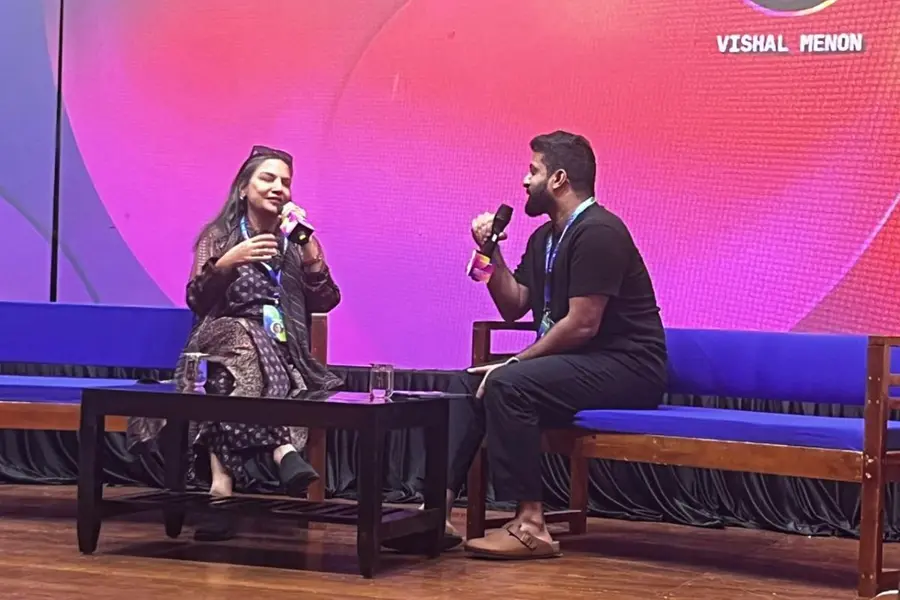
Speaking at Of Fire and Grace, her conversation with Vishal Menon at MBIFL 2026, Shabana Azmi said acting is less a profession than a constant way of seein- a heightened awareness that follows actors long after the camera stops rolling.
She called it an occupational hazard, half amused and half resigned. Actors, she said, are always alert, always absorbing-gestures, silences, grief, joy, even when they would rather just be present as human beings.
She illustrated it with a moment that still unsettles her. Standing in a small room after the death of a close friend, Azmi was overwhelmed by grief. And yet, alongside that raw emotion, another thought intruded — technical, clinical, professional. As she looked at the face, she noticed the jaw and thought: when you play a dead person, the jaw must not drop open.
Almost instinctively, she tried it herself. Then she stopped short, startled by her own mind. What am I doing? she remembered thinking. The shame came immediately after — but so did the understanding. “This is what acting does to you,” she said. You don’t just feel. You watch yourself feeling.
That split consciousness, she explained, never really leaves. Even during the session, she admitted she was observing Vishal Menon — the way he held the microphone, his posture, the rhythm of his questions, the pauses between them. It wasn’t deliberate note-taking. “You take it all in,” she said, because acting demands it.
Azmi connected this constant alertness to her belief in craft — and to her insistence that technique must remain invisible. “If the technique shows, it’s a bad technique,” she said, even though technique itself is essential. Emotion, memory and preparation sit quietly beneath the surface; the audience should never see the scaffolding.
This, she suggested, is also what allowed her to move between parallel cinema and mainstream films — from Ankur to Amar Akbar Anthony — without abandoning herself. Whether it was a Shyam Benegal film or a Manmohan Desai spectacle, the demand remained the same: complete emotional availability, paired with total control.
The cost of that availability, she acknowledged, is high. Actors carry stored emotions for years, drawing from experiences long after the moment has passed. “Actors are neurotic,” she said, smiling, before adding that the work almost requires it- an openness that is intrusive, exhausting and impossible to compartmentalise.
But without that constant readiness, she said, truth on screen would simply not be possible.
Published: 01 Feb 2026, 12:36 pm IST
ABOUT THE AUTHOR
Related Topics
Disclaimer: Kindly avoid objectionable, derogatory, unlawful and lewd comments, while responding to reports. Such comments are punishable under cyber laws. Please keep away from personal attacks. The opinions expressed here are the personal opinions of readers and not that of Mathrubhumi.