

The incredible stories of P Thankappan Nair, Kolkata`s `barefoot historian,` and Malayinkeezhu Gopalakrishnan, Trivandrum`s beloved chronicler. Uncover their dedication to preserving history.
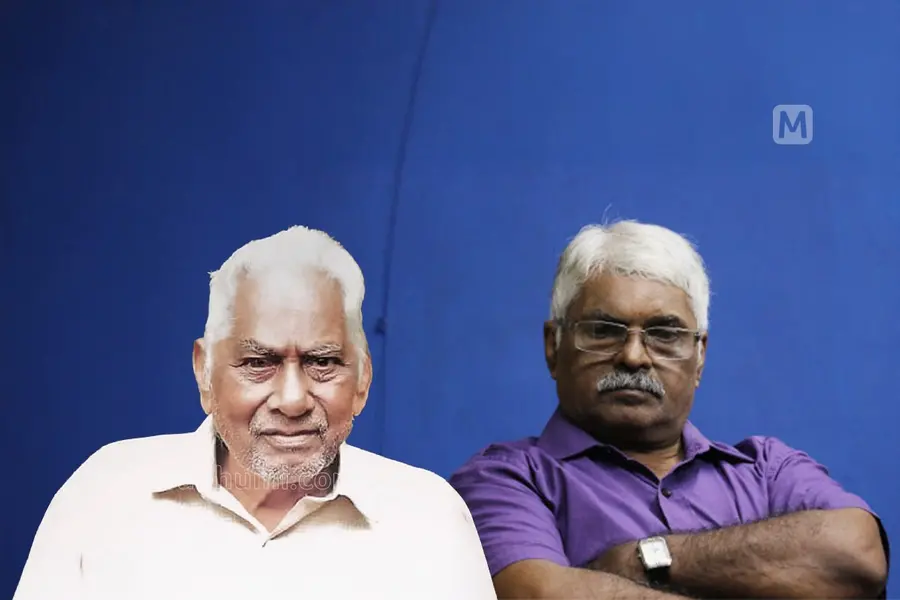
Can a Malayali be the Chronicler of Kolkata? This rare honour belongs to P Thankappan Nair, originally from Kalady, the birthplace of Adi Sankara. Nair came to Kolkata as a young man seeking a livelihood and stayed for nearly seven decades, allowing the city to seep into his bones. Over time, he emerged as perhaps the most meticulous and affectionate chronicler of Kolkata’s layered past through his extensive writings on the history of the capital of West Bengal. Nair, who passed away at 91 in 2024, was also known as a “barefoot historian” because he had no formal academic credentials.
If anyone deserves to be called the contemporary chronicler or the barefoot historian of Thiruvananthapuram, it would undoubtedly be the veteran journalist and author, Malayinkeezhu Gopalakrishnan. The Kerala government’s decision to confer on him the coveted Swadesabhimani-Kesari Award of 2025, the state’s highest award for lifetime achievement in the field of media, is thus timely and richly deserved.
Also Read
Gopalakrishnan’s iconic weekly column, Nagarappazhama, published in the Mathrubhumi newspaper, which spans Thiruvananthapuram’s past, has crossed a quarter-century. It could arguably be the longest-running weekly column based on the history of a single city in Malayalam, if not in any other language. Nagarappazhama has narrated hundreds of unknown or forgotten stories about Thiruvananthapuram’s history, politics, culture, and development; Gopalakrishnan wrote not just about the extraordinary people who shaped the city's life but also about the ordinary folks who fell through the cracks of official historiography. True to his journalistic instincts, Gopalakrishnan does not treat history as a museum piece but connects it to or contrasts it with the present, often using memory to critique contemporary life. Nagarappazhama has traversed through the sepia-tinged tales of the city’s various landmarks: palaces, colleges, churches, hospitals, mosques, temples, and other buildings, its iconic streets, markets and ponds. It revisited the city's major political agitations of the past and the floods and epidemics; it chronicled visits by celebrities such as Gandhi, Swami Vivekananda, Tagore, Nehru, Martin Luther King, and many others. No wonder that Mathrubhumi retained Gopalakrishnan’s popular column even after he retired as News Editor from the newspaper in 2008, after nearly four decades of distinguished service. Recently, a compilation of
Nagarappazhama has been published as a book, serving as a virtual biography of Thiruvananthapuram. Even before he began Nagarappazhama, Gopalakrishnan had been a relentless history freak, and almost every story he wrote drew from the past that stirred up the city’s collective nostalgia.
As a former colleague in Mathrubhumi, this writer vividly remembers the long hours Gopalakrishnan spent among the dusty files and crumbling books at the State Archives and in the city’s old libraries. When contemporary mass media worldwide are rightly blamed for “dumbing down” and “racing to the bottom”, excessively driven by the profit motive and a desperate competition with social media, Gopalakrishnan’s decades-long, dedicated efforts to inform, contextualise and educate readers stand out as an act of quiet resistance. He has also authored numerous books on figures such as Gandhi, Swami Vivekananda, Barrister G. P. Pillai, and Chithira Tirunal, as well as on other historical topics. Kolkata’s Thankappan Nair had a great collection of books and records about the City of Joy that he famously refused to sell even to Cambridge University, which offered him an astronomical amount. Gopalakrishnan also has the most extensive personal archive of old and rare books, documents, and priceless photographs of Trivandrum, which he assembled painstakingly over the years.
Even after becoming a respected senior journalist and the daily’s bureau chief, Gopalakrishnan had steadfastly focused on the local news. Unlike most journalists, Gopalakrishnan refused to be lured by the glamorous or the sensational beats, such as politics or crime, that guarantee a front-page byline. He was the first to establish a regular beat covering the city corporation. “When I started regularly attending the city corporation meetings, there was nobody from other newspapers. Within no time, there were over ten reporters,” he remembers. He also pioneered making the city zoo a regular news source, as his stories about the rare animals became a popular staple in Mathrubhumi and even earned Gopalakrishnan the affectionate sobriquet, the animal affairs correspondent.
When Mathrubhumi launched its Trivandrum edition in the late 1970s, its most significant hurdle was its image as a Malabar-centric paper, in contrast to the formidable Kerala Kaumudi, the capital’s long-standing and unchallenged leader. Not only were Mathrubhumi’s history and tradition more closely aligned with northern Kerala, but its language also appeared slightly unfamiliar to the southerners. Ironically, it was a quintessential “Malabari”, T. Venugopalan, the News Editor, the then head of the new Trivandrum edition, who masterminded the operation to get Mathrubhumi identified with Southern Kerala. The strategy was to flood the daily pages with stories and pictures that captured the region's smell and spirit. The job was cut out for the recruits like Gopalakrishnan and G Sekharan Nair, the “sons of the soil”, led by the veteran Trivandrum hand, P C Sukumaran Nair, who had crossed over from Kerala Kaumudi. They became the flag bearers of Mathrubhumi’s “Operation South”.
Gopalakrishnan’s personal and professional journey is marked with humility and grit. After completing his schooling, he migrated from Malayinkeezhu village on the outskirts of Thiruvananthapuram to the capital in the late 1960s to seek employment. Armed with a shorthand and typing diploma, he hoped, like most young men during that time, to land a clerical job in the state secretariat. But he had another secret ambition: journalism. He knew that M. M. Hassan, later a top Congress leader whom Gopalakrishnan had known since their boyhood, was working at Kerala Kaumudi. So Gopalakrishnan approached Kaumudi, only to learn that it hired only graduates.
Then came a chance encounter that radically transformed his life. A CPI(M) activist from his village recommended him as a writing assistant to P. Govinda Pillai, the editor of the party mouthpiece Deshbhimani and a legislator. (Personal disclosure: this writer is Pillai’s son). Gopalakrishnan was engaged to transcribe the daily editorials dictated by Govinda Pillai, which addressed a multitude of topics. History was particularly of interest to Pillai. Gopalakrishnan became Pillai's confidant, and they travelled together to meetings, libraries, and other places. “PG became my mentor and my university”, Gopalakrishnan says. PG’s home during that period was a hub for many young intellectuals and activists, including the former Naxalite leader K. Venu. He absorbed those debates as a silent listener. The bond endured until PG passed away in 2012.
During the 1970s, Gopalakrishnan took on odd jobs as a reporter with local newspapers. Never did he imagine that one of those assignments would turn out to be historic. On the 25th of June 1975, Prime Minister Indira Gandhi proclaimed the Emergency in the country. The Kerala Deluxe, a local tabloid with which Gopalakrishnan was associated, published an evening supplement, and he wrote a story about the historic proclamation. According to Gopalakrishnan, this was arguably the first news story on the historic incident in Kerala, as no evidence existed of any other publication reporting the Emergency on the same day.
Having joined Mathrubhumi as a part-time reporter in 1980, he rose steadily in the organisation, retiring in 2008 as the head of its Trivandrum edition. The self-made man who arrived in Trivandrum after completing his schooling enrolled in evening classes to earn a degree while working at Mathrubhumi, and later pursued a master's degree in history at Mysore University.
Even as he is in his late seventies now, Gopalakrishnan’s unquenchable thirst for knowledge or curiosity in history has not been dampened by either age or health issues. He is planning a new book, and the website he created, dutchinkerala.com, is the most comprehensive resource on Kerala's historical relations with the Netherlands.
Gopalakrishnan's contributions stand as a quiet rebuttal to credentialism and a reminder that history is often preserved not by institutions, but by solitary individuals with stamina, humility, and love for a place. They are the true custodians of our memories.
Published: 08 Feb 2026, 11:52 am IST
ABOUT THE AUTHOR
Disclaimer: Kindly avoid objectionable, derogatory, unlawful and lewd comments, while responding to reports. Such comments are punishable under cyber laws. Please keep away from personal attacks. The opinions expressed here are the personal opinions of readers and not that of Mathrubhumi.