

Kerala Congress`s history of frequent political shifts, splits, and alliances. Will the party`s `somersault` legacy continue or will Jose K Mani truly close the book?
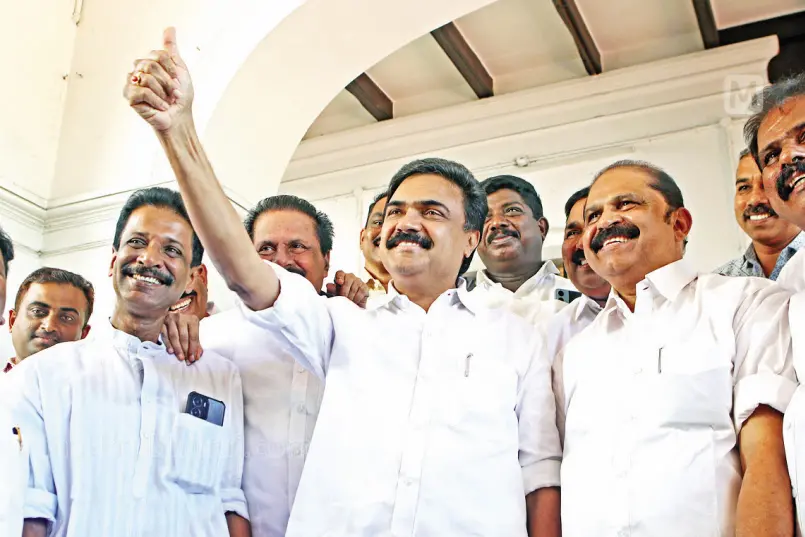
Recently, yet again, all eyes turned to the Kerala Congress. The state was in the throes of suspense for days together over the question - Will KC (M) cross over from the Left Democratic Front (LDF), where it had been for one year before the 2021 assembly elections and return to the United Democratic Front (UDF) with barely three months to the next polls? Rumour mills worked overtime, with the media crying hoarse about the growing divide within KC over the issue. According to media reports, Chairman Jose K Mani sought to return to the UDF, while Roshy Augustine, the state Irrigation Minister and the party’s second-in-command, insisted on staying with the LDF. For seasoned observers, it was deja vu. The script looked the same; only the cast was different.
However, a few days later, Mani Junior dismissed the speculations as baseless and declared that his party would remain firmly with the LDF. “That book is closed forever”, he said. Yet, such denials, too, have been part of the KC folklore, which would vanish into thin air when the “rumours” turn out to be true. Therefore, with three more months still to go before the next assembly elections, nothing can be ruled out, as there is enough time for stunning developments to unfold. Three months is a long time in the political calendar. And for the KC, it is an eternity.
Also Read
No other party in Kerala’s political history has switched sides with the fluidity of a gymnast. It's tough to keep track of the countless splits in the KC and the political somersaults it made over the six decades of its history since its birth in 1964, when it broke away from the Indian National Congress. At certain points, as many as five KC splinters coexisted, aligned variously with the UDF, the LDF or even the BJP. Each faction was identified by the first letter of its leader’s name in brackets: KC(M), KC(J), KC(B), KC(S) and more. Problems arose when rival leaders shared the same initial letter of their names, such as Joseph and Jacob. A running joke was that the English alphabet might prove inadequate to keep pace with the splintering.
Yet, the somersaults have outnumbered the schisms. Political Ideology or personal loyalty has never stood in the way of switching sides, even quicker than one could say 'Mani'. Power has been the motive; back-stabbing, betrayal, subterfuge, and skullduggery, the method. The undisputed master of this acrobatics was the inimitable KM Mani.
The KC, which contested elections independently until 1969 before joining the anti-CPI(M) front led by the CPI and Congress. But excluded from the government of 1970, KC, led by Mani, crossed over to the CPI(M) camp. During the Emergency proclaimed in 1975 by Prime Minister Indira Gandhi, leaders from all opposition parties, including the KC, were jailed. As the dreaded Emergency dragged on, KC leaders grew restive. The Congress promptly sent feelers to KC, combined with the stick and the carrot. KC leaders like George were summoned to Delhi multiple times, where Central Intelligence Bureau officers and KC Pant, the Union Home Minister of State, met them. The message was blunt: join the Congress front and become ministers or face more prison terms. The Catholic Church and its mouthpiece, Deepika, also pressured their sheep to distance themselves from the “godless Commies”. With the prospects of new posts in the air, intense haggling and bargaining erupted within the KC over who would become ministers. Six months into the Emergency, KC joined the Congress front with Mani and R Balakrishna Pillai becoming ministers and TS John, the Speaker, in December 1975. “They asked us, power or prison? We had no option,” Pillai later revealed innocently.
In 1976, George passed away, and Mani became all-powerful, leading to the first official split, with Pillai forming his faction. The UDF swept the 1977 assembly polls, in contrast to the Congress’s historic national defeat paying for the inhuman deeds of the Emergency. The KC secured three berths in the K Karunakaran ministry, with Mani holding the powerful Home portfolio. Two years later, KC split again, this time between Mani and his long-term rival, P.J. Joseph. The Congress-led government fell after the faction led by Chief Minister AK Antony and the CPI subsequently left to join the CPM camp.
In 1979, a ramshackle government came to power, led by CH Mohammed Koya of the Muslim League, backed by both KC factions and with outside support from the Congress. This remains the only state government led by the League in India since independence. But the Koya ministry fell three months later when Mani pulled the plug, feeling his rival faction had been given more priority. According to some, Mani’s anger actually stemmed from not being appointed chief minister.
Mani swung like a pendulum back to the CPM camp, which he had deserted during the Emergency. Neither had the Left any qualms to embrace the one who stabbed them in the back. In 1980, Mani became the powerful Finance Minister in the CPM-led government. He even became Chief Minister Nayanar’s close friend.
Hardly a year had passed when Mani was gripped again with his craving. Congress under Indira Gandhi was back in power in Delhi. The ‘Mr Clean” AK Antony, who had left the Congress in 1978 protesting against fielding Indira in the Chikkamagalore by-election and joined the CPM camp, returned to Indira’s arms. The Antony Congress’s exit made the Nayanar ministry’s survival dependent on KC.
An encore of all the drama of the Emergency period began behind the curtains. Congress knew that the CPM ministry would topple if it could woo Mani back into its fold, as before. The foxy K Karunakaran spread the net and again took out the carrots for Mani. As before, the Catholic Church and Deepika stepped in again. Congress offered KC more seats to contest, ministerial berths and much more if KC dumped the Left. Congress national president Moopanar formalised these offers in writing. Finally, Prime Minister Indira Gandhi’s Principal Secretary, P. C. Alexander, called Mani and made offers laced with some veiled warnings. Mani soon withdrew support from the CPM-led government in October 1981. Nayanar resigned immediately and never forgave Mani for toppling him.
Karunakaran formed the new government in which Mani returned as the Finance minister, along with Joseph from the other KC. But since the ruling UDF and the LDF had equal numbers in the house, the lame duck government survived on the Speaker's casting vote. It lasted only 80 days as Lonappan Nambadan, a KC legislator opposed to Mani's backstabbing of the Left, withdrew support. With the UDF winning the ensuing 1982 elections, all three KC factions merged into a united party, enabling it to have four ministers in the third Karunakaran government. Needless to say, Mani was among them, along with other faction leaders.
In the next elections, the CPM kept out all communal parties from its fold and romped home in 1987. The second Nayanar government took over, the first ministry since 1977 without having any KC faction. Four years later, Rajiv Gandhi's assassination helped the UDF storm into power in 1991. Mani, along with Pillai and T.M. Jacob, became ministers. By then, the united KC was split again, and Joseph buried his long-standing hostility to join the LDF, which, in turn, swallowed its earlier perception of all KC factions as communal outfits.
From 1981 to 2019, Mani maintained an unusually stable relationship with the UDF lasting nearly four decades. However, during this period, it was Joseph's turn to break his two-decade-long association with the LDF, serving as minister twice. In 2010, he surprised all by quitting the Achuthanandan ministry, which had only one year left, to merge with Mani, his bete noire. Next year, UDF was back in power, and both Mani and Joseph were in the Oommen Chandy ministry. During this period Mani got embroiled in the bar bribery scandal.
Mani believed the Congress had a tacit role in the scandal and also in registering the vigilance case against him under the Home Ministry headed by Ramesh Chennithala. After adverse remarks by the Kerala High Court against him in the vigilance case, Mani resigned in October 2015. Mani grew increasingly hostile to the Congress and wrote articles against both the Congress and the BJP, even as he praised the LDF.
A six-time minister and the longest-serving member of the assembly (he got elected 13 times continuously), Mani passed away in 2019 at the age of 86. Almost immediately, a bitter succession war erupted between Joseph and Mani's son, Jose K Mani, then a member of the Rajya Sabha. Congress backed Joseph and Jose quit the UDF in January 2021 to join the LDF.
Jose resigned from the Rajya Sabha and contested from Pala as an LDF candidate in the 2021 assembly elections. He lost despite the pro-Left wave across the state, which helped LDF win a second successive term in power for the first time. Jose was shocked by his defeat in Pala, his family turf, which had elected his father continuously for over half a century. Though Jose showed he was a chip of the old block when it came to political acrobatics, the people of Pala weren't impressed.
The coming three months, in the run-up to the next assembly election, will determine whether KC(M) will assert its genetic instinct -to split or somersault. Or will the party’s newgen leaders dare to close a book that has stubbornly refused to end ?
Published: 24 Jan 2026, 11:10 am IST
ABOUT THE AUTHOR
Related Topics
Disclaimer: Kindly avoid objectionable, derogatory, unlawful and lewd comments, while responding to reports. Such comments are punishable under cyber laws. Please keep away from personal attacks. The opinions expressed here are the personal opinions of readers and not that of Mathrubhumi.