

Analyzing LDF, UDF, and BJP`s strategies, demographic shifts, and the state`s political future
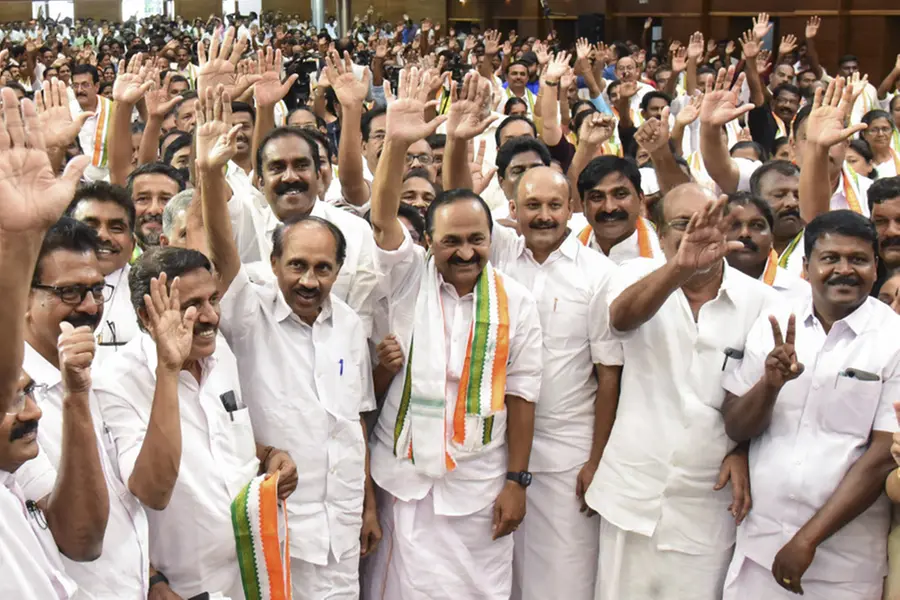
As Kerala marks the 70th year of formation, the state is bracing for an Assembly election that promises to be among the most bitterly contested in its political history. Far more than a routine alternation of power, the forthcoming contest carries existential implications for all three major political formations. For the ruling Left Democratic Front (LDF), victory has become imperative to preserve what is arguably its last bastion in the country at a time when the Indian Communist movement itself has entered its centenary. For the Congress-led United Democratic Front (UDF), another defeat in one of its remaining strongholds would hasten the collapse of an already enfeebled alliance. Relatively, the stakes appear lower for the BJP-led National Democratic Alliance (NDA), which still has no legislative presence in Kerala. Yet even for the NDA, the election is crucial to consolidate its emergence as a credible third force and to accelerate its long-term project of reshaping Kerala’s political landscape.
The verdict of the recent local self-government (LSG) elections has already sent a powerful message. The massive anti-incumbency sentiment against the LDF cut across religions and castes. Even though disaggregated statistical data is yet to be released, the broad trends are unmistakable: while Hindu communities appear to have moved in large numbers towards the NDA, minorities have consolidated almost entirely behind the UDF. The outcome suggests a sharp polarisation along religious lines—one that leaves the LDF stranded without any dependable vote bank of its own.
This is the LDF’s most serious predicament. Unlike its rivals, it does not enjoy the comfort of entrenched religious or caste loyalties. Its electoral appeal has historically rested on governance, ideological coherence, and a perception of principled secularism. With anti-incumbency running high and identity polarisation intensifying, the Left’s prospects in the coming Assembly election appear bleak. Logically, this should compel the LDF to consciously reject identity politics and attempt a political rebranding that transcends religious and caste divides. But with barely four months left for the polls, such a makeover seems neither feasible nor credible.
There is an instructive parallel in what happened to the Left in West Bengal. Once the Trinamool Congress steadily drew away Muslim votes—earlier a solid base of the CPI(M)—the BJP simultaneously began to eat into Hindu votes. Squeezed from both ends, the Left was left with little social space to survive. The Congress had already been marginalised earlier, leaving the field open for a new bipolarity that ultimately proved fatal to the Left Front.
Kerala has so far avoided such a denouement, largely because of the absence of a charismatic, Mamata Banerjee–like figure who could dismantle the existing bipolar structure. This has allowed the UDF to retain one pole of Kerala’s politics, with the LDF occupying the other. At present, the Congress appears firmly entrenched, buttressed by the staunch support of minorities who together constitute around 45 per cent of the population.
Yet the steady rise of the BJP is pushing Kerala towards a triangular polity. The critical question now is whether this will eventually settle into a new bipolarity—and if so, which formation will be pushed to the margins. As of now, the NDA remains a distant third, trailing far behind both the UDF and the LDF, which command nearly double its vote share. But the trends within Hindu society suggest a potentially transformative shift. In the 2024 Lok Sabha elections, over 40 per cent of Nairs and more than 30 per cent of Ezhavas reportedly voted for the NDA. This has emboldened the BJP to believe that it can soon become the principal recipient of Hindu votes in the state.
The contrast with the recent past is stark. In the 2021 Assembly elections, the LDF commanded nearly 50 per cent of the Hindu vote, while the UDF secured 26 per cent and the self-proclaimed Hindu alliance, the NDA, only 25 per cent. Among Nairs, the LDF had 32 per cent support and the UDF 38 per cent; among Ezhavas, the Left’s share was as high as 53 per cent, with the UDF trailing at 21 per cent. The NDA’s share among Nairs and Ezhavas stood at a modest 25 and 21 per cent respectively. By 2024, these figures had jumped dramatically to around 45 per cent among Nairs and 32 per cent among Ezhavas, and there is little reason to believe that the trend reversed in the 2025 LSG polls.
What these shifts underline is a fundamental truth of Kerala’s electoral politics: neither the UDF nor the LDF can claim a permanent vote bank. Multiple studies since 2016 have shown that the Kerala electorate displays remarkable volatility, largely unaffected by traditional identity markers such as religion, caste, age, gender, locality, or even class. Voters have repeatedly shifted their allegiance across elections. Minorities, who had overwhelmingly favoured the UDF for decades, voted in significant numbers for the Left in 2016 and 2021, prompting analysts to speak of a new sociological realignment in Kerala politics.
At the same time, the NDA has been steadily expanding its footprint since 2009, particularly among Nairs, who were earlier divided almost evenly between the UDF and LDF. From 2016 onwards, there was a visible erosion of the traditionally pro-Left Ezhava vote and even Scheduled Caste support towards the saffron camp. The Sabarimala agitation of 2018–19 turned this erosion into a torrent, accelerating the drift of Nair votes from the Left to the BJP. Only the numerically small Scheduled Tribe vote remained largely intact with the LDF.
The 2024 Lok Sabha elections and the recent LSG polls, however, reveal a new configuration. While minorities—especially Muslims—have historically backed the UDF with 60–70 per cent support in parliamentary elections, the latest local body results suggest that this consolidation has now extended to grassroots elections as well, possibly for the first time. Even the small five per cent Christian vote share that the NDA managed to secure in 2024 appears to have returned to the UDF, as indicated by the sharp decline in the BJP’s farmer support base.
The emerging pattern is clear. Minorities have returned almost entirely to their traditional political moorings with the UDF, while Nairs and Ezhavas continue to gravitate towards the NDA. The biggest casualty of this churn is the LDF. It has lost the minority support that had substantially increased in 2016 and 2021, while simultaneously suffering further erosion among Hindu communities to the saffron camp.
Anti-incumbency is undoubtedly the immediate cause of this reversal. But national factors cannot be ignored. It would be naïve to assume that Kerala’s Hindus will remain permanently immune to the hegemonic appeal of Hindutva, even if its magnetism is weaker here than elsewhere. The growing consolidation of minorities behind the Congress—the country’s largest opposition party—is itself a response to the same phenomenon. If Hindu consolidation is driven by attraction to Hindutva politics, minority consolidation is propelled by fear of it.
In Kerala, however, the CPI(M) has also played a role in alienating minorities, especially Muslims. Ironically, Communist leaders have long lamented their failure to win minority confidence despite consistently defending minority rights and resisting majoritarianism. E.M.S. Namboodiripad repeatedly identified this as the Left’s key weakness in Kerala. Yet the last two decades witnessed significant inroads by the CPI(M) into the Muslim community. Its firm opposition to Hindu majoritarianism—both at the national and state levels—contrasted sharply with the Congress’s ambivalence from the Babri Masjid demolition to the anti-CAA movement. This helped the Left win Muslim goodwill. The LDF’s Muslim vote share neared 40 per cent for the first time in the 2004 Lok Sabha elections and ranged between 30 and 39 per cent in Assembly elections from 2006 to 2021. A similar pattern was visible among Christians, leading analysts to speak of a new social engineering under way.
The past five years, however, have reversed this trend. Beyond national developments, the CPI(M) has acquired an image—fair or otherwise—of being anti-Muslim and even a “secret ally” of the BJP. While opposition propaganda has amplified this perception, the party’s own words and actions have contributed to it. Its sustained attacks on Jamaat-e-Islami after the organisation aligned with the UDF were portrayed as assaults on the Muslim community. Sharp criticism of the Muslim League had a similar effect.
Simultaneously, the CPI(M)’s endorsement of Vellappally Natesan, who has repeatedly made anti-Muslim remarks, its organisation of events like the Ayyappa Sangamam, and its overtures to the Nair Service Society reinforced allegations of a “soft Hindu” line. These moves were clearly aimed at arresting the erosion of Hindu votes but came at the cost of minority trust. There were also accusations that the party was appeasing Christians through its alliance with the Kerala Congress (M) while turning a blind eye to Islamophobic statements by some Church leaders.
Notably, Kerala’s CPI(M) has begun attracting international scrutiny. A December 2024 article in Jacobin, the US-based Left wing magazine, titled “Indian Communists’ Muslim Dilemma”, accused the party of alienating Muslims in Kerala just as it did earlier in West Bengal, despite Muslims constituting around a quarter of the population in both states. The author, Shadnan Ali Khan, argued that in trying to offset short-term setbacks such as the erosion of Ezhava support, the CPI(M) resorted to “populist reasoning”, invoking the spectre of Muslim extremism to reassure non-Muslim voters. He cited statements attributed to leaders like Pinarayi Vijayan and V.S. Achuthanandan as borrowing from the lexicon of Hindutva politics.
Drawing parallels with West Bengal, Khan recalled how early Left Front policies had benefited Muslims, only for subsequent developments—most notably Nandigram—to trigger alienation. By the 2009 general election, this had resulted in a 10 per cent shift in Muslim votes away from the Left, paving the way for its eventual collapse.
The article concludes by locating the crisis in a deeper ideological malaise. At its core, it argues, the CPI(M)’s predicament is a crisis of imagination about the nature of social transformation it seeks. Its reliance on balancing majority–minority calculations to remain electorally relevant traps it within identity conflicts, undermining its long-standing claim of transcending such divisions through working-class politics.
Whether the Left in Kerala can escape this trap—or whether it is headed towards the fate of its West Bengal counterpart—may well be decided in the election that awaits a state turning seventy, yet confronting one of the most consequential crossroads in its political history.
Published: 03 Jan 2026, 10:14 am IST
ABOUT THE AUTHOR
Related Topics
Disclaimer: Kindly avoid objectionable, derogatory, unlawful and lewd comments, while responding to reports. Such comments are punishable under cyber laws. Please keep away from personal attacks. The opinions expressed here are the personal opinions of readers and not that of Mathrubhumi.