Life on Saturn’s moon? New study finds Enceladus could support microbes
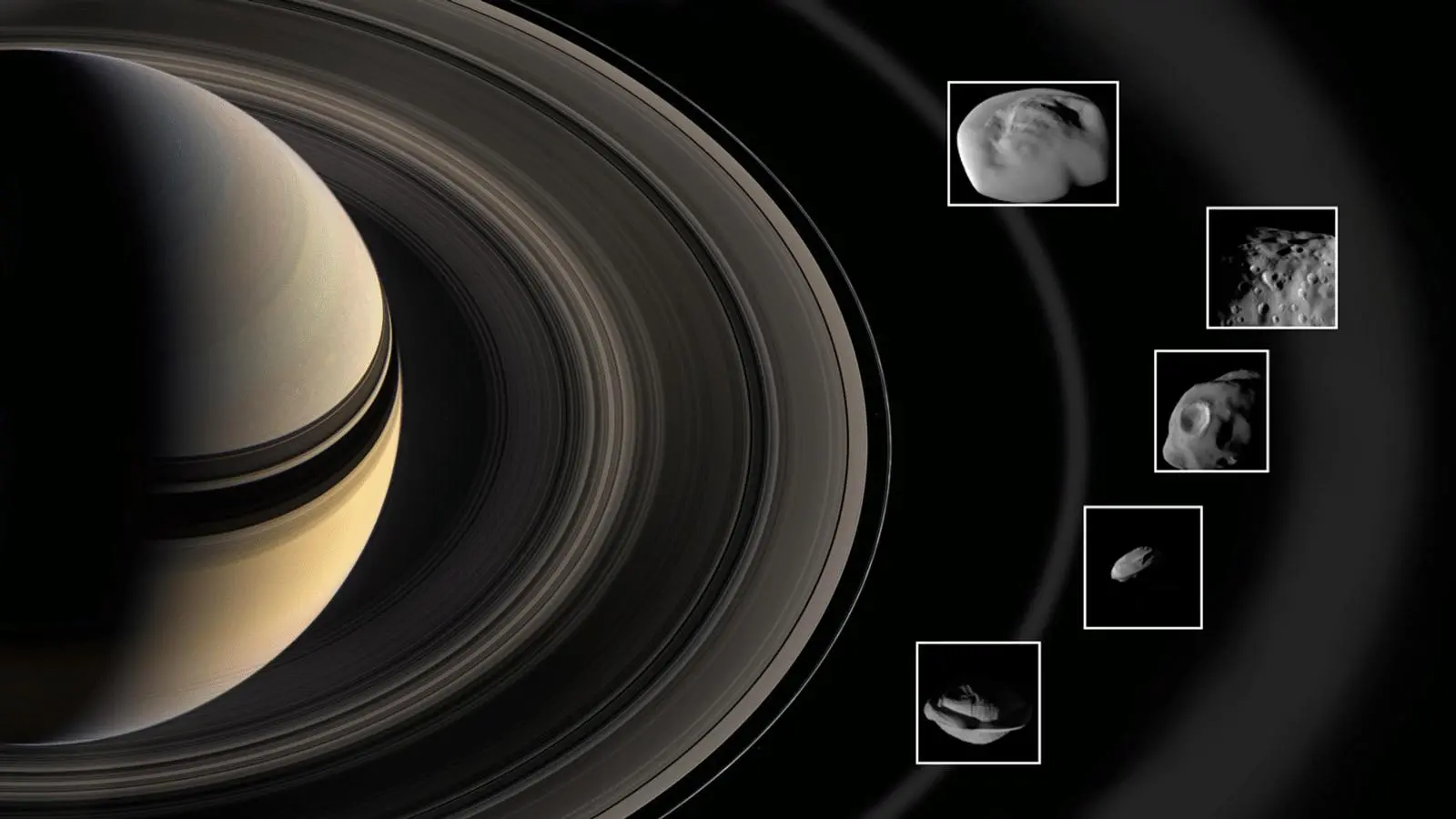
Scientists have found new evidence that Enceladus, one of Saturn’s moons, could provide conditions suitable for certain forms of microbial life.
A study led by researchers at Ludwig-Maximilians-Universität München (LMU) recreated the extreme chemical conditions believed to exist on the seafloor beneath Enceladus’ icy crust. The experiments showed that a methane-producing microorganism was able to survive and continue growing in an environment previously considered highly challenging for such organisms.
The research involved scientists from LMU, the University of Regensburg, the Woods Hole Oceanographic Institution and Freie Universität Berlin. The findings were published in Science Advances.
Scientists recreate Enceladus conditions
Enceladus has a thick outer ice shell covering a global ocean of liquid water. Data collected by NASA’s Cassini mission showed that plumes of water and other material regularly erupt from cracks in the moon’s icy surface.
Those plumes contain molecular hydrogen, methane and dissolved minerals. Scientists have interpreted these findings as evidence of hydrothermal activity and chemical reactions between water and rocks on the ocean floor.
To reproduce these conditions, researchers created an oxygen-depleted environment in the laboratory. Oxygen levels in the experiment were around 10,000 times lower than those in Earth’s atmosphere.
They also used carbonate salts to recreate the highly alkaline, hypersaline conditions believed to exist in Enceladus’ ocean.
The researchers then introduced Methanothermococcus okinawensis, a methane-producing archaeon that naturally lives around deep-sea hydrothermal vents on Earth.
Microbe survived extreme conditions
The microorganism uses hydrogen and carbon dioxide to obtain energy and produce methane. This type of metabolism is considered one of the most ancient energy-producing processes retained by organisms on Earth.
Under conventional laboratory conditions with a pH of 10 or 11, the organism failed to grow. However, it continued growing in the simulated Enceladus environment.
The researchers found that the microorganism could use hydrogen generated through water-rock reactions and produce methane despite the highly alkaline conditions.
How Enceladus could provide carbon
One of the major challenges for potential life on Enceladus is the very low availability of carbon dioxide. The moon’s highly alkaline ocean chemistry limits the amount of freely available CO₂.
The experiments indicated that Methanothermococcus okinawensis could adapt to these conditions and make use of the small amounts of carbon dioxide available.
The researchers said the interaction between Enceladus’ rocky interior and ocean could therefore perform two important functions: generating hydrogen that microbes could use for energy and creating chemical conditions that help them access carbon.
Does this prove life exists on Enceladus?
No. The experiment does not establish that life exists on Enceladus.
Instead, it demonstrates that a specific type of microorganism can survive and maintain an ancient form of metabolism under laboratory conditions designed to resemble the moon’s environment.
The findings therefore expand the range of environments scientists consider potentially habitable when searching for life beyond Earth.
Why the Cassini mission matters
NASA’s Cassini spacecraft provided much of the evidence that made Enceladus a major target in the search for extraterrestrial life.
During its mission, Cassini flew through material erupting from the moon and detected water vapour, molecular hydrogen, methane and other compounds. These observations indicated that Enceladus has liquid water and active chemistry beneath its icy surface.
Because the ocean is hidden beneath ice, directly studying it remains difficult. The plumes offer scientists a potential way to examine material originating from the subsurface environment without drilling through the entire ice shell.
The study is significant because it moves the discussion beyond simply asking whether Enceladus has water. For life as we know it, researchers also need to consider energy sources, carbon availability and chemical conditions.
The new experiments suggest that the interaction between water and rock inside Enceladus could provide both an energy source and chemical conditions that allow certain microbes to obtain carbon. That does not demonstrate an inhabited ocean, but it strengthens the scientific case for investigating Enceladus directly.
The researchers say the findings support future missions capable of analysing material from the moon’s ocean-derived plumes. The study notes that the European Space Agency has announced plans for a future flagship mission, currently referred to as L4, with a launch currently foreseen for 2042.
The key distinction is that the research demonstrates habitability potential, not the discovery of extraterrestrial life.