
Karwa Chauth 2026 falls on October 29. Check Delhi-NCR puja time, Moon rise time, sargi traditions, puja vidhi and the Karwa Chauth vrat katha.
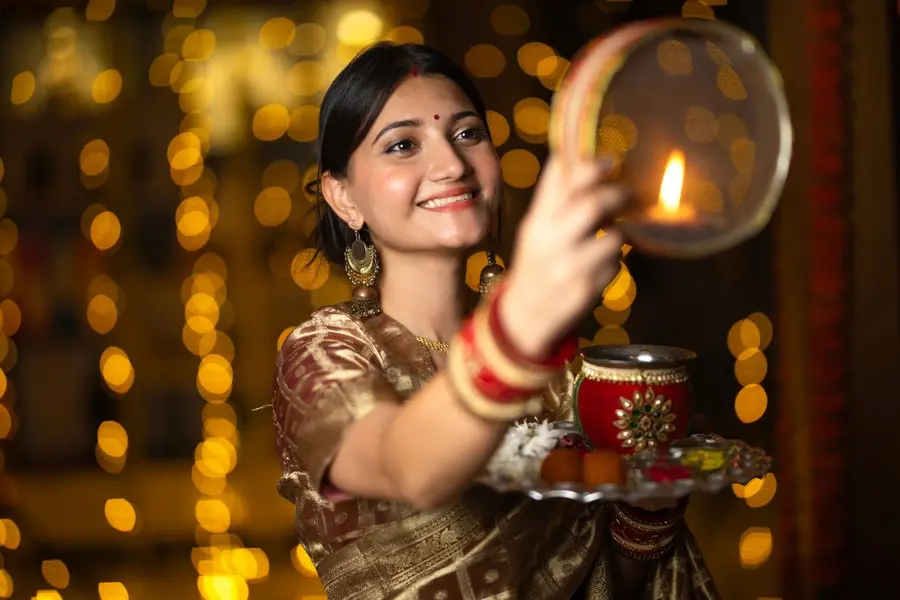
Karwa Chauth 2026: The festival is being observed on Thursday, October 29. Married women observe a day-long fast and pray for their husbands’ long life, good health and a happy married life. The fast traditionally begins after the pre-dawn sargi meal and is broken after offering water to the Moon and completing the evening rituals.
If you are observing Karwa Chauth today, here are the important timings for Delhi-NCR, the puja vidhi, the sargi tradition and the Karwa Chauth vrat katha.
Karwa Chauth 2026: Date and puja time
Karwa Chauth falls on the Chaturthi Tithi of Krishna Paksha in the Hindu month of Kartik. In 2026, it is being observed on October 29.
Chaturthi Tithi begins: Around 1:06 am on October 29
Chaturthi Tithi ends: Around 10:09 pm on October 29
Karwa Chauth puja time: Around 5:38 pm to 6:56 pm
Moonrise in Delhi: Around 8:17 pm
The moonrise time may vary by city.
Karwa Chauth sargi time 2026
Sargi is the pre-dawn meal traditionally eaten before the Karwa Chauth fast begins. In many families, a mother-in-law prepares or gives sargi to her daughter-in-law as part of the festival tradition.
The meal may include fruits, sweets, dry fruits and other nourishing foods. Women generally eat sargi before sunrise and then observe the fast until the Moon appears in the evening.
There is no single sargi time applicable to every city. Women observing the fast should follow the local sunrise time and their family’s customs. The fast is traditionally observed without food or water by many women, although practices may vary.
Karwa Chauth puja vidhi: How to perform the rituals
Women usually prepare a puja thali and worship Lord Shiva, Goddess Parvati, Lord Ganesha and Karwa Mata in the evening. The rituals may differ across regions and families.
The usual steps are:
- Eat sargi before sunrise
- Prepare for the evening puja
- Offer prayers
- Perform the Karwa puja
- Listen to the vrat katha
- Once the Moon is visible, offer water and pray for the family’s well-being
- Break the fast: In many families, women look at the Moon and their husbands through a sieve before breaking the fast with water and food.
Karwa Chauth vrat katha: The story of Veeravati
The Karwa Chauth vrat katha is traditionally associated with Veeravati, the daughter of a wealthy merchant. According to the popular story, she was the only sister of seven brothers.
After her marriage, Veeravati observed Karwa Chauth for the first time. As she waited throughout the day for the Moon to rise, the fast left her weak and hungry. Her brothers, worried about her condition, decided to make her believe that the Moon had appeared.
They placed a lamp behind a sieve on a distant tree, creating the impression of moonlight. Mistaking it for the Moon, Veeravati ended her fast. Soon afterwards, she received distressing news about her husband.
The story says that Veeravati prayed to Goddess Parvati with devotion. According to the traditional account, the goddess blessed her and her husband was restored to life. Veeravati then completed the fast with devotion.
The tale is recited as part of the Karwa Chauth tradition and reflects the religious belief associated with the fast.
Why is the Moon worshipped on Karwa Chauth?
Moon worship is one of the central rituals of Karwa Chauth. According to religious beliefs, offering water to the Moon and praying after moonrise symbolise a woman’s wishes for her husband’s long life, good health and a peaceful married life.
These customs vary according to regional practices and family traditions.
Published: 29 Oct 2026, 10:55 am IST
ABOUT THE AUTHOR

Related Topics
Disclaimer: Kindly avoid objectionable, derogatory, unlawful and lewd comments, while responding to reports. Such comments are punishable under cyber laws. Please keep away from personal attacks. The opinions expressed here are the personal opinions of readers and not that of Mathrubhumi.