
As NASA and a Sino-Russian coalition scramble to land nuclear reactors on the Moon, corporate visionaries like Elon Musk and Jeff Bezos are building an off-planet digital economy—testing the limits of 1960s space law
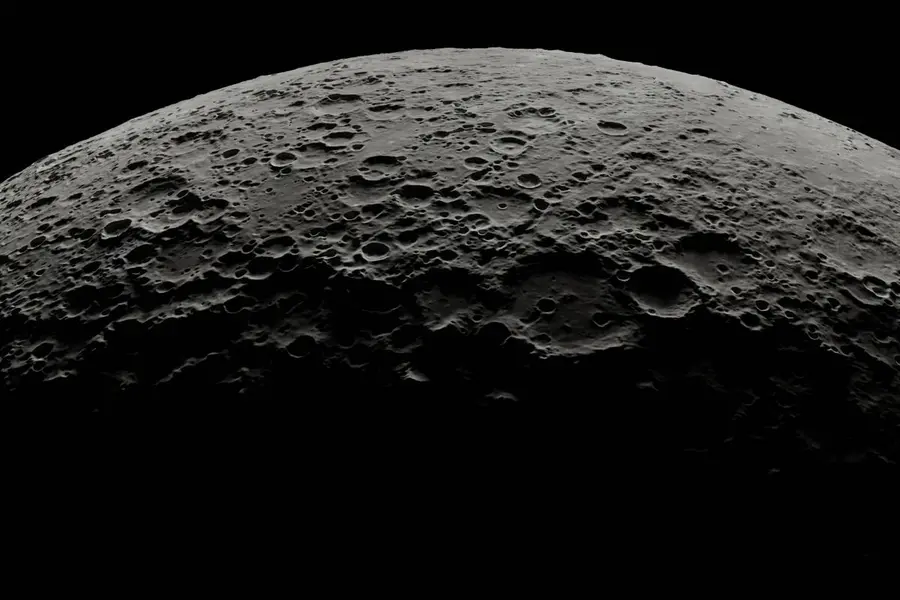
A new geopolitical and technological space race is unfolding across the cislunar void. Unlike the symbolic competition of the Cold War, the twenty-first-century scramble for Earth’s satellite is defined by permanent surface habitability, industrial-scale resource extraction, and off-planet computing infrastructure. At the centre of this contest is an urgent technological imperative: securing continuous, high-density nuclear power on the lunar surface.
Surviving on the Moon requires energy on a scale that conventional space technology cannot deliver. The lunar night lasts for roughly fourteen Earth days, plunging surface temperatures to a bone-chilling minus 223 degrees Celsius.
Also Read

Solar panels are completely useless during this fortnight of darkness, and chemical fuel cells cannot scale to meet the continuous multi-kilowatt and megawatt demands of permanent life-support habitats and heavy industrial processing.
Heavy industrial operations such as Molten Salt Electrolysis -- which dissolves lunar regolith in liquid salt at temperatures exceeding 900 degrees Celsius to strip out life-sustaining oxygen and yield structural metallic alloys -- are extraordinarily power-hungry.
Converting energy to electricity through standard solar or thermal setups wastes roughly 60 percent of power as heat, making nuclear fission surface power the sole viable, durable solution for long-term lunar colonization.
Consequently, the international competition is focused primarily on the lunar South Pole, where permanently shadowed craters harbour rich deposits of water ice essential for rocket propellant and life support.
Under its Fission Surface Power initiative, NASA has established a target to deploy its first surface reactor, designated Lunar Reactor 1, near the lunar South Pole by December 2030.
Driven by executive directives accelerating the National Initiative for American Space Nuclear Power, NASA’s program calls for a 20-to-100-kilowatt class system utilizing Low-Enriched or High-Assay Low-Enriched Uranium fuel and a closed Brayton cycle thermal management system.
Engineered to operate autonomously without human maintenance for at least five years, the reactor will be delivered fully assembled on a commercial lander. Senior US space policy officials explicitly accelerated the program out of strategic concern that a rival deployment by China and Russia could allow the coalition to establish restricted exclusion zones over prime water-ice real estate.
Standing in direct opposition is the International Lunar Research Station, a joint initiative led by the China National Space Administration and Roscosmos. Russia has tasked its state agencies, including Rosatom, NPO Lavochkin, and the Kurchatov Institute, with developing an automated lunar nuclear reactor named Selena. Designed to generate between 10 and 100 kilowatts of autonomous power for up to 10 years, Selena is slated for delivery to the lunar surface between 2033 and 2036 to provide uninterrupted baseload energy for the research complex.
Concurrently with state-funded atomic installations, private commercial enterprises are expanding the frontier of space industrialization into high-density computing infrastructure.
Terrestrial data centers face escalating grid constraints, local permitting battles, and power delivery delays ranging from two to ten years. Moving computing payloads into orbit and onto the lunar surface promises access to uninterrupted solar energy, natural radiative cooling, and immunity from terrestrial physical or cyber disruptions.
Jeff Bezos, founder of Blue Origin, has outlined a multi-decade roadmap focused on shifting energy-intensive industries, specifically gigawatt-scale artificial intelligence training data centers, off Earth. Supported by Blue Origin's heavy-lift New Glenn rocket, the Blue Moon lunar lander, liquid hydrogen cryocoolers operating at 20 Kelvin, and the Tera Wave optical communications architecture, Bezos envisions in-space manufacturing and computing hubs powered by continuous 24/7 sunlight.
Elon Musk’s SpaceX provides the heavy transport backbone for this off-planet infrastructure through its 124-meter-tall Starship platform, which achieved Earth orbit on its fourteenth test flight while deploying 26 next-generation Starlink V3 satellites.
By targeting launch costs of roughly $200 per kilogram compared to $2,700 per kilogram on the Falcon 9, Starship eliminates historical mass restrictions, enabling the transport of heavy radiation shielding, structural enclosures, and large server arrays directly to cislunar space.
SpaceX has also filed with the Federal Communications Commission for approval to deploy a solar-powered space data center constellation comprising up to one million satellites connected via optical laser links.
In early 2025, Florida startup Lonestar Data Holdings launched its one-kilogram Freedom payload, the world's first physical lunar hardware data center, aboard Intuitive Machines' IM-2 Athena lander via a SpaceX Falcon 9 rocket.
Built with radiation-shielded Phison Pascari enterprise solid-state drives and Microchip PolarFire FPGAs inside a 3D-printed shell designed by Bjarke Ingels Group, Freedom survived touchdown near Shackleton Crater intact.
Operating as an off-planet external hard drive for Earth, Freedom stores sovereign backup data for the State of Florida alongside commercial client records, demonstrating that solid-state storage can endure extreme lunar launch forces, radiation, and thermal swings.
Concurrently, Nvidia-backed startup Starcloud achieved a major milestone in late 2025 by training an AI model in orbit using commercial Nvidia H100 GPUs, and has partnered with Firefly Aerospace to deploy an AI data-processing payload to lunar orbit aboard the Elytra spacecraft in 2028.
The rapid convergence of permanent atomic bases, mining operations, and private corporate data centers has pushed international space law to a breaking point. The legal baseline remains the 1967 Outer Space Treaty, negotiated during the Cold War when commercial mining and long-term surface occupation were purely theoretical.
Contemporary operations trigger friction across three core provisions: Article II, which prohibits national appropriation of celestial bodies by claim of sovereignty, use, or occupation; Article VI, which holds nation-states legally liable for all national space activities including private enterprises; and Article IX, which mandates that states conduct activities with due regard to others and initiate consultations to avoid harmful interference.
To bridge regulatory gaps without waiting for UN multilateral consensus, two competing governance frameworks have emerged. The US-led Artemis Accords, which grew to 75 signatory nations by September 2026, establish a non-binding soft-law arrangement.
Section 10 asserts that space resource extraction does not constitute national appropriation, while Section 11 introduces safety zones -- declared operational perimeters around lunar activities to manage proximity risks, dust plumes, and radiation hazards.
Conversely, non-signatories China and Russia reject the Accords as a US-centric initiative and lead the competing ILRS alliance alongside member states such as South Africa, Egypt, Pakistan, Belarus, Thailand, Venezuela, Kazakhstan, Nicaragua, Serbia, and Senegal.
Critics caution that safety zones declared around nuclear reactors could be deployed unilaterally as de facto keep-out zones over prime lunar terrain, effectively fracturing cislunar governance into rival geopolitical blocs.
As superpower competition intensifies, spacefaring nations are pushing forward with distinct exploration timelines. While NASA targets December 2030 for its surface reactor at the Artemis Base Camp, the Sino-Russian coalition is advancing its three-phase International Lunar Research Station roadmap.
Following Phase 1 reconnaissance -- highlighted by China's historic Chang'e 6 mission in June 2024 which retrieved the first far-side lunar samples from the Apollo Basin -- Phase 2 construction begins with China's Chang'e 7 in 2026, Chang'e 8 testing resource utilization in 2028, and Russia's Luna 26 orbiter in 2028 and Luna 27 lander in 2029.
Between 2031 and 2035, five crucial heavy-lift launches using Long March 9 and Yenisei rockets will establish command centers, energy grids, and telecommunication nodes, culminating in Phase 3 long-term human utilization from 2036 supported by the Selena nuclear plant.
Independently, India's ISRO has formulated a master plan targeting a moon-orbiting space station by 2040 and a permanent crewed surface base by 2050, backed by indigenously developed Plutonium-238 Radioisotope Thermoelectric Generators and surface fission units.
Meanwhile, the European Space Agency is developing its Argonaut heavy lander for launch around 2030, pioneering Americium-241 radioisotope power systems extracted from civil plutonium stocks to sustain operations through the lunar night.
As heavy landers, atomic reactors, and server racks touch down on the regolith, governance on the Moon is no longer being written in diplomatic halls, but is being defined in real-time by physical presence and operational control on the lunar surface.
Published: 05 Oct 2026, 01:07 pm IST
Related Topics
Disclaimer: Kindly avoid objectionable, derogatory, unlawful and lewd comments, while responding to reports. Such comments are punishable under cyber laws. Please keep away from personal attacks. The opinions expressed here are the personal opinions of readers and not that of Mathrubhumi.