
As India marks World Environment Day 2026, climate change is no longer a distant concern but an everyday reality affecting health, livelihoods, food security, water resources and daily life across the country.
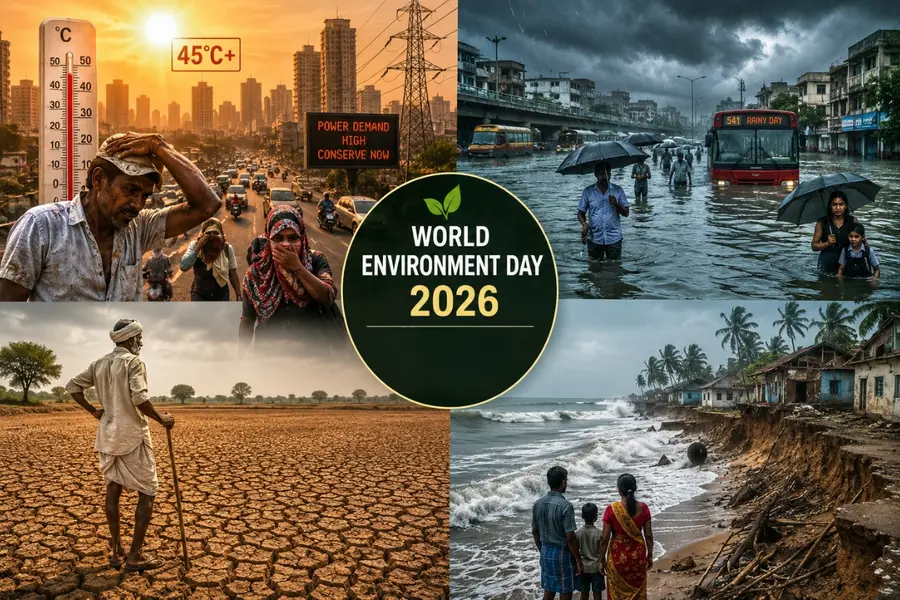
Climate change is no longer a problem of the future. Across India, rising temperatures, extreme weather events, changing rainfall patterns and environmental degradation are already reshaping how people live, work and travel.
As the world observes World Environment Day 2026, the impacts of global warming are becoming increasingly visible in homes, farms, cities and coastal communities.
Also Read

World Environment Day 2026 is observed on June 5, bringing global attention to environmental challenges and encouraging action to protect the planet and promote sustainable living.
India's summers are becoming more dangerous
One of the most visible effects of climate change is the rise in extreme heat. During the summer of 2026, several parts of northern, central and western India experienced temperatures above 45°C, with heatwaves arriving earlier than usual.
A growing concern is the disappearance of "cool nights". Expanding urban areas covered by concrete and asphalt absorb heat during the day and release it slowly at night, creating urban heat islands. As a result, millions of people are unable to get relief even after sunset, increasing the risk of heat-related illnesses.
Research suggests that extreme heat is emerging as a major public health challenge, contributing to increased cases of cardiovascular and respiratory illnesses, particularly among the elderly, outdoor workers and vulnerable populations.
Rising temperatures are increasing electricity demand
As temperatures climb, households and businesses are becoming more dependent on air conditioners, coolers and fans. This surge in cooling demand is placing significant pressure on India's power grid.
Many cities are witnessing rising electricity bills and occasional power disruptions during peak summer periods. Managing energy consumption has become a daily concern for families trying to stay comfortable while controlling costs.
Coastal communities face growing risks
India's 11,000-kilometre coastline is experiencing some of the most dramatic effects of climate change.
In parts of Kerala and Tamil Nadu, rising temperatures combined with high humidity are creating conditions that make outdoor labour increasingly difficult. Coastal regions of Maharashtra are witnessing more intense monsoon rainfall, leading to flooding and disruption of transport networks.
In Goa, unpredictable rainfall patterns are affecting traditional salt production and fishing activities. Meanwhile, rising sea levels and increasing soil salinity in regions such as Odisha and the Sundarbans are damaging agricultural land and forcing some communities to consider relocation.
Traditional weather knowledge is becoming less reliable
For generations, farmers and fishing communities relied on predictable weather patterns to plan agricultural and fishing activities. Climate change is disrupting these long-established systems.
Unseasonal rains, delayed monsoons and sudden storms are making it increasingly difficult to predict weather conditions. This uncertainty affects crop yields, incomes and food production, turning traditional livelihoods into increasingly risky occupations.
Children are among the most vulnerable
Climate change is also affecting children's health and development. Poor air quality, prolonged heat exposure and extreme weather events are limiting outdoor activities and increasing health risks.
Environmental changes can also affect food production and supply chains, contributing to higher food prices and making nutritious food less accessible for vulnerable families. These pressures can have long-term consequences for child nutrition and overall wellbeing.
India's environmental boundaries are under stress
Experts warn that India is facing increasing pressure on critical natural resources, including freshwater systems, forests and biodiversity. Environmental degradation is contributing to habitat loss, declining ecosystem health and increased human-wildlife interactions.
The spread of invasive species and changing environmental conditions are also altering ecosystems, creating new challenges for conservation and sustainable resource management.
Adapting to a changing climate
As climate impacts become more visible, attention is increasingly shifting from disaster response to climate adaptation. Governments, businesses and communities are exploring ways to build resilience through sustainable development, renewable energy, efficient water use and environmentally responsible lifestyles.
Initiatives such as the Lifestyle for Environment (LiFE) movement are encouraging citizens to adopt more sustainable habits and reduce their environmental footprint.
Climate change is now part of everyday life
World Environment Day 2026 serves as a reminder that climate change is no longer an abstract global issue. From rising electricity bills and dangerous heatwaves to changing food prices and coastal erosion, its effects are already being felt by millions of Indians every day.
The challenge ahead is not only to reduce emissions but also to adapt to a rapidly changing climate that is already transforming the way people live across the country.
Published: 04 Jun 2026, 06:05 pm IST
Disclaimer: Kindly avoid objectionable, derogatory, unlawful and lewd comments, while responding to reports. Such comments are punishable under cyber laws. Please keep away from personal attacks. The opinions expressed here are the personal opinions of readers and not that of Mathrubhumi.