
This inability to process criticism is not a Communist problem. It is not a Congress problem. It is not even a BJP problem. It is a modern political problem
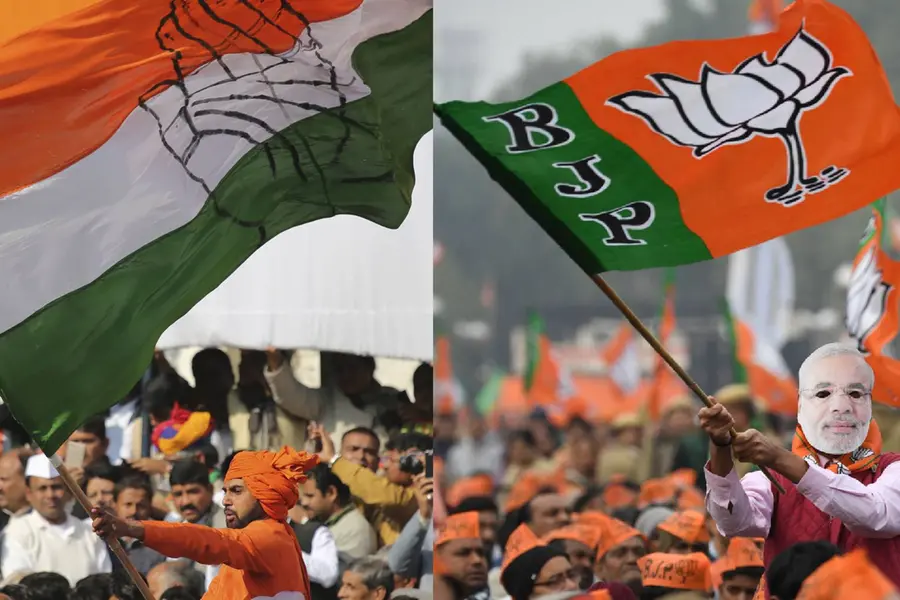
There was a time when political debate involved the tedious business of arguments. One would read an article, disagree with it, marshal a few facts, perhaps cite an election result or two, and attempt to persuade the reader that the author had got it wrong. Well, that was a primitive age, and people actually responded to arguments. Today, thankfully, we have evolved. We no longer ask whether an argument is right or wrong. Instead, we ask the far more profound question, "Whose side are you on?!"
The transformation was on full display after Ramachandra Guha's recent critique of Rahul Gandhi and the Congress leadership. Guha, who for years was regarded by many Congress supporters as a sympathetic intellectual voice, committed the unforgivable sin of saying aloud what a large section of the political class has long believed privately, that Rahul Gandhi's record does not inspire confidence in his suitability for the country's highest office. Now, one may agree with Guha or disagree with him. One may argue that Rahul Gandhi has grown politically, that he has improved the Congress's parliamentary performance, or that he remains the best available face of the opposition. And, perhaps, those would all even be legitimate responses. But where is the fun in that? Instead, the discussion immediately shifted to the far more important question of whether Guha had defected to the BJP, been secretly recruited by the RSS, or was somehow engaged in a conspiracy to destroy the Congress from within. The argument itself became irrelevant. The author was put on trial.
Also Read

This is now the defining feature of our political discourse. Every political leader has acquired a digital priesthood. Their followers no longer function as supporters, but rather as custodians of faith. Any criticism becomes blasphemy. Question Rahul Gandhi's electoral record, and you are a BJP sympathiser. Question Narendra Modi's policies, and you are an anti-national liberal. Question Pinarayi Vijayan's governance, and you are apparently operating from the Congress’s or the BJP's state headquarters. The possibility that a citizen may simply be evaluating a politician on merit no longer exists. Political debates have been reduced to loyalty tests.
The irony is that this phenomenon is often strongest among those who claim to value critical thinking. Take Kerala, for example. For a decade, the CPM's formidable propaganda machinery convinced itself that it had discovered a secret formula for perpetual political success. Every criticism was dismissed as motivated. Every scandal was exaggerated by enemies. Every setback was temporary. Every survey was proof of imminent victory. And then came an election result that looked less like a contest and more like a public audit. Yet, even after a crushing defeat, where they were decimated, sections of the faithful continued to cling to the comforting fiction that reality itself had somehow malfunctioned. The electorate was wrong, the analysts were wrong, and the journalists were wrong. Only the propaganda remained correct. Some have even embarked on the entertaining project of proving that V D Satheesan is secretly aligned with the BJP, a theory so ambitious that it would make even a Hollywood screenwriter blush.
This inability to process criticism is not a Communist problem. It is not a Congress problem. It is not even a BJP problem. It is a modern political problem. Social media has created an environment where every political conversation resembles a football derby. You are not expected to think. You are expected to cheer. The old political vocabulary has disappeared. Words such as nuance, complexity, contradiction, and context have been quietly escorted out of public life. Everything now exists in only two categories. Friend. Foe. If you criticise a politician, you must support his opponent. If you criticise both, you must secretly support one of them. If you support neither, you are accused of disguising your allegiance. The independent observer has become an endangered species.
This is particularly absurd in the case of Rahul Gandhi. If a politician spends over a decade leading his party from one defeat to another, loses three consecutive general elections, presides over the erosion of historic strongholds, drags the entire opposition into a culture of perpetual losing, and even manages to forfeit his own family's political fortress, then describing him as incompetent is not character assassination; I would call it statistical analysis. One may disagree with the conclusion that he is unsuited for leadership. But surely the question itself is legitimate. Yet asking it often triggers outrage, as though electoral performance is an irrelevant metric for evaluating a politician. Imagine a cricket captain losing series after series for nearly a decade and a half and being declared beyond criticism because questioning him would strengthen the opposing team! Would any sporting association tolerate such logic? Politics increasingly demands it. The same pattern is visible elsewhere. A government can make mistakes. An opposition can be incompetent. A leader can possess admirable qualities and serious flaws simultaneously. These used to be uncontroversial observations. But today, they are treated as revolutionary ideas.
The tragedy is that democracy depends upon criticism. Political parties improve when they confront uncomfortable truths. They decline when they begin believing their own publicity. History is rife with movements that mistook applause from loyalists for approval from the public. The public eventually corrected them. Brutally. The real lesson from the reaction to Guha's article is not whether Rahul Gandhi is capable or incapable of becoming Prime Minister. It is that many people no longer know how to engage with criticism without questioning the critic's loyalty.
The argument has become secondary. The tribe is everything. And so we arrive at the strange destination to which modern politics has brought us. A citizen cannot simply dislike demonetisation and dislike Rahul Gandhi. He cannot criticise Pinarayi Vijayan and criticise Narendra Modi. He cannot agree with one speech and disagree with the next. He must choose a camp. He must wear a jersey. He must swear allegiance. In an age overflowing with information, the greatest casualty has become independent thought. The last surviving political ideology is no longer Left, Right, secular, nationalist, socialist, liberal, conservative, or communist. It is simply: Agree with me. Or else.
(The author is a National Award winner for Best Narration and an independent political analyst. Views expressed are personal.)
Published: 04 Jun 2026, 09:31 am IST
Disclaimer: Kindly avoid objectionable, derogatory, unlawful and lewd comments, while responding to reports. Such comments are punishable under cyber laws. Please keep away from personal attacks. The opinions expressed here are the personal opinions of readers and not that of Mathrubhumi.