

Dr Nair discusses the importance of conserving Crop Wild Relatives, lessons of India's Green Revolution, environmental consequences of chemical farming, and the urgent need for climate-resilient agricultural practices
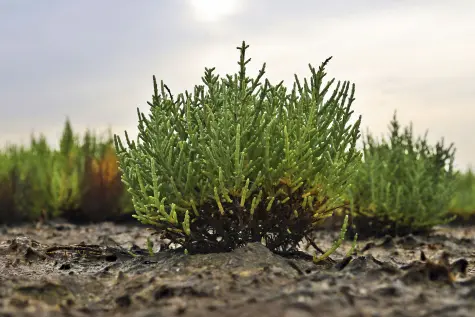
As climate change, soil degradation, and declining crop resilience pose growing threats to global food security, scientists are turning their attention to an often-overlooked resource in nature—Crop Wild Relatives (CWRs). These wild cousins of cultivated crops possess valuable genetic traits that can help plants withstand pests, diseases, drought, heat, and other environmental stresses.
In this interview, eminent soil scientist Dr Prabhakaran Nair explains the crucial role of Crop Wild Relatives in strengthening agriculture and safeguarding future food production. Dr Nair has developed the groundbreaking Nutrient Buffer Power Concept, a revolutionary soil-testing methodology that has transformed approaches to sustainable fertiliser management. His pioneering work earned him the prestigious International Fertiliser Award from the International Fertiliser Industry Association, Paris, in 2001. In recognition of his decades of research and global contributions to sustainable agriculture, he has now been nominated for the 2026 Global Leadership Prize of the renowned Tällberg Foundation in Stockholm, Sweden.
With decades of research across Europe, Africa, and Asia, Dr Nair discusses the importance of conserving Crop Wild Relatives, lessons of India's Green Revolution, environmental consequences of chemical farming, and the urgent need for climate-resilient agricultural practices. He also offers insights from his forthcoming book, Crop Wild Relatives to Combat Global Warming – A Critical Analysis, which explores how these invaluable genetic resources could help secure the future of farming in a warming world.
Excerpts:
What are Crop Wild Relatives (CWRs)?
Those plant species, growing in the wild, which have the capacity to withstand biotic and abiotic stresses and are capable of transferring their genes to normally grown/cultivated plant species are known as crop wild relatives.
Why are Crop Wild Relatives important for improving food production?
It is now well established that the "dwarf" wheat and rice varieties, mostly imported from the International Center for Maize and Wheat Improvement in Mexico under the patronage of USA and the International Rice Research Institute in Philippines under the patronage of the Ford Foundation, have now succumbed to a variety of diseases, like the rice blast, and wheat rust. This simply shows that the "alien" or "imported" genes cannot thrive well in Indian conditions in the long run. It is in this context that CWRs become very relevant for Indian agriculture
How do scientists use these plants for scientific purposes and in breeding programs to develop stronger and more productive crop varieties?
The technique used is called "introgression". In simple language transferring the genes from CWRs into the normal cultivated crops/plants by cross breeding
Why is conservation of Crop Wild Relatives becoming more important today?
The Indian experience shows that when the cultivated crops carry alien genes the plant breaks down, succumbing to an array of diseases and/or pests as cited above in the case of rice blast and wheat rust. This has been vividly seen during the "green revolution" phase in India. This makes it all the more urgent that we in India search for our own CWRs and conserve them for later introgression
How do crop wild relatives help farmers?
CWRs help farmers to stabilise crop yields, and, guard them against abiotic stresses like climate change.
Can you explain about the book and how effective it would be for the scientific world?
I was recently invited by the very prestigious Cambridge Scholars Publishing to write a book on CWRs which is now under print titled "Crop Wild Relatives to combat global warming - A critical Analysis". The book explains the scientific facts and draws on field experience from several foreign countries.
How can climate change affect crop production and farming?
There are many ways in which climate change can adversely affect farming. For instance, excessive heat, as we currently experience in India, can reduce wheat yield by as much as 25%.
What are some farming practices that can help reduce the effects of climate change?
In farming, what one must remember is that both ambient (atmospheric) and soil temperature affect crop performance. One must always remember that the soil surface should not be left barren. There should always be a cover. Green manures come in very handy in such cases.
What lesson does the example of Punjab and Green Revolution teach us about agriculture and the environment?
Punjab, the "cradle" of Indian green revolution is a living testimony to the environmental hazards caused by the so-called green revolution. The term "Green Revolution" was coined by Dr. William Gaud, who served as the Administrator of the United States Agency for International Development (USAID) during the 1960s. He first used this term in a speech delivered in 1968, describing the remarkable transformation taking place in agriculture across developing nations.
Though India could harvest high wheat and rice yields for some time, especially between late 60s and early 70s, the green revolution caused huge environmental hazards in India. For example, India's geographical area is 328.73 million hectares, of which now more than 120.40 million hectares, that is more than a third, have degraded soils, mostly in Punjab state and western Uttar Pradesh, which followed the "high input" (chemical fertilisers) farming. Soils now in these areas are degraded, ground water is no more potable, due to high concentration of chemical residues, and districts like Gurdaspur is now known as the "cancer capital" of India, due to unbridled use of both chemical fertilisers and herbicides and pesticides. Huge quantities of chemical fertilisers, especially urea, were applied to soils to boost both wheat and rice yields.
In fact, as my research shows, this has even caused global warming, because excessive use of urea leads to the emission of nitrous oxide into the atmosphere which entraps radiant heat in the stratosphere thus causing global warming. Fertiliser application must be based on precise soil testing, which was not the case. This is because all the fertiliser recommendations were based on outdated routine soil testing procedures. A revolutionary soil testing method based on thermodynamic principles, now globally known as "The Nutrient Buffer Power Concept", could have precluded all the soil-related environmental hazards. This revolutionary method is a result of more than three decades of research in Europe, Africa and Asia.
Published: 03 Jun 2026, 12:34 pm IST
ABOUT THE AUTHOR
Disclaimer: Kindly avoid objectionable, derogatory, unlawful and lewd comments, while responding to reports. Such comments are punishable under cyber laws. Please keep away from personal attacks. The opinions expressed here are the personal opinions of readers and not that of Mathrubhumi.