
Skyroot Aerospace is set to make history with the launch of Vikram-1, India's first privately developed orbital launch vehicle. Mission Aagaman marks a major milestone for the country's private space sector as the four-stage rocket prepares to place multiple payloads into Low Earth Orbit.
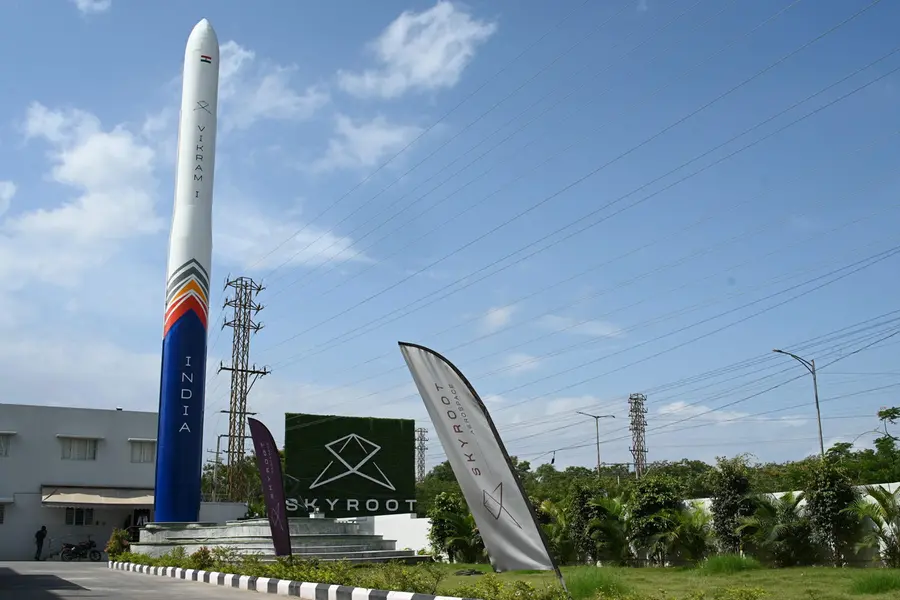
Sriharikota: India is set to enter a new chapter in its space journey as Hyderabad-based Skyroot Aerospace prepares to launch Vikram-1, the country's first privately developed orbital launch vehicle. The mission, named Mission Aagaman, is scheduled to lift off at 11:30 am on Saturday from the First Launch Pad at the Satish Dhawan Space Centre (SDSC-SHAR) in Sriharikota, Andhra Pradesh.
The launch is significant because it marks the first time an Indian private company will attempt to place satellites into orbit using a launch vehicle designed and built independently, without relying on a government-developed rocket.
Also Read

A milestone for India's private space sector
Vikram-1 is a 24-metre, four-stage launch vehicle built using a lightweight carbon-composite structure. It is powered by three solid-fuel stages and a liquid orbital adjustment module, enabling it to carry payloads weighing up to 350 kilograms into a 450-kilometre Low Earth Orbit (LEO) with a 60-degree inclination.
Mission Aagaman is expected to deploy multiple technology demonstration payloads from Indian and international customers. These include payloads from Grahaa Space, Cosmoserve, DCubed and Skyroot's own SCOPE platform. Among the most unique payloads is the "Diamond Lotus", a lab-grown diamond artwork developed by Bengaluru-based Cosmos Diamonds.
PM Modi hails a 'historic new frontier'
Ahead of the launch, Prime Minister Narendra Modi described the mission as "a historic new frontier for India's space journey." In a post on X, he congratulated the Skyroot Aerospace team and said the mission reflected the success of India's space sector reforms.
The Prime Minister urged Indians, particularly young people, to watch the launch and support the mission using the hashtag #IndiaWithVikram1.
Former ISRO Chairman S. Somanath also extended his best wishes to Skyroot Aerospace, calling Vikram-1's maiden flight a landmark moment that represents the arrival of India's private rocket-building capability.
Mission carries PM's handwritten postcard
Adding a symbolic touch to the mission, Vikram-1 will carry a handwritten postcard by Prime Minister Modi bearing the message "Vande Mataram." The rocket will also transport handwritten postcards from engineers, scientists and Indian astronauts, along with a micro-art payload and several technology demonstration experiments.
Built after India's space reforms
Officials said the mission highlights the rapid growth of India's private space ecosystem following the government's 2020 space sector reforms.
IN-SPACe Technical Director Rajesh Jothi noted that India has grown from having only a handful of private space startups to more than 400 companies, crediting policy reforms and the establishment of IN-SPACe for encouraging private participation.
Skyroot Aerospace Co-founder and Chief Operating Officer Naga Bharath Daka said the company was founded eight years ago with the goal of providing affordable, reliable and on-demand launch services for satellite operators around the world. He described Mission Aagaman as the culmination of years of engineering and development.
Why Vikram-1 matters
If successful, Mission Aagaman will establish Skyroot Aerospace as the first Indian private company to place payloads into orbit using its own launch vehicle. The mission will also validate Vikram-1's propulsion, guidance and navigation systems, paving the way for future commercial launches and strengthening India's position in the rapidly growing global small satellite launch market.
Published: 18 Jul 2026, 09:44 am IST
Disclaimer: Kindly avoid objectionable, derogatory, unlawful and lewd comments, while responding to reports. Such comments are punishable under cyber laws. Please keep away from personal attacks. The opinions expressed here are the personal opinions of readers and not that of Mathrubhumi.