
Skyroot Aerospace successfully tests payload fairing separation for ‘Vikram-1’, clearing a critical milestone ahead of its first orbital launch and boosting India’s private space ambitions.
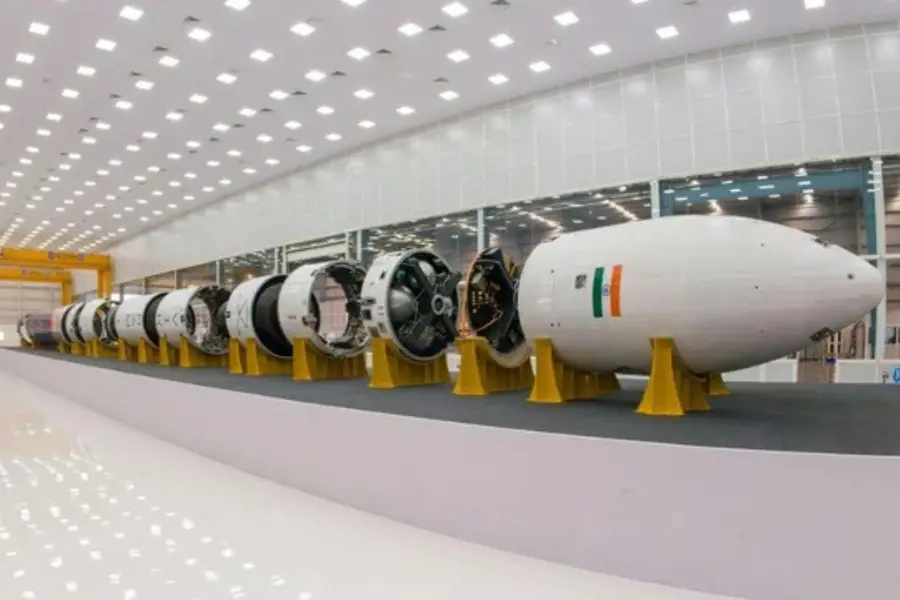
India’s private space sector marked an important milestone as Skyroot Aerospace completed the final pre-flight payload fairing separation test for its upcoming Vikram-1 rocket.
This test is a critical step in ensuring that the rocket can safely carry and deploy satellites into space during its planned launch. What is a payload fairing, and why does it matter?
The payload fairing is the protective nose cone of a rocket. During launch, it plays a crucial role by shielding the satellite from extreme conditions such as intense heat, strong air pressure, and vibrations as the rocket travels at very high speeds through the atmosphere.
Once the rocket reaches space, this protective cover must separate cleanly into two halves and fall away. This allows the satellite to be released into orbit without any obstruction or risk of damage.
A failure at this stage can compromise the entire mission, making the test extremely important. How was the test conducted? Skyroot carried out the test using a pneumatic separation system powered by air pressure.
Notably, the company used the actual flight hardware, making the test more realistic and reliable.
High-speed cameras recording at 10,000 frames per second captured the moment when the fairing split open.
The footage showed the two halves separating quickly and smoothly, confirming that the system works as intended. The company stated that the mechanism is stable and has been successfully validated.
Following the successful test, Skyroot hinted at the next step, saying “Next stop: Sriharikota,” referring to the planned launch from Satish Dhawan Space Centre, India’s primary spaceport operated by Indian Space Research Organisation.
Vikram-1: A step ahead for private space launches. Skyroot, founded in 2018 by former ISRO scientists Pawan Kumar Chandana and Naga Bharath Daka, is India’s first private company to build rockets for space missions.
The company had earlier achieved a major milestone in November 2022 by launching Vikram-S, India’s first privately developed rocket to reach space.
Although it was a suborbital mission, it succeeded on the first attempt, which is rare even among established global players. Vikram-1, however, represents a more advanced capability.
The rocket stands about 20 metres tall and is built using lightweight carbon composite materials. It also features 3D-printed engines, which help reduce manufacturing time and cost.
The rocket is designed to carry payloads of up to 350 kilograms into low-Earth orbit. This makes it well-suited for launching small satellites used in communication, earth observation, and scientific research.
The successful fairing test is one of the final major milestones before Vikram-1’s first orbital launch, which is expected around May 2026.
With support from ISRO’s infrastructure and India’s evolving space policy, private players like Skyroot are working to make satellite launches more affordable and frequent.
This is especially important as global demand for small satellite launches continues to grow.
The development also reflects the broader progress of India’s private space sector, which is steadily gaining momentum and contributing to the country’s position in the global space industry.
Overall, the successful test brings Vikram-1 one step closer to launch and highlights India’s growing capabilities in building cost-effective and reliable space technologies.
Published: 09 Apr 2026, 08:22 pm IST
ABOUT THE AUTHOR

Related Topics
Disclaimer: Kindly avoid objectionable, derogatory, unlawful and lewd comments, while responding to reports. Such comments are punishable under cyber laws. Please keep away from personal attacks. The opinions expressed here are the personal opinions of readers and not that of Mathrubhumi.