
Viewers will be able to watch the event live via NASA’s official website, as well as streaming platforms including YouTube, Amazon and Netflix
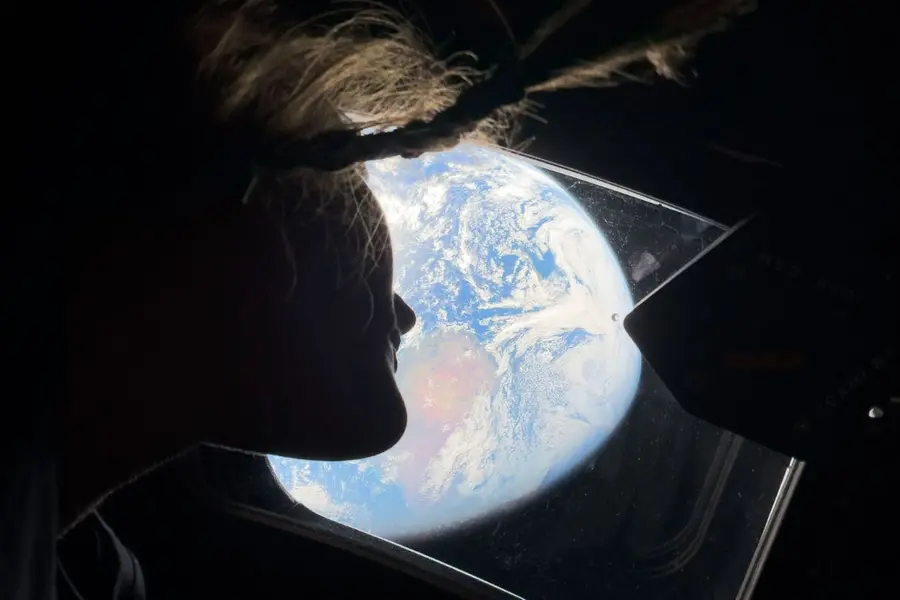
For the first time in over half a century, astronauts will travel around the Moon on Monday as part of NASA’s Artemis 2 mission — a landmark moment in modern space exploration.
The flyby marks a major milestone in humanity’s return to deep space and will be broadcast live to audiences around the globe.
Live coverage of the flyby
The seven-hour flyby is scheduled to begin at approximately 2:45 p.m. Eastern Time (18:45 GMT) and conclude around 9:20 p.m. (01:20 GMT).
Viewers will be able to watch the event live via NASA’s official website, as well as streaming platforms including YouTube, Amazon and Netflix. Commentary will come from both the astronauts onboard and mission specialists at Mission Control in Houston.
ALSO READ | Artemis goes to the Moon, but its $23M toilet can’t handle take-off
However, due to the unprecedented distance from Earth — the furthest humans have ever travelled — NASA has warned that video quality may occasionally be disrupted.
A tense period of radio silence
During the mission, there will be a 40-minute communications blackout as the spacecraft passes behind the Moon, out of direct contact with Earth.
Astronomy professor Derek Buzasi described the moment as “exciting… in a slightly scary way”, recalling similar tension during the Apollo missions, when observers would anxiously await the crew’s return to contact.
Breaking new ground in spaceflight
Artemis 2 represents several historic firsts. The crew includes the first woman, Christina Koch, the first Black astronaut, Victor Glover, and the first non-American, Jeremy Hansen, to travel to the Moon.
Previously, only astronauts from the Apollo era — all white American men — made the journey between 1968 and 1972.
The mission will also set a new record for the furthest distance travelled by humans, surpassing the Apollo 13 mission record by 6,600 kilometres. At its peak, the spacecraft will reach around 406,772 kilometres from Earth.
A distant view of the Moon
Unlike the Apollo missions, which passed roughly 110 kilometres above the lunar surface, Artemis 2 will maintain a much greater distance — about 6,500 kilometres at its closest point.
Rather than entering orbit, the spacecraft will swing around the Moon in a carefully calculated trajectory. This vantage point will allow astronauts to view the Moon in its entirety, including polar regions rarely seen before.
ALSO READ | The new ‘blue marble’: NASA releases breathtaking high-res Earth photos from Artemis II
From their perspective, the Moon is expected to appear roughly the size of a basketball held at arm’s length.
Exploring the Moon’s far side
The crew will also pass over the Moon’s far side — a region never visible from Earth.
While Apollo astronauts experienced this passage, they were too close to observe the full landscape. Artemis 2’s distance will provide a broader view, allowing astronauts to study areas previously only captured by robotic missions.
Their observations are expected to contribute valuable insights into the Moon’s geology and the history of the solar system.
Witnessing a rare solar eclipse
Toward the end of the flyby, the astronauts will experience a rare celestial event: a solar eclipse lasting around 53 minutes.
As the spacecraft aligns with the Moon and the Sun, the solar disc will be completely obscured, revealing the Sun’s outer atmosphere — the corona — as a glowing halo.
The crew will also watch for flashes of light caused by meteorite impacts on the Moon’s surface.
The mission may also recreate one of the most iconic images in space history — the “Earthrise” photograph captured during the Apollo 8 mission.
Published: 06 Apr 2026, 07:40 am IST
Related Topics
Disclaimer: Kindly avoid objectionable, derogatory, unlawful and lewd comments, while responding to reports. Such comments are punishable under cyber laws. Please keep away from personal attacks. The opinions expressed here are the personal opinions of readers and not that of Mathrubhumi.
