
While harmless to Earth, the impact provides scientists a rare chance to study high-speed crater formation via NASA’s Lunar Reconnaissance Orbiter.
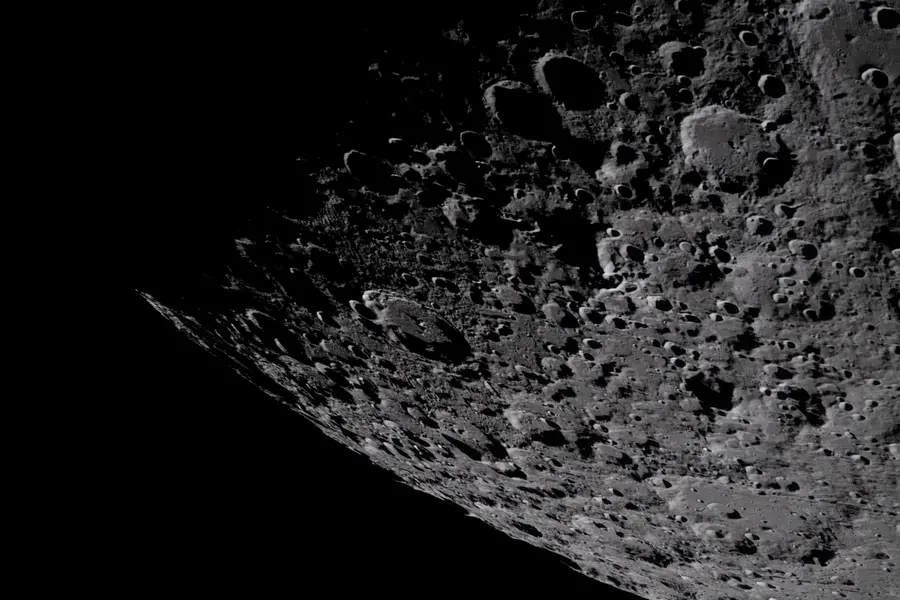
Washington DC: A spent SpaceX Falcon 9 rocket upper stage has struck the lunar surface in an unintentional collision, impacting the Moon at a velocity of roughly 5,400 mph. According to multiple reports, the collision occurred on 5 August 2026, gouging a fresh crater into the lunar terrain.
The four-tonne section, catalogued as object 2025-010D, was launched in January 2025 to carry Firefly Aerospace's Blue Ghost Mission 1 lunar lander into space. While most rocket upper stages are directed back towards Earth to safely burn up in the atmosphere, this booster required additional thrust to send its payload to the Moon. Once its fuel was completely exhausted, the spent hardware remained adrift in a wide, looping orbit within the Earth-Moon system.
According to independent astronomer Bill Gray of Project Pluto, who tracked the object through over a thousand telescope observations, the collision was caused by a combination of gravitational forces from the Sun, Earth, and Moon, alongside photon pressure from solar radiation. SpaceX official Julianna Scheiman confirmed that environmental factors and solar activity gradually nudged the dead rocket stage onto an unalterable crash course. With zero remaining fuel, controllers had no means of steering the vehicle clear.
Calculations from Project Pluto indicated that the collision took place on the sunlit near side of the Moon, close to the Einstein crater. NASA confirmed that the event posed no danger to Earth. Instead, space scientists view the unplanned crash as a rare scientific opportunity. Researchers plan to analyse orbital imagery captured by NASA's Lunar Reconnaissance Orbiter (LRO) to examine the resulting plume and newly formed crater, aiding studies on high-speed impact physics.
Nevertheless, the incident has renewed widespread debate surrounding orbital debris and the lack of strict disposal requirements for hardware sent into deep space. With lunar missions expanding under global exploration programmes, space agencies and private operators face growing pressure to ensure spent rocket stages do not become uncontrolled hazards in cislunar space.
Published: 05 Aug 2026, 06:14 pm IST
ABOUT THE AUTHOR

Related Topics
Disclaimer: Kindly avoid objectionable, derogatory, unlawful and lewd comments, while responding to reports. Such comments are punishable under cyber laws. Please keep away from personal attacks. The opinions expressed here are the personal opinions of readers and not that of Mathrubhumi.