
ISRO is now preparing for a busy launch schedule.
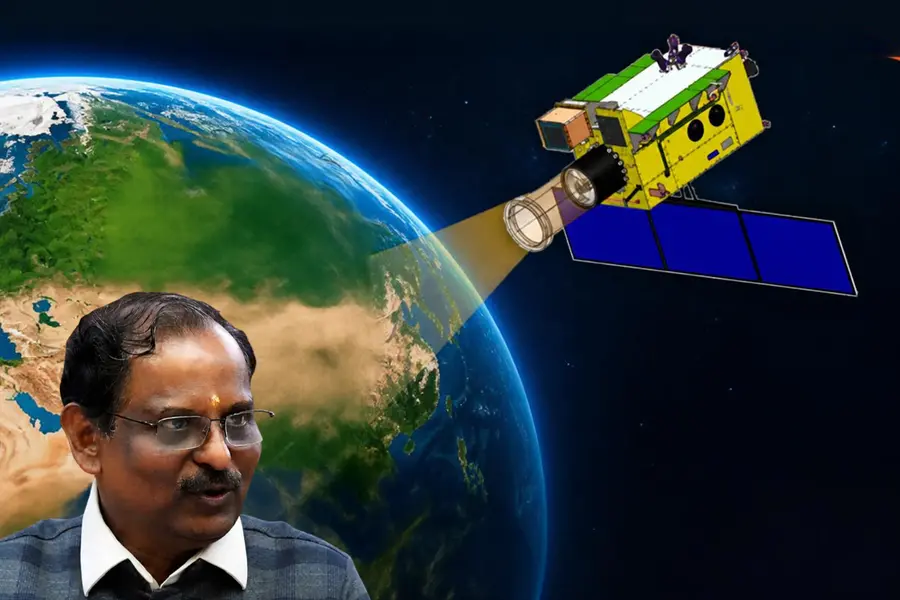
India’s space programme reached a major milestone on Friday as the Indian Space Research Organisation (ISRO) successfully launched its first dedicated geosynchronous Earth imaging satellite.
The GSLV-F17 rocket lifted off at 2:55am from the Second Launch Pad at the Satish Dhawan Space Centre (SHAR) in Sriharikota, Andhra Pradesh, despite rain and the pre-dawn conditions.
The launch ended an eight-month gap in ISRO’s launch schedule and marked the 107th launch from Sriharikota. Hundreds of spectators gathered at the launch-viewing area, many carrying umbrellas, to watch the mission.
The successful flight also comes after setbacks during earlier missions and marks an important step in the development of India’s Earth observation capabilities.
Mission follows earlier launch setbacks
The GSLV-F17 mission comes after a series of challenges faced by ISRO.
In January 2026, the PSLV-C62 mission failed to deploy 16 satellites after a critical glitch developed during the rocket’s third stage.
Friday’s launch also effectively replaces the role planned for the GSLV-F10/EOS-03 mission, which failed in 2021 after being aborted 307 seconds into the flight because of an anomaly involving the Cryogenic Upper Stage.
The GSLV’s previous mission was in July 2025, when the GSLV-F16 successfully placed the joint NASA-ISRO Synthetic Aperture Radar (NISAR) satellite into orbit.
Against this backdrop, the successful deployment of EOS-05 provides an important boost to the programme.
EOS-05 to monitor India from geosynchronous orbit
The Advanced Earth Observation Satellite-05 (EOS-05) will operate at an altitude of about 36,000km, significantly higher than satellites in low Earth orbit.
At geosynchronous altitude, the satellite matches the Earth’s rotation and can remain positioned over a particular region. A senior ISRO scientist described it as "The eye in the sky".
EOS-05 is designed to provide near real-time imagery and continuously observe India and nearby areas. The data is expected to support applications including agriculture and disaster management.
During a post-launch press conference, ISRO chairman V Narayanan rejected speculation that the spacecraft was primarily a covert surveillance satellite.
"Spy is a very negative language", Narayanan said, describing EOS-05 instead as a versatile, multipurpose platform designed to continuously scan and observe India.
He said the data "will be useful for ensuring safety and security of our citizens". The satellite has a planned operational lifetime of nine years.
GSLV carries its heaviest payload
The mission also demonstrated a significant improvement in the GSLV’s payload-carrying capability.
The GSLV-F17 is a three-stage rocket measuring 51.7 metres in height. It has a lift-off mass of 420.5 tonnes and features a 4-metre-diameter ogive composite payload fairing.
The rocket carried EOS-05, which weighs 2,367kg, making it the heaviest satellite ever launched by the GSLV into a geosynchronous transfer orbit (GTO) or sub-GTO orbit.
The increase in payload capacity reflects years of work by ISRO engineers to reduce structural mass and improve propulsion systems.
The GSLV programme began with GSLV-D1, which carried a 1,536kg payload. Its latest mission represents a substantial increase in the vehicle’s capacity.
Mission Director Thomas Kurien described the payload as a uniquely configured system capable of near real-time imaging and called it "the heaviest satellite ever launched by GSLV into a GTO or sub-GTO orbit".
Project Director Imteyaz Ahamad described it as "a complex satellite in terms of configuration, content and capability".
Satellite systems reported healthy after launch
Following separation and injection, telemetry indicated that the satellite’s systems were functioning properly. Its solar panels were also successfully deployed.
Narayanan confirmed the successful placement of the spacecraft, saying: "Today, we have injected the heaviest satellite, 2367 kgs, using this launch vehicle. The health of the satellite is perfectly alright."
He added that the GSLV-F17 had successfully and precisely injected the satellite into its required orbit.
The successful launch was welcomed by Union minister Jitendra Singh, who described the mission as "Another giant leap for India in Space!"
Singh said EOS-05 is a state-of-the-art Earth observation satellite and India’s first imaging satellite from geosynchronous orbit, with imaging capabilities across visible, infrared, multi-spectral and hyperspectral bands.
Narayanan credited the achievement to ISRO personnel as well as its industrial partners and the academic community.
"This success is the culmination of the hard work of the entire ISRO team along with our industrial partners and academia. On this occasion, I congratulate each and every one of you. This is a great achievement in our country’s space programme," he said.
ISRO targets six more launches this financial year
ISRO is now preparing for a busy launch schedule.
Narayanan said the agency is targeting six more launches during the current financial year, including the NVS-03 navigation satellite.
"Reward for hard work is more work," he said, outlining the agency’s approach after the successful EOS-05 mission.
He said placing an Earth observation satellite in geosynchronous orbit was a major milestone because it is "essentially required for continuously monitoring India and its nearby places for Earth observation".
Gaganyaan preparations continue
Alongside its satellite missions, ISRO is continuing preparations for the Gaganyaan human spaceflight programme.
The agency plans to conduct its first uncrewed Gaganyaan mission before the end of 2026.
Narayanan said work on the programme was progressing "vigorously and systematically", while acknowledging the technological demands involved in sending humans into space.
"Gaganyaan is a technology-intensive mission. The vehicle is human-rated. We are getting ready for this mission. A lot of development work we have completed, including safety system development," he said.
The agency is also looking to expand India’s wider space industry rather than focusing only on government-led missions.
New launch pad planned in Tamil Nadu
Narayanan said the growth of India’s space sector would depend on the expansion of the wider ecosystem.
"What is required is not just ISRO’s growth but the growth of the space ecosystem in our country," he said.
According to Narayanan, around 440 start-up companies are currently active in India’s space sector, contributing to job creation and the expansion of the industry.
To support the growing launch programme, ISRO is also developing a new launch pad at Kulasekarapattinam in Tamil Nadu.
The facility is scheduled to become operational by March 2027.
"The launch pad at Kulasekarapattinam will be ready by March next year. Everything is going as per the targeted plan," Narayanan said.
With EOS-05 successfully deployed, ISRO is now moving ahead with its next set of satellite, human-spaceflight and infrastructure missions.
Published: 04 Sept 2026, 08:42 am IST
Related Topics
Disclaimer: Kindly avoid objectionable, derogatory, unlawful and lewd comments, while responding to reports. Such comments are punishable under cyber laws. Please keep away from personal attacks. The opinions expressed here are the personal opinions of readers and not that of Mathrubhumi.
