
The government reported that India had about 400 space start-ups by February 2026, compared with one registered start-up in 2014
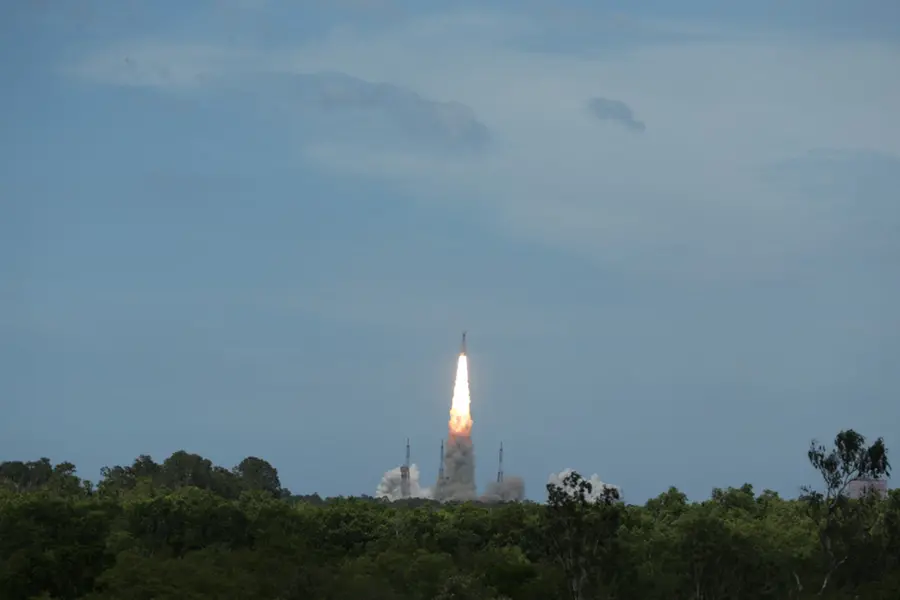
India’s space programme is entering a new phase. Built over decades through public investment and the work of generations of scientists, it has delivered landmark missions, from Chandrayaan-3’s lunar landing to Aditya-L1’s study of the Sun. Over the past decade, reforms have widened the sector to private companies and start-ups, creating new routes to innovation and commercial growth.
A major policy change came in June 2020, when the government led by Prime Minister Narendra Modi opened more space activities to private participation. The decision reflected a view that companies could help develop and operate launch vehicles, satellites and space-based services, while ISRO focused more of its effort on research, advanced technology and national missions.
Two organisations help put that approach into practice. IN-SPACe—the Indian National Space Promotion and Authorisation Centre—was established in 2020 to promote, authorise and supervise non-government space activities, and to facilitate access to relevant ISRO facilities and expertise. NewSpace India Limited (NSIL) is the Department of Space’s commercial arm. It markets space products and services, arranges commercial launches, and works to transfer or commercialise technologies developed by ISRO.
The Indian Space Policy 2023 set out responsibilities for the government, ISRO, NSIL and non-government entities. It provides a framework for private companies to undertake a broader range of space activities, subject to authorisation and oversight. In February 2024, the government also liberalised foreign direct investment rules for parts of the sector, allowing up to 100% FDI in specified activities and setting different limits for areas such as satellite manufacturing and launch vehicles. These measures are intended to attract capital and expertise while building domestic industrial capacity.
Launch vehicles, satellite manufacturing, propulsion and ground infrastructure are all being reshaped by reusability, miniaturisation and private participation. Satellite manufacturing is shifting towards modular, miniaturised, constellation-based designs. Small satellites made up 97% of global launches in 2024, creating opportunities for Indian electronics, aerospace and MSME suppliers, particularly through the Atmanirbhar Bharat push for supply-chain localisation.
Satellite communication (SATCOM) addresses the global digital divide, enabling broadband, telemedicine, disaster communication, and maritime and aviation connectivity. Navigation, anchored by India’s indigenous NavIC system, supports fleet management, logistics, timing for financial transactions and strategic autonomy from foreign GNSS systems.
Space has become central to military power, with global defence-related space spending reaching an estimated $73.5 billion in 2025. Key military applications include secure SATCOM, ISR (intelligence, surveillance and reconnaissance), precision targeting, and missile warning. India’s defence space assets include NavIC, the GSAT series (notably GSAT-7 “Rukmini” for naval communications), RISAT radar-imaging satellites, and the Mission Shakti anti-satellite (ASAT) test.
The reforms have begun to change the ecosystem’s scale. The government reported that India had about 400 space start-ups by February 2026, compared with one registered start-up in 2014. Companies such as Skyroot Aerospace and Agnikul Cosmos are developing launch vehicles; Pixxel is building Earth-observation satellites; and Dhruva Space is working on satellite platforms and related services. Start-ups still face long development cycles, high capital needs and the challenge of securing steady customers. Public support includes a Rs 1,000-crore venture-capital fund approved for the sector and a Rs 500-crore technology-adoption fund.
Recent missions show the breadth of that work. Chandrayaan-3 achieved a soft landing on the Moon in August 2023, making India the fourth country to land on the lunar surface and the first to land near the Moon’s south polar region. Aditya-L1, launched in September 2023, became India’s first space-based solar observatory and entered its halo orbit around the Sun–Earth L1 point in January 2024. XPoSat, launched in January 2024, is India’s first dedicated X-ray polarimetry mission.
The SpaDeX mission demonstrated autonomous rendezvous, docking and undocking in 2025, an important capability for missions involving crewed spacecraft, space stations or satellite servicing. In June 2025, Indian astronaut Group Captain Shubhanshu Shukla flew to the International Space Station on Axiom Mission 4.
Commercial launches are another established strength. PSLV has carried Indian and foreign payloads, while LVM3 has flown OneWeb missions and other commercial payloads. Between 2015 and 2024, India launched 393 foreign satellites for 34 countries, generating about US$433 million in revenue.
India is a significant spacefaring nation, but economically it remains smaller than the leading space powers. The government’s estimates put India’s 2023 space economy at about $8.4 billion, roughly 2% of the global total. The government has projected growth to around $44 billion by 2033, with an ambition to raise India’s global share to about 8%. Globally, the sector is expanding: the Space Foundation estimated the 2024 space economy at $613 billion, projected to reach $1.8 trillion by 2035.
Global competition is intensifying. Reusable launch systems and large satellite constellations are changing the economics of access to orbit and broadband. NASA and its partners are advancing the Artemis programme and the Gateway lunar station, while NASA is also supporting privately developed space stations intended to serve customers as the International Space Station approaches retirement. Europe is working to restore and expand its autonomous launch capacity through Ariane 6 and Vega-C. These efforts reflect a wider shift: governments still fund science and exploration, but increasingly rely on commercial partners for launch, communications and operations.
India’s prospects hinge on turning mission successes and reforms into sustained industrial growth. With Chandrayaan-4–8, a crewed lunar mission by 2040 and a Space Activities Bill in the pipeline, India’s 300-plus space companies could help expand the sector.
To reach the projected US$44 billion space economy by 2033, a Confederation of Indian Industry report identifies six coordinated priorities: (1) scale downstream adoption from pilots to programme-level deployment across agriculture, logistics, disaster management and more; (2) build upstream industrial depth in manufacturing, propulsion and testing infrastructure; (3) strengthen regulatory and financing environments through streamlined authorisations, spectrum, liability norms and risk capital; (4) use government demand as a “first customer” to de-risk commercial adoption; (5) deepen strategic and defence space capabilities through public-private coordination; and (6) position India as a global space partner and export hub, particularly for Asia, Africa and the Global South.
Published: 30 Sept 2026, 10:57 am IST
Disclaimer: Kindly avoid objectionable, derogatory, unlawful and lewd comments, while responding to reports. Such comments are punishable under cyber laws. Please keep away from personal attacks. The opinions expressed here are the personal opinions of readers and not that of Mathrubhumi.
