
The US military has struck Iranian rocket sites in the Strait of Hormuz, prompting Iranian missile retaliation against US bases in Jordan.
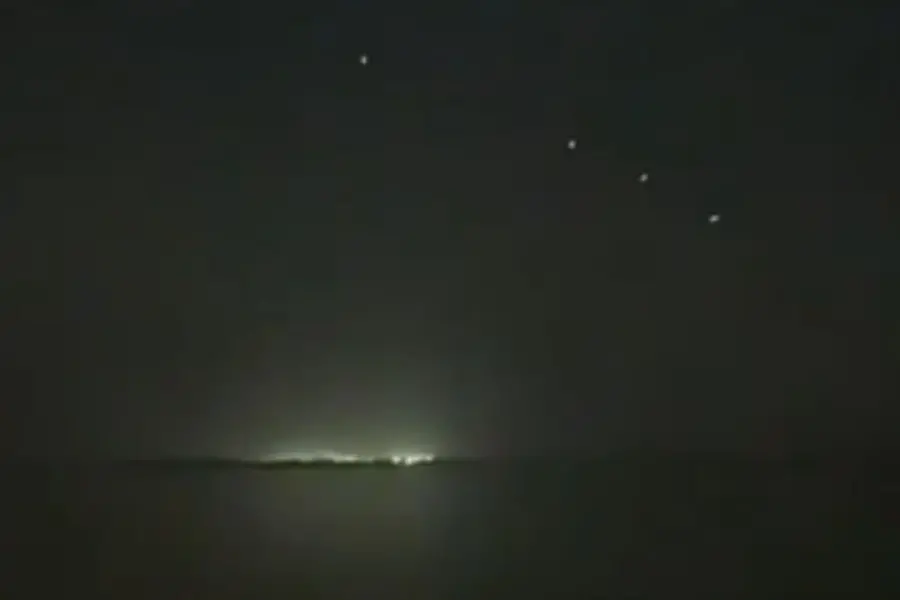
Washington: The US military launched airstrikes against Iranian rocket positions along the Strait of Hormuz on Sunday, breaking a month-long operational pause in a conflict that has spanned over six months. Iran quickly pledged to retaliate for the strikes.
According to US Central Command spokesperson Tim Hawkins, Islamic Revolutionary Guard Corps (IRGC) personnel were spotted preparing to deploy sea mines via rocket launchers into the strategic waterway. The strike follows the US military's recent completion of mine-clearing operations along international shipping channels in the strait.
Iranian media reported explosions near Larak Island. The IRGC confirmed casualties in a statement broadcast by state media, citing “the martyrdom and injury of several of our fighters and compatriots”.
In response, Iranian state television broadcast footage of ballistic missiles being fired at US positions in Jordan. Jordanian armed forces reported intercepting eight incoming missiles over their airspace early Monday.
The escalation threatens to reignite open conflict in a region where Iran has targeted US bases and Gulf state infrastructure since hostilities began on February 28.
The US last reported striking Iranian targets on July 29 during a wide-ranging operation against coastal defense sites. On August 1, President Donald Trump paused further offensive actions following requests from regional allies, including Qatar, Saudi Arabia, and the United Arab Emirates.
Shift toward economic pressure
The military action comes shortly after the Trump administration signaled a shift toward economic pressure to resolve the dispute, focusing on secondary sanctions against third-party entities doing business with Tehran.
Gen Hossein Mohebi, an IRGC spokesperson, called the US strike a "fatal mistake by the Trump regime during the economic war," warning that Washington would face military and economic consequences.
The shift toward sanctions coincided with growing concerns over depleted US munitions reserves after months of sustained operations. Meanwhile, administration officials indicate that talks are not imminent, with President Trump stating last week that he is “not in a hurry” to resume negotiations.
Despite reports from Iranian officials estimating direct and indirect war damages at $270 billion alongside severe disruptions to its senior leadership recent appointments to Iran’s security apparatus signal continued resistance.
Oil market reaction and Strait security
Tehran continues to leverage its control over the Strait of Hormuz, a conduit for roughly 20% of global oil supplies. Despite huge damage to its naval assets, Iran retains substantial drone and missile capabilities targeting maritime traffic.
Oil prices climbed on Sunday following the strikes. US crude rose 1.8% to $84.94 per barrel, while Brent crude increased 1.9% to $89.79 per barrel.
While President Trump recently stated the “Strait of Hormuz is open”, citing 24 vessel transits last week, traffic remains far below the pre-war average of 130 ships daily. The US-led maritime coalition confirmed commercial traffic remains reduced.
In addition, the United Kingdom Maritime Trade Organisation reported that an unidentified projectile hit a commercial tanker north of Khasab, Oman, on Saturday. No casualties or environmental damage were reported. Central Command noted that US naval forces have redirected 83 commercial vessels and disabled three under an ongoing maritime blockade of Iranian ports.
AP
Published: 31 Aug 2026, 06:35 am IST
ABOUT THE AUTHOR

Disclaimer: Kindly avoid objectionable, derogatory, unlawful and lewd comments, while responding to reports. Such comments are punishable under cyber laws. Please keep away from personal attacks. The opinions expressed here are the personal opinions of readers and not that of Mathrubhumi.