
US Vice President JD Vance has said Iran must make a "meaningful" reduction in its nuclear enrichment capacity before Washington would agree to halt the seven-month war.
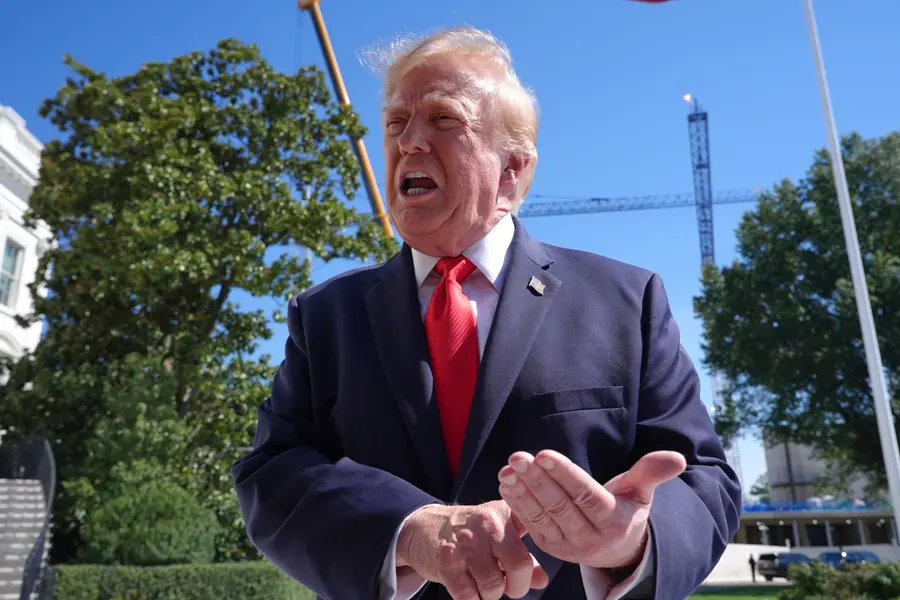
Washington: US President Donald Trump is seeking military options to strike Iran ahead of the November 3 midterm elections, with the White House asking the Pentagon to prepare potential plans for attacks on Iranian targets in the coming weeks, The Atlantic reported, citing US officials.
According to the magazine, the request reflects Trump's push to bring down petrol prices and demonstrate progress in the war with Iran before voters head to the polls.
The size and nature of any potential strikes, as well as whether Trump will ultimately approve military action, remain under discussion, the report said.
Meanwhile, Axios reported, citing US officials, that the Pentagon has been instructed to prepare for possible fresh strikes.
According to the report, the Pentagon instructed US Central Command (US CENTCOM) several days ago to conclude preparations for resuming major combat operations in Iran. The directive did not set a specific date for launching strikes.
US and Israeli officials told Axios that renewed combat operations could take place before the US midterm elections, scheduled to be held on November 3, and possibly ahead of Israeli elections, which are expected a week earlier.
If major combat operations resume, they are expected to include extensive strikes on Iranian energy, infrastructure, and nuclear targets, Axios reported, citing sources.
Trump has repeatedly claimed that the US-Israel war on Iran will end "very soon", either before or shortly after the midterm elections.
The article says even those backing the strikes admit that limited attacks alone are unlikely to bring Iran back to the negotiating table, reopen the Strait of Hormuz or bring down gas prices before the election. But they believe further military action could help Trump project strength and claim some kind of victory after months of uneasy peace, giving Republicans some much-needed momentum ahead of the midterms.
The report comes as Trump continues to project confidence that the conflict will end soon and that energy prices will fall once the war is over.
Trump says Iran war will end 'very quickly'
Trump on Wednesday said the war with Iran would end "very quickly" and predicted that oil prices would fall sharply, while claiming that US action had stripped Iran of its nuclear capability.
"It is a war from the standpoint of what we have to do. We have to get rid of the nuclear weapons for Iran. We have taken away their nuclear power. If they had nuclear power, you would have had problems like you have never had before," Trump told reporters while leaving Washington for a Republican campaign rally in San Antonio.
"Their whole country right now is wiped out. It will be over very quickly, and when it does, oil prices will come tumbling down," he added.
Trump's comments came amid continuing disagreements between Washington and Tehran over possible negotiations to end the conflict and reopen the Strait of Hormuz.
Iran rejects Trump's claims over oil minister
Iranian government spokesperson Fatemeh Mohajerani rejected Trump's claim that Iran's oil minister had resigned because of pressure caused by the US war.
She described the US president's claim as "a futile effort to hide his own failures", Al Jazeera reported.
Mohajerani said the minister's resignation was "not a sign of weakness", but instead reflected flexibility within Iran's political system.
Trump had earlier claimed that the Iranian oil minister "just quit", saying the official told him, "We have no economy, we have no oil, we have nothing."
Iranian Foreign Minister Abbas Araghchi, meanwhile, said Tehran remains determined to defend itself but is also serious about using diplomacy to protect its interests and national security.
Araghchi said Iran's delegation to the United Nations General Assembly in New York had used the visit to present a seven-day proposal to the US aimed at reopening the Strait of Hormuz, according to Al Jazeera, citing his Telegram channel.
Trump rejected the proposal a day after it was presented late last month, while US officials subsequently put forward a counterproposal aimed at reviving negotiations.
Vance demands 'meaningful' nuclear concessions
US Vice President JD Vance has said Iran must make a "meaningful" reduction in its nuclear enrichment capacity before Washington would agree to halt the seven-month war.
In an interview with Reuters, Vance said the United States remained open to a negotiated settlement but would demand concrete action from Tehran rather than assurances about future restrictions.
"If you don't want a nuclear weapon, then why do you need 60% enriched fuel?" Vance said. "If you want to show commitment to not building a nuclear weapon, don't build highly enriched fuel. That's a very basic threshold issue," he added.
"I think if they want to show a commitment to not building a nuclear weapon, they would do something meaningful on their enrichment capacity," he further said.
The two sides have exchanged proposals in recent weeks aimed at ending the conflict and restoring free passage through the Strait of Hormuz, a crucial route for global energy shipments.
Trump has already rejected Iran's latest proposal and warned that US military action could intensify after the November midterm elections.
Vance also stressed that Washington would not accept verbal assurances in place of concrete steps.
"We're not going to trade words for actions," he said.
Energy prices add pressure on Trump administration
The prolonged conflict has disrupted energy markets and increased political pressure on the Trump administration, with rising fuel prices becoming a key concern ahead of the midterm elections.
Vance also said Washington remained uncertain about who ultimately controls major decisions within Iran's political system.
US officials have been communicating with Iranian President Masoud Pezeshkian and Foreign Minister Abbas Araghchi, but Vance questioned how much authority the two have over Tehran's decision-making process.
"One of the things we picked up on is it's not totally clear how their country makes decisions," he said.
Iran rejected the assessment. Foreign Ministry spokesman Esmaeil Baghaei said US officials are fully aware of their Iranian counterparts and understand how decisions are made in Tehran.
"The problem is actually the opposite; it lies in the contradictory positions and mixed messaging from US officials," Baghaei said.
Vance also said he had spoken with US field commanders about the conflict and dismissed suggestions that American forces were facing critical shortages of munitions.
He said Iranian forces still had the capability to strike commercial vessels in the Strait of Hormuz but were largely unable to prevent energy shipments from passing through the waterway.
Published: 08 Oct 2026, 06:32 am IST
ABOUT THE AUTHOR

Related Topics
Disclaimer: Kindly avoid objectionable, derogatory, unlawful and lewd comments, while responding to reports. Such comments are punishable under cyber laws. Please keep away from personal attacks. The opinions expressed here are the personal opinions of readers and not that of Mathrubhumi.