
Ukraine launched another wave of long-range drone attacks, setting a major Russian oil refinery ablaze and targeting energy infrastructure as Kyiv intensifies pressure on Moscow's war economy.
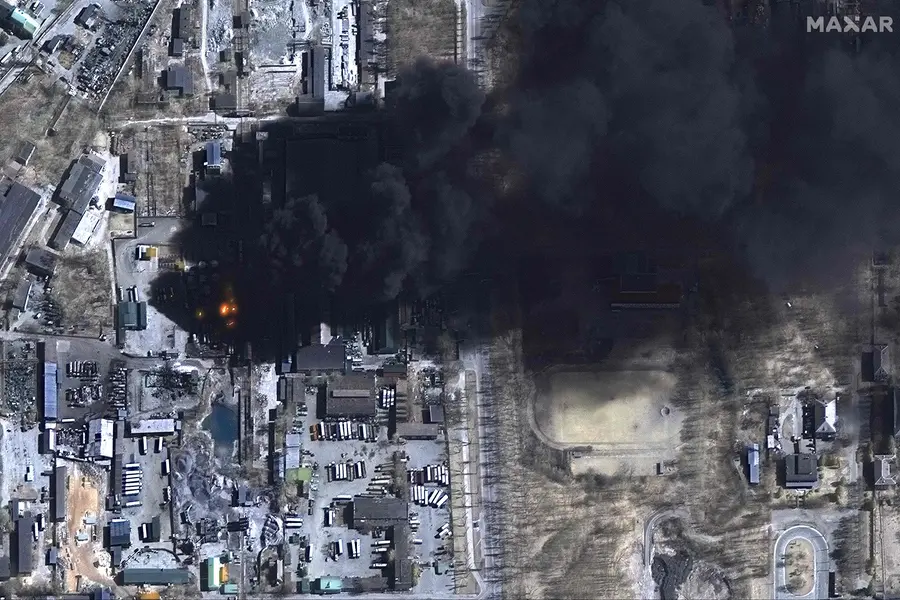
Kyiv: Ukraine has intensified its long-range drone campaign against Russia, setting a major oil refinery ablaze and targeting key energy infrastructure in a strategy aimed at disrupting Moscow's fuel supplies and reducing the revenues that finance its war effort.
Ukraine launched another wave of long-range drone attacks deep inside Russian territory overnight, targeting critical energy infrastructure and military-linked facilities in what appears to be an escalating strategy to weaken Moscow's war machine.
Also Read

Russian authorities said debris from intercepted Ukrainian drones sparked a major fire at the Slavyansk oil refinery in the Krasnodar region, while separate attacks reportedly killed at least two people in different parts of Russia.
Major refinery catches fire
The most significant strike targeted the Slavyansk-na-Kubani oil refinery in southern Russia, one of the country's major processing facilities with an annual refining capacity of nearly four million tonnes of crude oil.
According to Russian officials, debris from downed drones ignited a blaze at the refinery. One person was killed in Slavyansk-na-Kubani, while another was injured in a nearby village.
Videos circulating on Russian social media showed thick black smoke rising from the refinery, although the footage has not been independently verified.
Zelenskyy claims another refinery was hit
Ukrainian President Volodymyr Zelenskyy said another refinery in Russia's Yaroslavl region was also targeted during the overnight operation.
"Tonight, our 'long-range sanctions' reached two oil refineries in Russia. Each (strike) means a reduction in the resources that fuel the Russian war machine, and another step toward peace," Zelenskyy wrote on Telegram.
Russian authorities acknowledged a Ukrainian drone attack in the Yaroslavl region but did not immediately confirm damage to the refinery. Roads were temporarily closed and airport operations were briefly suspended as a precaution.
Russia reports massive drone attack
Russia's Defence Ministry said its air defences intercepted 213 Ukrainian drones overnight across Russian territory, occupied Crimea and the Black and Azov seas.
Separate drone attacks in the Belgorod border region reportedly killed one person and injured another.
Russia launches fresh strikes on Ukraine
Ukraine's Air Force said Russia responded by launching 142 long-range drones and eight missiles overnight.
According to Ukrainian officials, air defence systems intercepted 125 drones and seven missiles before they reached their intended targets.
The latest exchange highlights the continuing cycle of large-scale aerial attacks between the two countries as the war enters its fifth year.
Why Ukraine is targeting oil refineries
Ukraine has increasingly focused on Russia's energy infrastructure over recent months, using domestically developed long-range drones capable of striking targets more than 1,000 kilometres inside Russian territory.
Military analysts say these attacks are designed to reduce Russia's fuel production, disrupt military logistics and cut oil revenues that help finance the invasion.
Several Western assessments suggest repeated attacks have strained Russian fuel supplies, affected refinery output and increased pressure on Moscow's economy.
Reports indicate that Ukrainian drone strikes have forced temporary shutdowns at multiple refineries, contributed to regional fuel shortages and complicated military supply chains.
Growing reach of Ukraine's drone programme
Ukraine's long-range drone capabilities have expanded significantly since the beginning of the war.
What began as a limited domestic programme has evolved into an increasingly sophisticated arsenal capable of reaching strategic targets far inside Russia.
The growing effectiveness of these attacks has transformed drones from tactical battlefield weapons into strategic tools capable of disrupting critical infrastructure hundreds—and in some cases more than a thousand—kilometres from the front lines.
As both sides continue exchanging long-range strikes, energy infrastructure remains one of the key battlegrounds in a conflict that increasingly extends far beyond the frontline.
(With AP inputs)
Published: 28 Jun 2026, 05:14 pm IST
Disclaimer: Kindly avoid objectionable, derogatory, unlawful and lewd comments, while responding to reports. Such comments are punishable under cyber laws. Please keep away from personal attacks. The opinions expressed here are the personal opinions of readers and not that of Mathrubhumi.