
The central issue was Labour's sharp decline in popularity since its emphatic election victory in July 2024
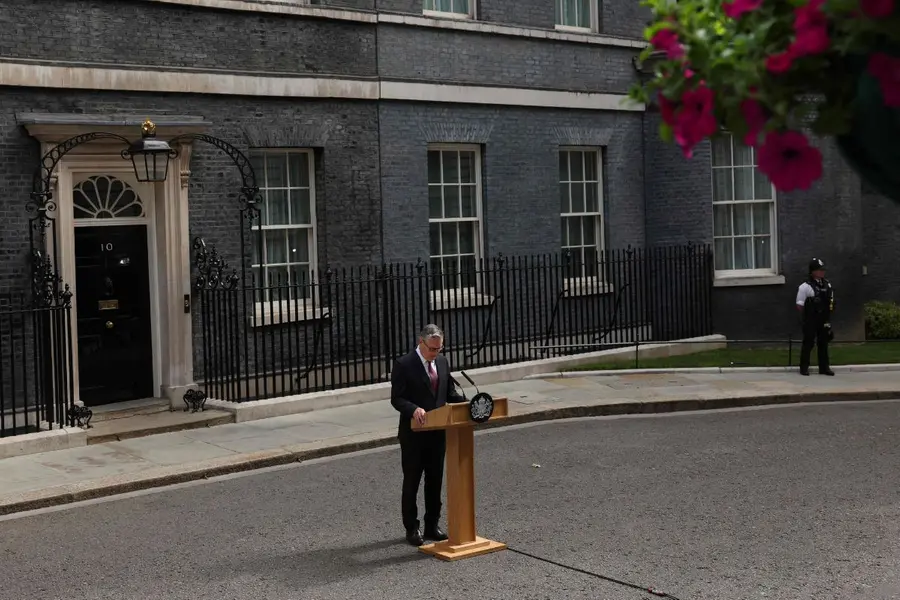
Less than two years after leading Labour to a landslide election victory, British Prime Minister Keir Starmer has announced that he will step down as Labour leader and hand over power once the party elects a successor. His departure marks another period of political upheaval in Britain and puts the country on course for its seventh prime minister in a decade.
Also Read

What Did Starmer Announce?
Speaking outside 10 Downing Street, Starmer said he would resign as leader of the Labour Party but remain prime minister until a leadership contest is completed.
He said he would work to ensure an orderly transition and a smooth transfer of power to his successor.
Why Was He Forced Out?
Starmer's resignation was the culmination of months of mounting pressure from within his own party.
The central issue was Labour's sharp decline in popularity since its emphatic election victory in July 2024. What had begun as grumbling among MPs gradually turned into open calls for a leadership change, with many lawmakers fearing the party was heading towards electoral trouble.
Labour figures became increasingly concerned that the party was losing support on multiple fronts — progressive voters were drifting towards the Green Party, while Reform UK, led by Nigel Farage, was making gains among voters frustrated by immigration and economic issues.
The Problems That Hurt Starmer
Several factors combined to weaken his position.
Economic challenges
One of the biggest criticisms of Starmer's government was its inability to deliver meaningful improvements in living standards. Economic growth remained sluggish, while many households continued to feel the pressure of the cost-of-living crisis.
As public frustration grew, Labour struggled to convince voters that conditions were improving.
Leadership concerns
Critics inside the party increasingly questioned Starmer's leadership style, arguing that he lacked a clear political direction. A series of policy reversals and perceived indecision fuelled concerns about his ability to lead Labour into the next election.
Internal party unrest
The government also faced repeated internal disagreements and high-profile resignations, exposing divisions within Labour and undermining confidence in Starmer's leadership.
Controversies
Starmer faced criticism over several appointments and decisions during his time in office. Opponents argued that these controversies damaged the government's credibility and contributed to Labour's declining support.
Did Starmer Have Any Successes?
Despite his domestic difficulties, Starmer earned praise in some areas of foreign policy.
He played a prominent role in rallying European support for Ukraine and worked with allies to manage the impact of international crises. Supporters argue that he projected stability abroad even as challenges mounted at home.
Who Could Replace Him?
The Labour Party will now begin the process of choosing a new leader.
Among the names being discussed is Andy Burnham, the former Mayor of Greater Manchester, who recently returned to Parliament and has long been viewed as a potential national leader.
Former Health Secretary Wes Streeting is also seen as a possible contender after previously positioning himself as a critic of Starmer's leadership.
At this stage, however, no successor has been formally chosen.
Britain's Revolving Door of Prime Ministers
Starmer's departure continues a remarkable period of political instability in the UK.
Since the Brexit referendum in 2016, Britain has seen a succession of prime ministers leave office before completing a full term. David Cameron resigned after the Brexit vote, Theresa May was brought down by Brexit negotiations, Boris Johnson left amid scandal, Liz Truss resigned after a disastrous mini-budget, and Rishi Sunak lost power after Labour's election victory.
Now, with Starmer stepping aside after less than two years in office, the UK is preparing for its seventh prime minister in just ten years — a striking reflection of the turbulence that has shaped British politics in the post-Brexit era.
Published: 22 Jun 2026, 03:42 pm IST
Related Topics
Disclaimer: Kindly avoid objectionable, derogatory, unlawful and lewd comments, while responding to reports. Such comments are punishable under cyber laws. Please keep away from personal attacks. The opinions expressed here are the personal opinions of readers and not that of Mathrubhumi.