
The move comes amid a sharp exchange between the two leaders
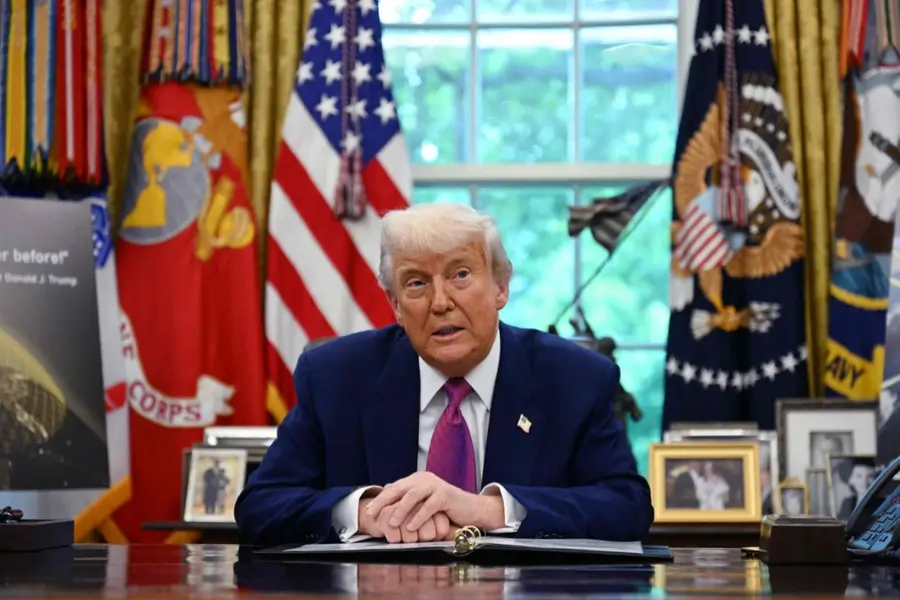
Washington/Moscow: In a dramatic escalation of tensions, US President Donald Trump on Friday announced that he had ordered the deployment of two nuclear submarines, responding to what he described as “highly provocative” comments from former Russian President Dmitry Medvedev.
Writing on his Truth Social platform, President Trump said:
“Based on the highly provocative statements of the Former President of Russia, Dmitry Medvedev… I have ordered two Nuclear Submarines to be positioned in the appropriate regions, just in case these foolish and inflammatory statements are more than just that.”
He added: “Words are very important, and can often lead to unintended consequences. I hope this will not be one of those instances.”
Trump–Medvedev clash escalates
The move comes amid a sharp exchange between the two leaders. On Thursday, Trump criticised Russia and India for their growing ties, saying the two nations could “take their dead economies down together.” He also referred to Medvedev as a “failed former President of Russia” who “thinks he’s still President,” warning him to “watch his words.”
Medvedev, a close Putin ally and deputy chair of Russia’s Security Council, responded by accusing Trump of playing a dangerous “game of ultimatums.” He invoked Russia’s Cold War-era nuclear deterrent system known as Perimeter, or "Dead Hand", warning that continued threats could push the situation towards conflict—not just with Ukraine, but with the United States itself.
“Russia isn’t Israel or even Iran,” Medvedev said, adding, “Each new ultimatum is a threat and a step towards war.”
Tariff threats and diplomatic fallout
President Trump recently stated that the US would impose 100% tariffs on Russian goods and those of its trade partners unless a peace agreement in Ukraine is reached within a strict deadline—first set at 50 days, and then abruptly reduced to 10. Moscow has rejected these terms, continuing to assert its own conditions for ending the war in Ukraine.
The incident follows a scathing US National Transportation Safety Board (NTSB) report and broader scrutiny of both Boeing and US-Russia relations in recent months, though the current escalation is rooted in foreign policy tensions rather than aviation or commercial matters.
Published: 01 Aug 2025, 11:13 pm IST
Related Topics
Disclaimer: Kindly avoid objectionable, derogatory, unlawful and lewd comments, while responding to reports. Such comments are punishable under cyber laws. Please keep away from personal attacks. The opinions expressed here are the personal opinions of readers and not that of Mathrubhumi.
