
As INS Aridhaman nears commissioning, India strengthens its sea-based nuclear shield with a submarine capable of staying hidden for months and launching long-range nuclear strikes.
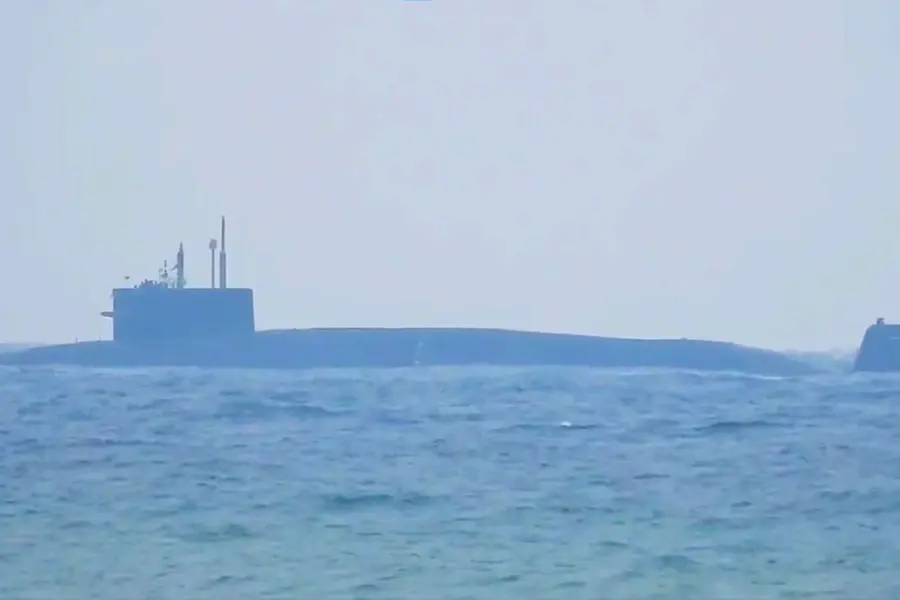
Imagine a submarine so powerful and stealthy that it can hide deep beneath the ocean for months, carrying nuclear-tipped missiles capable of striking targets thousands of kilometres away, all while remaining completely undetected. This isn't science fiction, it's India's latest achievement in defence technology. On Tuesday, December 2nd, 2025, Navy Chief Admiral Dinesh K. Tripathi announced that INS Aridhaman, India's third indigenous nuclear-powered submarine, is now in its final testing stages and will be commissioned very soon.
This announcement, made just days before Navy Day celebrations in Thiruvananthapuram, marks a significant milestone in India's journey towards becoming a stronger naval power. INS Aridhaman will join its sister submarines, INS Arihant and INS Arighaat, forming a formidable trio of nuclear-powered vessels that significantly enhance India's ability to defend itself and maintain peace in the region.
To understand why this matters so much, we first need to know what makes these submarines so special. INS Aridhaman belongs to a category called SSBN, which stands for Ship, Submersible, Ballistic, Nuclear. Think of it as an underwater fortress that can stay hidden beneath the waves for extremely long periods without needing to surface. Unlike conventional submarines that run on diesel and need to come up for air regularly, SSBNs use nuclear reactors for power, allowing them to remain submerged for months at a time. This makes them nearly impossible to detect and track by enemy forces.
What makes an SSBN truly powerful is what it carries. These submarines are equipped with ballistic missiles that can travel enormous distances, sometimes thousands of kilometres, and can carry nuclear warheads if needed. In simple terms, an SSBN is a mobile, hidden nuclear missile platform lurking beneath the ocean, ready to respond if India ever faces a nuclear threat. This ability to strike back even after being attacked is what experts call nuclear deterrence, essentially making sure that no country dares to attack India with nuclear weapons because they know India can retaliate effectively.
INS Aridhaman is particularly impressive because it's larger and more capable than its predecessors. Weighing around seven thousand tonnes, this submarine can carry more K-4 missiles than INS Arihant and INS Arighaat. The K-4 missiles are advanced nuclear-capable ballistic missiles with a range of approximately 3,500 kilometres, meaning they can strike targets far away while the submarine remains safely hidden in the depths of the Indian Ocean. This extended reach dramatically improves India's strategic defence capabilities.
The submarine is part of India's highly secretive Advanced Technology Vessel project, commonly known as the ATV programme, which began back in the 1990s with an investment exceeding ninety thousand crore rupees. Building a nuclear submarine is incredibly complex. It requires cutting-edge design, special materials that can withstand enormous underwater pressure, sophisticated nuclear reactor technology, and precision engineering that few countries in the world have mastered. The fact that India has developed this capability entirely on its own is a testament to the brilliance and dedication of our scientists and engineers.
INS Arighaat, the second submarine in this class, was commissioned on August 29th, 2024, in Visakhapatnam after years of meticulous work. Now, with INS Aridhaman undergoing advanced sea trials and a fourth SSBN currently under construction, India's underwater nuclear deterrent force is steadily growing stronger.
However, it's important to understand the bigger picture. While commissioning INS Aridhaman represents tremendous progress in India's defence self-reliance, our SSBN fleet remains smaller compared to other major nuclear powers. China operates at least six large Jin-class SSBNs carrying long-range JL-3 missiles that can reach up to ten thousand kilometres, along with six nuclear attack submarines. The United States maintains a fleet of fourteen Ohio-class SSBNs and fifty-three nuclear attack submarines.
Here's where we should understand another important term: SSN, or nuclear-powered attack submarine. Unlike SSBNs that carry long-range nuclear missiles and focus on deterrence, SSNs are designed for combat operations. They hunt enemy ships and submarines, gather intelligence, protect naval assets, and are incredibly fast and agile. They don't carry ballistic missiles but are equipped with torpedoes and cruise missiles for attacking surface ships and other submarines.
India's steady progress in adding advanced submarines like INS Aridhaman demonstrates our nation's firm commitment to building what's called a credible minimum nuclear deterrent. This means having just enough nuclear capability to ensure that if anyone attacks India, we can respond effectively, thereby preventing war through strength rather than aggression. This approach is crucial for maintaining strategic stability in the Indo-Pacific region, where various countries have competing interests.
For a nation surrounded by complex security challenges, having submarines like INS Aridhaman patrolling our waters provides an invisible shield, a guarantee of safety that allows India to pursue peace and development confidently. Every advancement in this programme represents not just military strength, but the hard work, intelligence, and determination of countless Indians working behind the scenes to protect our future.
The author is a Defence, Aerospace & Geopolitical Analyst
Published: 03 Dec 2025, 03:43 pm IST
Related Topics
Disclaimer: Kindly avoid objectionable, derogatory, unlawful and lewd comments, while responding to reports. Such comments are punishable under cyber laws. Please keep away from personal attacks. The opinions expressed here are the personal opinions of readers and not that of Mathrubhumi.
